Sell Gold Jewelry: A Trusted Buyer’s Guide

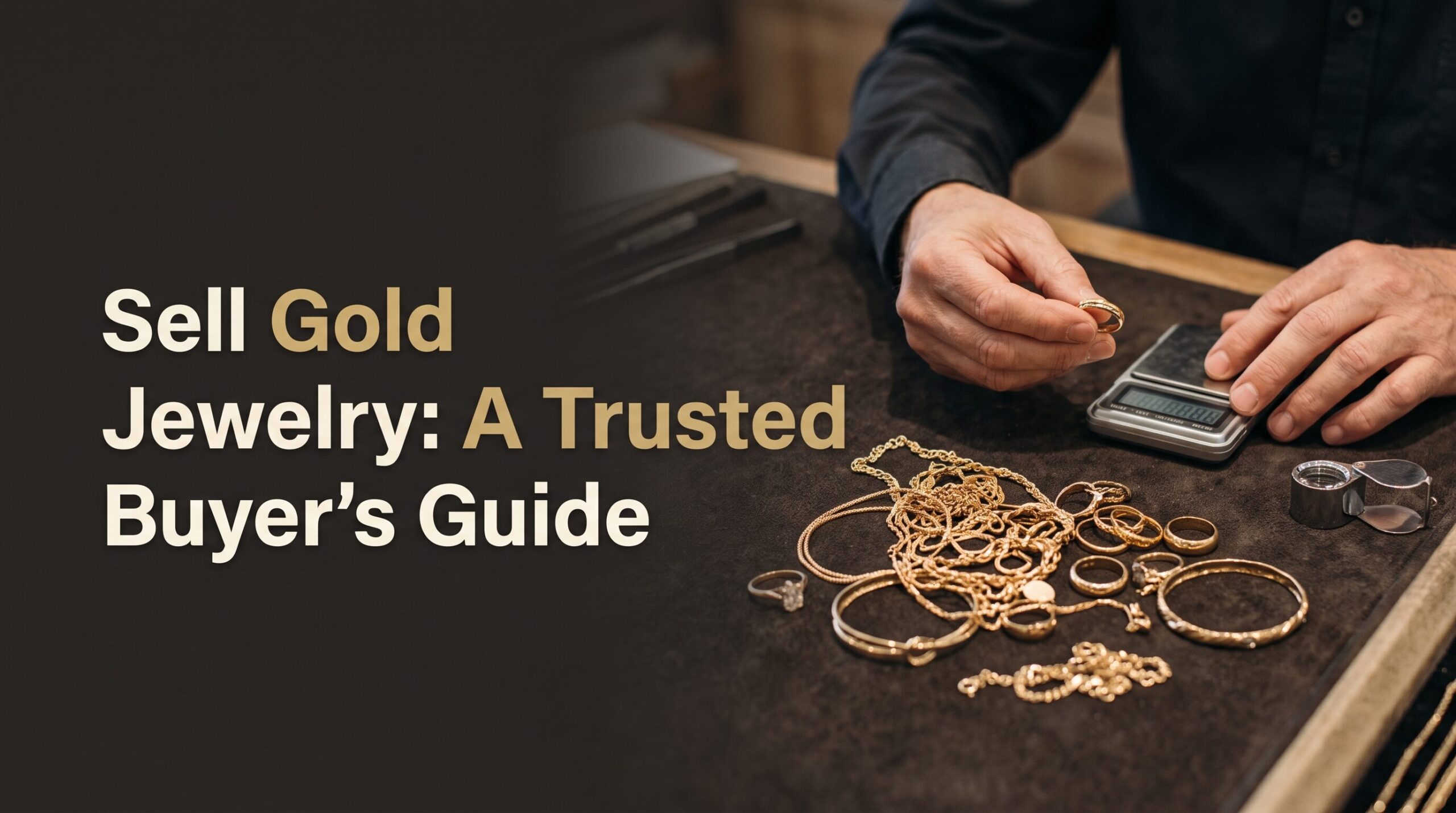
To sell gold jewelry with confidence, look for a buyer who checks the item’s purity, weight, and current market value. A professional evaluation by specialists, like Eagle Coins Gold and Silver Buying, can help you understand what your gold is worth before you decide whether to accept an offer.

Gold jewelry can carry more value than you may expect. An old, forgotten ring in a drawer, a broken chain, or a necklace you no longer wear may still have value because of the gold it contains.

If you want to sell your gold jewelry, the first step is finding a buyer who will evaluate your items carefully and explain the offer clearly. At Eagle Coins Gold and Silver Buying, our buying professionals have years of experience in buying precious metals, including gold.

Also, we provide in-person gold evaluations at our store in Harwich Port, Massachusetts.

Table of Contents

What Can Affect the Value of Your Gold Jewelry?

We all know that not every piece of gold jewelry is worth the same amount. Over time, the value can change based on the type and amount of gold in the item.

Here are some of the main details you should know that we commonly consider:

Purity: Gold can come in different karats, such as 10K, 14K, 18K, 22K, and 24K. Here, the karat tells us how much gold the piece contains.

Weight: The weight helps us determine how much material we are evaluating.

Current market value: Gold prices change over time, so the market price at the time of your visit is one factor in our offer.

Type of jewelry: We evaluate many types of gold jewelry, including rings, earrings, necklaces, chains, bracelets, pendants, bangles, anklets, charms, cufflinks, brooches, lockets, and more.

Gold jewelry can contain different amounts of pure gold, depending on its karat and composition. The Federal Trade Commission provides guidance on how precious metals should be described, including their quality and metallic content. You can read its jewelry guides to learn more about gold descriptions and markings.

What to Know Before You Sell Gold Jewelry

You do not need to know everything about your jewelry before you bring it to us.

Maybe you inherited a collection and do not know the karat. Perhaps you have a broken chain that you have not worn for years. You may even have jewelry with no clear marking.

Rather than leaving your jewelry in a drawer, bring it to Eagle Coins Gold and Silver Buying. We evaluate your gold jewelry based on factors such as purity, weight, and current market value. And that’s not all! We even buy broken and damaged gold jewelry, so you don’t have to worry about the condition of the piece you own.

If you want to sell old gold jewelry, gather the items you are considering selling and bring them to our Harwich Port store. We will help you understand what you actually have before making a decision.

A Simple Way to Sell My Gold Jewelry

Selling jewelry may seem like a big decision, but it’s pretty simple if you look at it. All you have to do is gather the gold items you no longer want or use.

You might have:

– Old rings

– Gold earrings

– Necklaces and chains

– Bracelets and bangles

– Pendants

– Charms

– Cufflinks

– Brooches or pins

– Lockets

– Broken or worn gold jewelry

We buy these types of gold jewelry and provide an in-person evaluation at our Harwich Port store. You do not need to make an appointment before visiting us.

If you are wondering, “Where can I sell my gold jewelry?” a local evaluation gives you the chance to speak with the people handling your items and ask questions before you decide. If you have receipts, previous appraisals, or paperwork for your jewelry, you can bring those along, too.

Why Current Gold Prices Matter

Gold prices change over time. This means the amount you paid for a piece years ago may not reflect what it is worth when you decide to sell it.

This matters when you sell because the amount you paid for a piece years ago may not tell you what it is worth today. The buyer needs to consider the current market when making an offer.

At Eagle Coins Gold and Silver Buying, we evaluate gold using current market value along with the item’s purity and weight. Our process is designed to give you a clear understanding of how we determine the amount or make you an offer for your items.

That can be helpful when you sell old gold jewelry because you do not have to rely only on an old purchase price or a guess based on how the piece looks.

Things to Check Before Selling Your Gold Jewelry in Harwich

Before you hand over your jewelry, it is wise to know how the buyer will handle it. Here are a few things worth considering:

What to considerWhy it matters
ExperienceAn experienced team has handled many types of precious metal items.
In-person evaluationYou can bring your jewelry in and discuss it directly with the professionals.
Clear pricingYou should understand that factors such as purity, weight, and market value affect the offer.
No-pressure processYou should have the freedom to decide whether you want to accept the offer.
Local locationA nearby store can make the process simple if you prefer an in-person visit.

If you search for ‘sell old jewelry in Harwich,’ you may be looking for more than a place that simply gives you a number. You may want to speak with someone face-to-face and watch your jewelry being evaluated for an offer before deciding what to do.

That is where a local buyer can make the process easier.

You can bring your gold jewelry to our store at 537 Main Street, Harwich Port, Massachusetts. Our evaluations are free, and you are not required to sell after receiving an offer. This way, you get more time to consider the amount and decide what works for you.

For someone searching ‘sell my gold jewelry,’ having that choice can make the process feel much less stressful.

What Happens When You Sell Gold Jewelry?

Here is what you can expect when you bring in your gold jewelry, including broken or worn items.

We test and weigh the gold
We start with our multilevel scientific testing to assess gold purity. We clean gold with an ultrasonic machine before weighing it, and record the weight to three decimal places per gram. This process makes it easier for us to determine the gold content and weight of the items we evaluate.

We explain our offer
We don’t believe in extending an offer without explaining how we evaluated it in the first place. Our professionals give you information not just on your jewelry’s purity and weight but also about current market pricing. You can freely ask us how these factors affect the amount we offer and raise any questions or doubts that you may have.

You decide whether to sell
If you like the offer and accept it, we will pay you in cash. In case you don’t wish to accept it, you can simply decline. You are not required to sell simply because you brought your jewelry in for an evaluation.

Knowing these steps in advance can help you feel more prepared.

Ready to Find Out What Your Gold Is Worth?

If you have gold jewelry sitting unused in a drawer, you may want to sell it for cash. Bring your items to Eagle Coins Gold and Silver Buying in Harwich Port for a professional evaluation. Our local team can evaluate your pieces and give you an offer based on the details of your gold and the current market value before you decide whether to sell your gold jewelry.

Frequently Asked Questions

Q.1 How do I know if my old gold jewelry has value?
Gold jewelry can have value based on multiple factors such as its purity, weight, and current market value. Even if a piece is broken or heavily worn, it may still be worth evaluating.

Q.2 Can I sell my gold jewelry if I do not know its karat?
Yes. You can bring the item in for evaluation. Professional buyers use testing and evaluation to determine the relevant details.

Q.3 Where can I sell old jewelry in Harwich?
Eagle Coins Gold and Silver Buying is located at 537 Main Street, Harwich Port, MA. Our specialists provide in-person evaluations for precious items, including gold jewelry.

Q.4 How can I sell gold jewelry for cash?
Bring your gold jewelry to our Harwich Port store for an evaluation. After assessing the items you want to sell, we will give you an offer. It’s your decision whether or not you want to accept it.
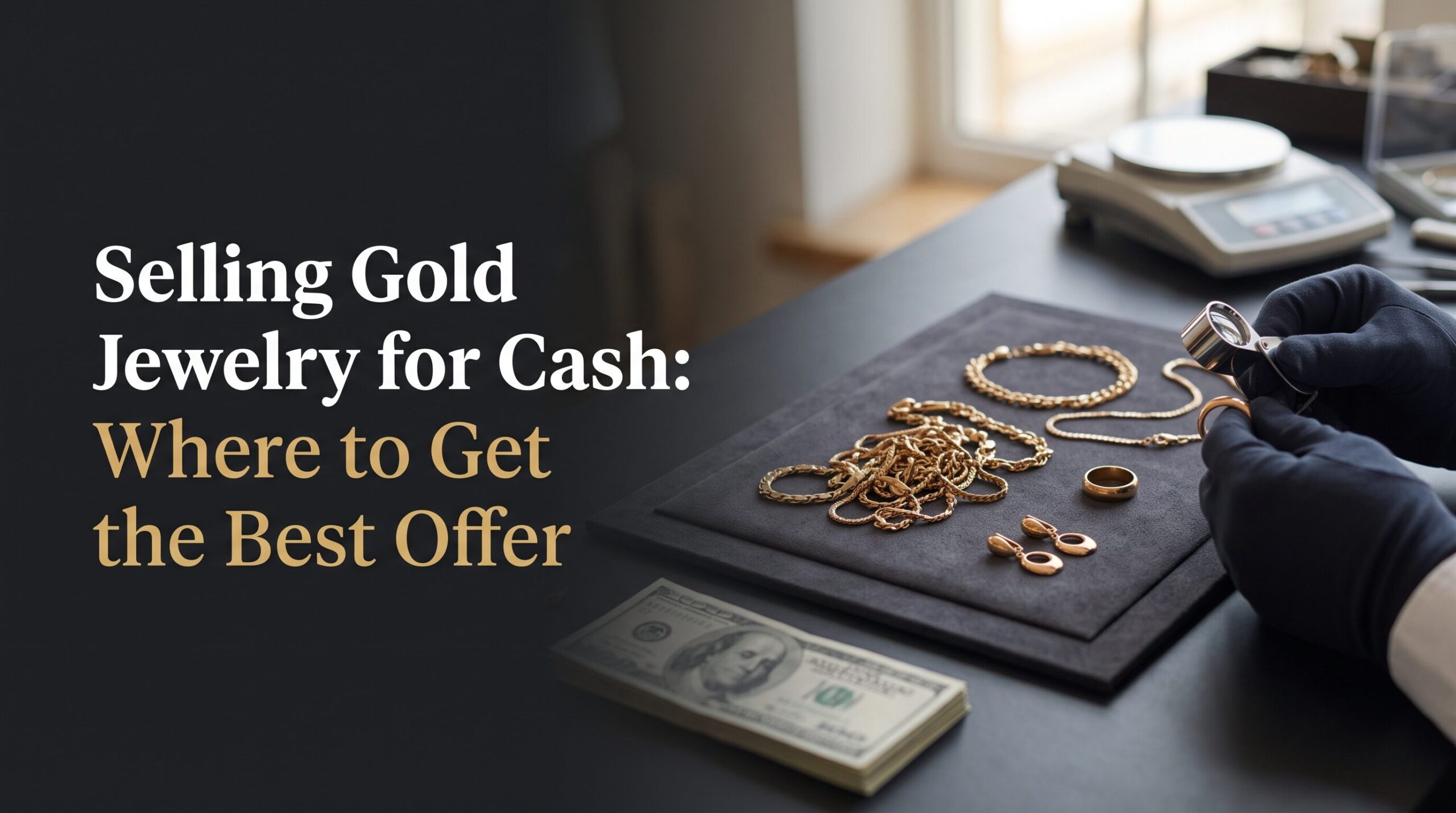
Selling Gold Jewelry for Cash: Where to Get the Best Offer

A practical way to turn jewelry you no longer want into money is by selling gold jewelry for cash. The offer depends on factors such as gold purity, weight, and current market value. A professional buyer, like Eagle Coins Gold and Silver Buying, can test and weigh the jewelry before giving you a good offer.

Gold jewelry can have a long history. For instance, a necklace given to you by someone you are no longer in touch with, or a ring that may have belonged to a family member who isn’t in this world anymore. And at some point, you may decide that keeping that piece of jewelry in a drawer no longer makes sense.

This is where you should consider selling gold jewelry for cash.

But the main question is where to sell it. Not every buyer follows the same evaluation process, which means the amount offered can vary. Before you decide, it’s wise to learn what a buyer checks, how they calculate the offer, and what questions you should ask.

Table of Contents

What Determines the Value of Gold Jewelry?

The price you paid for a piece of jewelry usually differs from the amount you can receive when selling it. Retail jewelry prices usually include design, labor, brand, and other costs.

Three things are especially important:

FactorWhat it tells the buyer
PurityHow much actual gold the jewelry contains
WeightHow much material is being evaluated
Market valueWhat gold is worth in the market at the time of your visit

For example, gold jewelry can carry marks such as 10K, 14K, or 18K. Occasionally, you also see numbers such as 417, 585, or 750. While these marks give an indication of purity, only a professional can test and provide a more accurate assessment.

Selling Gold Jewelry for Cash Starts With a Proper Evaluation

A good place to sell gold jewelry is where you get a clear idea of how the offer is determined. A buyer should not leave you guessing about whether they have checked the purity or weight of your jewelry.

At Eagle Coins Gold and Silver Buying, for instance, we use multi-level scientific testing to determine gold value. Our professionals weigh gold only after cleaning it with an ultrasonic machine and record measurements to three decimal places per gram.

So, if you are searching for the best place to sell old gold jewelry, it’s wise to look for a buyer who can explain the evaluation rather than simply giving you a number.

When comparing buyers, ask the same questions at each place:

How do you test purity?
A buyer should be able to explain how they check the gold content rather than relying only on a stamp.

How do you weigh the jewelry?
Ask whether the weight is measured carefully and whether the process is visible to you.

Which gold price do you use?
Gold prices change, so ask which current market rate is being used to calculate the offer.

Are there any deductions or fees?
Ask whether any charges will be taken out of the amount offered.

Is the evaluation free?
Make sure you understand whether you can decline the offer without a charge or obligation.

We follow this approach at our Harwich Port store. Not only can you see your jewelry being evaluated, but you can also ask questions to understand the factors behind our offer before deciding what to do next.

What Gold Jewelry Can You Sell?

Most people try to decide the value of the jewelry before taking it to a buyer. But you don’t have to do that yourself! Simply, you can visit your shortlisted buyers’ websites to check what you can sell.

At Eagle Coins Gold and Silver Buying, we buy a wide range of gold jewelry, including:

  • Rings
  • Earrings
  • Necklaces
  • Chains
  • Pendants
  • Bracelets
  • Bangles
  • Anklets
  • Charms
  • Cufflinks
  • Brooches
  • Lockets
  • Body jewelry
  • Toe rings

We also buy several types and styles of gold jewelry, like

  • Yellow, white, rose, green, and black gold
  • Solid gold
  • Gold-filled jewelry
  • Gold-plated jewelry
  • Gold vermeil
  • Hollow gold jewelry
  • Diamond or stone-studded gold jewelry
  • Filigree designs
  • Engraved jewelry
  • Personalized or custom-name jewelry

If you have several pieces, you can bring them together for evaluation.

How to Find the Best Place to Sell Old Gold Jewelry

It’s convenient to search online for ‘cash for gold jewelry near me’ and visit a nearby gold buyer to sell your old or unwanted jewelry, but distance should not be the only thing you consider.

First, check how each buyer handles the evaluation. You can start by looking for a process that includes purity testing and careful weighing.

Next, compare the offers themselves. If you visit more than one buyer, try to get each offer for the same items and compare them within a similar time frame. Gold prices can move up or down, so an offer made on a different day may be based on a different market price.

Also, you should be able to ask questions about the calculation and understand any deductions before accepting an offer. At Eagle Coins Gold and Silver Buying, we offer a free, no-obligation evaluation at our Harwich Port location. You can ask us to explain the assessment and then decide whether you want to accept it.

What Happens When You Sell Your Jewelry?

If you are searching for ‘sell gold jewelry near me,’ come straight to Eagle Coins Gold and Silver Buying. Our process is straightforward.

First, bring in the jewelry

Bring the pieces you want us to evaluate. If you know the karat or see a stamp such as 14K or 585, you can point it out, but you do not need to determine the purity yourself.

Next, we test and weigh the gold

We clean gold with an ultrasonic machine, test its purity, and record the weight to three decimal places per gram to determine how much gold the jewelry contains.

Then, we explain our offer

We consider the jewelry’s weight, purity, and current market pricing when determining the amount. As mentioned earlier, you can ask us how those factors affect the offer and raise any questions you have before making a decision.

Finally, you decide

If you accept our offer, we will pay you in cash. If you decide the offer is not right for you, you can decline it. There is no obligation to sell after the evaluation.

Bring Your Gold Jewelry to Us for an Evaluation

If you have jewelry that you no longer wear, there is no need to guess what it may be worth.

Instead of looking for ‘cash for gold jewelry near me,’ come straight to us. We can test and weigh your jewelry, consider current market prices, and explain the offer we make. You can bring in rings, chains, earrings, bracelets, and other gold jewelry to our Harwich Port location.

And if you want to compare buyers for selling gold jewelry for cash, use the same questions that we provided you before. We want you to understand the process before making a decision.

Frequently Asked Questions

Q.1 How is gold jewelry valued when I sell it?
The value is based largely on the jewelry’s gold purity and weight, along with current gold market prices. Retail factors such as the original design or purchase price do not necessarily carry over to resale value.

Q.2 Where is the best place to sell old gold jewelry?
The best place to sell your old gold jewelry depends on what you value. A good buyer will provide you with a clear offer only after professional testing and careful weighing.

Q.3 How can I compare gold offers from different gold buyers?
Ask each buyer how they test purity, weigh the jewelry, and calculate the offer. Do they use current market prices or not? Do they apply fees or deductions you are unaware of? Then compare offers for the same items as close together in time as possible.

Q.4 Where can I find cash for gold jewelry near me?
You can look for ‘sell gold jewelry near me’ online to find nearby gold buyers. If you are in Massachusetts, you can visit our Harwich Port store for an in-person evaluation.

Q.5 Does old or unwanted gold jewelry still have value?
It can. It’s important to understand that the age or style of a piece does not by itself determine its gold value. A simple way to determine its value is to visit a buyer like Eagle Coins that lists broken and unwanted gold among the items it buys after proper evaluation.

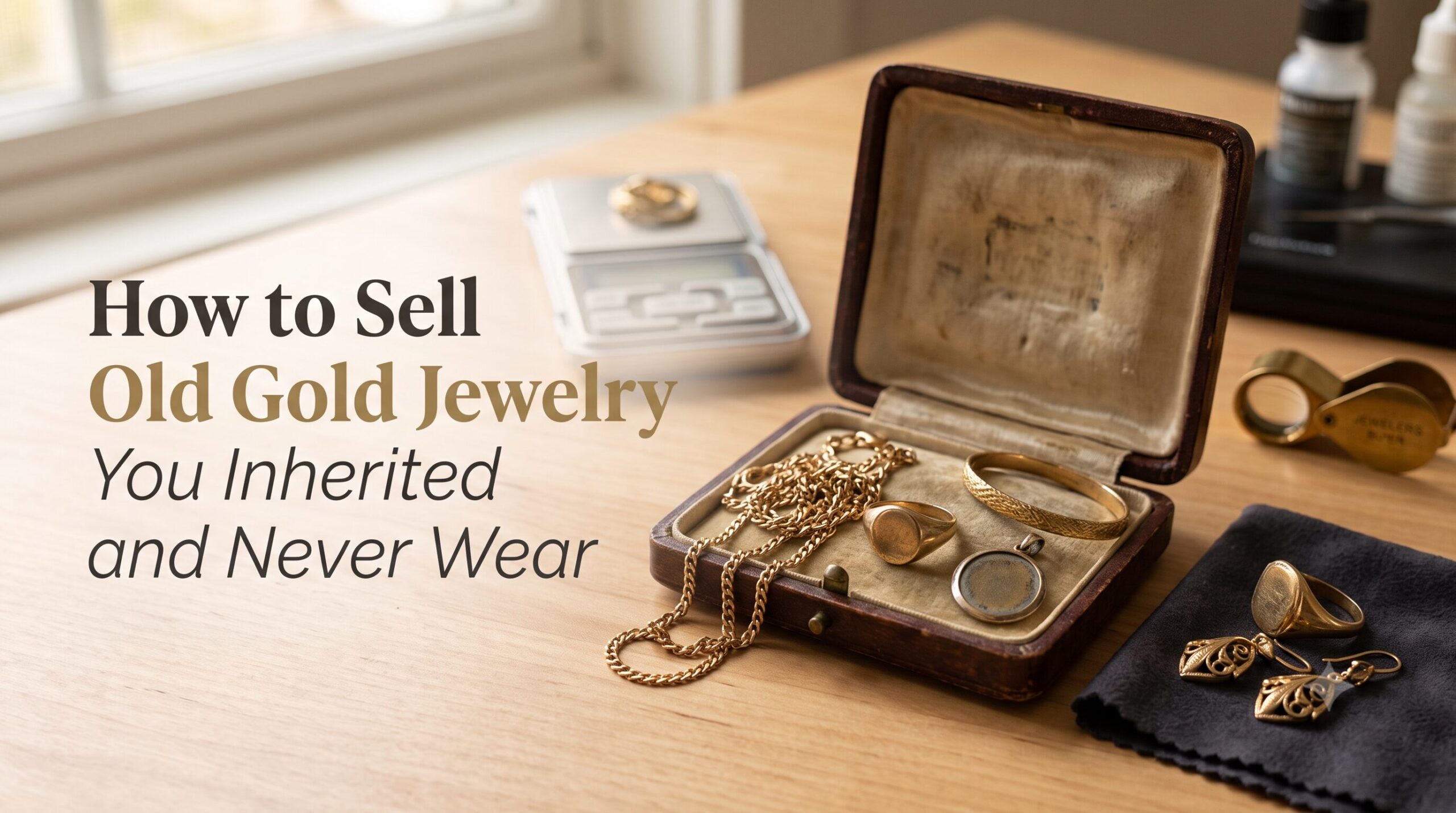
How to Sell Old Gold Jewelry You Inherited and Never Wear

To sell old gold jewelry from an inherited collection, start by separating solid gold from plated pieces and costume jewelry, then have the solid gold tested and weighed rather than guessed at. A proper evaluation establishes karat scientifically, cleans each piece before weighing, and prices against the live market rate. Nothing needs to be sold to find out what it’s worth.

Most inherited jewelry arrives in a box that nobody opens for a year.

There’s a reason for that, and it isn’t indecision. Opening the box means making decisions about someone who has died, and the jewelry stands in for the person. So the box goes in a drawer, and the drawer stays shut.

When it does get opened, the questions are usually the same. Is any of this actually gold? Is any of it worth something? What do I do with the pieces nobody in the family wants, and how do I find out without feeling like I’m putting a price on my grandmother?

What follows is how to sort a collection before you take it anywhere, what a real evaluation involves, and why finding out what something is worth carries no obligation to sell it.

Table of Contents

Why Inherited Jewelry Sits in a Drawer for Years

Nobody wants to be the person who sold their mother’s rings.

That’s the honest obstacle, and it’s worth naming before any of the practical advice. The jewelry isn’t really jewelry at this point. It’s the last physical thing that belonged to someone, and selling it feels like a decision about them rather than about metal.

Here’s the part that helps most people: knowing what something is worth and selling it are two different acts. You can do the first without the second. Plenty of people come in, hear the numbers, put everything back in the box, and leave. Some come back years later. Some never do. Both are fine.

What you cannot do is make a good decision without information. A collection you’ve never had looked at is a collection you’re guessing about, and guesses tend to run in both directions. People assume the ornate Victorian brooch is the valuable one and the plain chain is nothing, when it’s frequently the reverse.

Sorting the Box Before You Go Anywhere

You don’t have to do this, but it makes the visit faster and tells you more.

Separate into four rough piles:

  • Marked gold. Anything stamped 10K, 14K, 18K, 22K, 585, 750, 916
  • Probably gold but unmarked. Older pieces often lost their stamps to wear
  • Look for sterling, 925, or a lion passant on British pieces
  • Everything else. Costume, plated, unknown

Then bring all four piles anyway.

That’s not a contradiction. Sorting helps you understand your own collection, but the fourth pile is where surprises live. Stamps wear off. Some pieces were never marked. And costume jewelry from certain makers carries collector value that has nothing to do with metal content at all.

The pile people most often leave at home is the broken one. A snapped chain is worth the same per gram as a whole one. So is a single earring, a bent ring, or a clasp with nothing attached.

How to Tell Solid Gold From Plated

A few things you can check yourself, with the caveat that none of them are conclusive.

Look for wear at the edges.
Plating wears through at high-contact points first. Check the inside of a ring band, the back of a pendant, the edge of a clasp. A different color showing through means the plating.

Check for a stamp, then don’t trust it completely.
Marks are useful but not final. They wear down, they’re occasionally wrong, and some older pieces were never marked at all.

Weight gives you a hint.
Gold is dense. A piece that looks substantial but feels light is often hollow or plated. This is a feel rather than a test, and it takes handling a lot of jewelry to develop.

Discoloration on skin
Sometimes indicates plating over base metal, though this varies by person and isn’t reliable on its own.

None of this replaces testing. We use multi-level scientific testing to determine actual gold content rather than relying on a stamp and hoping. It costs you nothing, and it’s the only way to know.

What an Estate Jewelry Buyer Actually Evaluates

Four things happen, all of them on the counter where you can watch.

  1. Testing establishes what each piece actually is. Not what it’s stamped as. Not what the family always said it was.
  2. Ultrasonic cleaning comes before weighing. Decades in a box leave residue, polish, and grime, none of which is gold. Cleaning first means you’re paid for metal rather than dirt.
  3. Weighing to three decimal points per gram. On a collection of small pieces, the third decimal place adds up across the whole box.
  4. Pricing against the live market rate. Gold moves daily. You can check the live spot price before you come in, and we’d encourage it.

Then each piece gets discussed separately, because the answer isn’t always “melt.” Some pieces are worth more intact than as metal, and we’ll say so.

Keep, Sell, or Decide Later

Most inherited collections split three ways, and the split usually becomes obvious once the numbers exist.

What it usually isWhat to do
Worth more than metalSigned pieces, period designs, significant stones, some collectible makersGet it valued as a piece, not as weight
Worth metal valueBroken chains, worn bands, single earrings, unfashionable settingsThis is the pile most people sell
Worth keepingAnything someone in the family actually wants to wearNobody should talk you out of this
Worth nothing muchCostume, plated, heavily damaged base metalHonest answer, delivered plainly

The fourth row matters. A buyer who finds value in every single item in your box is not being straight with you. Some inherited jewelry is costume jewelry that someone loved, and that’s all it is. We’ll tell you that rather than rolling it into a vague lump-sum offer.

When Several People Have a Claim

This comes up more than you’d expect, and it’s worth planning for.

If a collection is being divided among siblings or beneficiaries, get everything evaluated before anyone takes anything. An itemized assessment gives everyone the same information, making division a conversation about who wants what rather than an argument over who got more.

Come together if you can. Two people hearing the same numbers at the same counter prevents a lot of difficulty later. If that isn’t practical, ask for the breakdown in writing so the same figures can be shared with everyone.

And if the estate is still in probate, check with the executor or the estate’s attorney before selling anything. We’re not lawyers and won’t pretend to be, but we’d rather raise it than have you find out afterward.

Sell Old Jewelry in Harwich Without Deciding Anything First

We’ve been buying gold on Cape Cod for over 40 years, and we’re a BBB Accredited Business. Inherited collections are a large part of what comes across the counter, and the thing most people want isn’t the highest possible number. It’s an honest one, explained, with nobody pushing.

Every evaluation is free. No appointment is needed. Our 100% satisfaction guarantee covers the transaction, and the decision stays yours.

For more on the process, see our sell old jewelry and estate jewelry pages, or read about the shop on our About Us page.

Bring the box as it is, tangles included. Come to Unit 1-C, 537 Main Street in Harwich Port, or call +1 508-252-8888 if you’d rather talk it through first. We also serve Yarmouth, Barnstable, Hyannis, Brewster, Orleans, and towns across Cape Cod and greater Massachusetts.

Frequently Asked Questions

Q.1 Do I have to sell everything I bring in?
No, and most people don’t. You can have the whole collection evaluated, sell three pieces, and take the rest home. Each item is assessed separately so you can decide piece by piece.

Q.2 What if I don’t know whether something is real gold?
Bring it. Testing is free and takes a minute. Roughly a third of what comes in from inherited collections turns out to be plated or costume, and knowing which is which is useful on its own.

Q.3 Should I clean inherited jewelry before bringing it in?
No. We use ultrasonic cleaning as part of the evaluation, and home cleaning can damage older settings or loosen stones.

Q.4 Can you value a collection for dividing among family?
Yes. We can assess each piece individually so everyone involved sees the same figures. Bring everything in one visit, and ask for the breakdown in writing.

Q.5 What about pieces that aren’t gold or silver?
We’ll look at them. Some costume jewelry carries collector value, and we also buy diamonds, watches, coins, and old currency. If something has no real value, we’ll say so plainly.

Where to Get the Best Offer for Selling Gold Jewelry for Cash

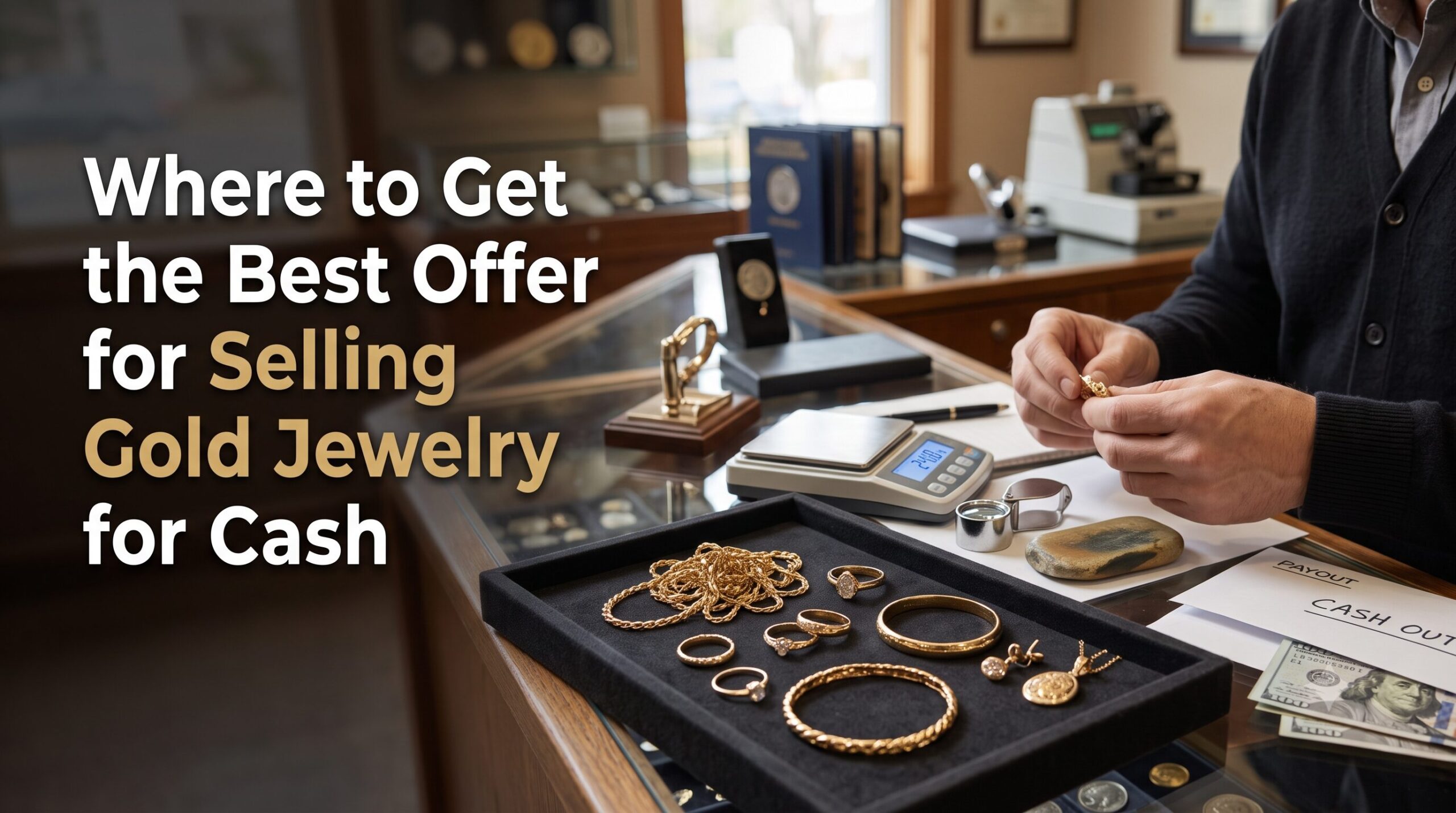
Selling gold jewelry for cash comes down to karat, weight, and the live market rate on the day you sell. A proper evaluation tests purity scientifically, cleans the piece, weighs it to three decimal points per gram, and prices it against current rates. Watching that happen in person beats mailing your jewelry to a stranger.

Most people who walk in here holding a gold ring are not thinking about grams. They are thinking about the person who gave it to them.

That is the part no pricing guide accounts for, and it is why selling gold jewelry is different from selling anything else you own. There is a number, and it is a real number, but it has nothing to do with what the piece meant or what it cost when it was new.

What follows is how that number actually gets calculated: what karat means in practice, what happens during a proper evaluation, what moves an offer up or down, and why the difference between a scientific test and a glance at a stamp can be several hundred dollars on a single ring.

Whether you sell at the end of it is entirely your business. Plenty of people hear the number and take the ring home.

Table of Contents

Why Jewelry Is Harder to Sell Than Scrap

Selling a gold bar is arithmetic. Selling your mother’s bracelet is not.

That difference is real, and it’s worth naming before anything else. People bring in wedding bands after a divorce, chains after a funeral, rings they haven’t worn in fifteen years but couldn’t throw away. The metal has a market price. The piece has a history, and the two numbers have nothing to do with each other.

We’re not going to tell you the sentimental part doesn’t matter. What we will do is give you an honest number for the metal, explain how we got there, and let you decide what to do with that information. Plenty of people come in, hear the number, and take the ring home again. That’s a perfectly good outcome.

The hesitation most first-time sellers feel is usually about being taken advantage of. Watching your piece get tested and weighed on the counter in front of you, rather than sealed into an envelope, tends to settle that quickly.

What Gold Jewelry We Actually Buy

Almost anything in gold, in almost any condition.

  • Rings, chains, bracelets, earrings, and pendants in 10k, 14k, 18k, 22k, and 24k
  • Broken chains, snapped clasps, and bent pieces
  • Single earrings with no match
  • Dental gold, including crowns and bridges
  • Estate and inherited pieces, including full collections
  • Gold watches, including vintage and luxury brands such as Rolex and TAG Heuer

You don’t need the original box, the receipt, or a matching set. If it’s gold, it has value, and we’ll weigh it — the same goes for scrap gold and karat gold in every grade.

The single most common thing people leave at home is the broken stuff. A snapped chain is worth exactly the same per gram as an intact one. So is one earring. If you’re cleaning out a drawer, bring the tangle at the bottom too. We sort it here.

What is Karat

Karat is a purity measurement, and it’s the biggest single factor in what your piece is worth.

Pure gold is 24k. Everything below that is gold mixed with other metals for strength, because pure gold is soft enough to bend with your hands. The number tells you how much of the piece is actually gold:

  • 10k is 41.7 percent gold
  • 14k is 58.3 percent gold
  • 18k is 75 percent gold
  • 22k is 91.7 percent gold
  • 24k is 99.9 percent gold

So two rings that look identical and weigh the same can be worth very different amounts. A heavy 10k ring can be worth less than a lighter 18k one. This constantly surprises people, and it’s why guessing from appearance doesn’t work.

Stamps help, but they’re not the final word. Marks wear down, and occasionally a stamp is simply wrong. That’s why we test rather than read.

What Happens During the Evaluation

Four steps, all of them in front of you, none of them costing you anything.

  1. Multilevel scientific testing.
    We establish the actual gold content rather than relying on a stamp.
  2. Ultrasonic cleaning.
    Residue, polish, skin oil, and years of grime all add weight that isn’t gold. Cleaning first means you’re paid for metal, not dirt.
  3. Weighing to three decimal points per gram.
    Not a rounded figure. The third decimal place matters on smaller pieces, and it’s the difference between a real number and an estimate.
  4. Pricing against the current market rate.
    Gold moves daily. We price against where the market actually is when you’re standing there.

Then we tell you the number and explain how we reached it. No appointment needed for any of this, and no obligation once you’ve heard it.

Four Things That Move Your Offer

  1. Karat. Covered above, and the largest single variable.
  2. Weight. Straightforward, which is exactly why precision matters.
  3. Condition. For scrap value, condition barely matters. A mangled chain and a pristine one are the same metal. Condition only enters the conversation for collectible or branded pieces where the item may be worth more intact than melted.
  4. Market timing. Gold prices shift daily. We can’t control the rate, but we can tell you what it’s doing when you come in — that kind of transparency is what our shop has been built on for four decades.

Notice what isn’t on that list: how much you originally paid. Retail jewelry prices include design, brand, retail markup, and margin. None of that survives into resale value. This is the hardest part of the conversation for most sellers, and we’d rather say it here than surprise you at the counter.

Local Buyer vs. Mail-In vs. Pawn Shop

FactorEagle Coins (local)Mail-in servicePawn shop
Who holds your jewelryYou, until you agree to sellShipped out of your handsIn store
When you see the testLive, on the counterAfter it arrives, if shown at allQuick counter check
PaymentSame-day cashCheck, often after a waitCash, or a loan against the piece
If you decline the offerTake it home that minuteReturn shipping, and more waitingTake it home
Pricing explainedYes, step by stepSet after receiptVaries

The mail-in column is the one worth sitting with. Once a package leaves your hands, you’ve lost your only leverage. If the offer that comes back is lower than expected, your options are to accept it or wait for your jewelry to be shipped home.

Why Face-to-Face Matters More With Jewelry

With a bar or a bullion coin, purity is stamped and standardized. With jewelry, every piece is different, and that variability is where questions come up.

Is the clasp the same karat as the chain?
Is that stone worth pricing separately from the setting?
Is this piece worth more as it is than as metal?

Those are conversations, not form fields. You can have them across a counter. You can’t have them with a shipping label.

Bring It In, Even If You’re Undecided

We’ve been buying gold on Cape Cod for over 40 years, and we’re a BBB Accredited Business. In four decades, the thing we’ve learned about jewelry is that people mostly want two things: an honest number and no pressure attached to it.

You get both here. Every evaluation is free, no appointment is needed, and the decision is entirely yours.

If you want to know what your piece is actually worth, see our full sell gold jewelry page.

Come in and find out. Bring the ring, the chain, or the whole tangled drawer to Unit 1-C, 537 Main Street in Harwich Port, or call us at +1 508-252-8888. Free evaluation, no appointment, no pressure to sell. Just a real number.

Selling something heavier? If you’re holding bullion rather than jewelry, read where to sell gold bars safely and get the best price.

Frequently Asked Questions

Q.1 Is the appraisal really free?
A.
Completely free, with no catch built in. We’re not charging you for the evaluation and then recovering it in a lower offer. People walk out without selling all the time, and that’s fine with us.

Q.2 What karats of gold jewelry do you buy?
A.
All of them, from 10k through 24k. We also buy pieces where you’re not sure of the karat, because we test rather than rely on the stamp. If a piece turns out to be gold-plated rather than solid, we’ll tell you that too.

Q.3 Do you buy broken or single pieces?
A.
Yes, and please stop leaving them at home. A broken chain is worth the same per gram as a whole one. Single earrings, bent rings, and clasps with no chain attached all count.

Q.4 How fast do I get paid?
A.
Same visit. You accept the offer, we count out the cash, and you’re done. No check in the mail, no holding period, no coming back tomorrow.