
Gold Buyer in Cape Cod: Get Top Cash for Your Gold with a Free Appraisal

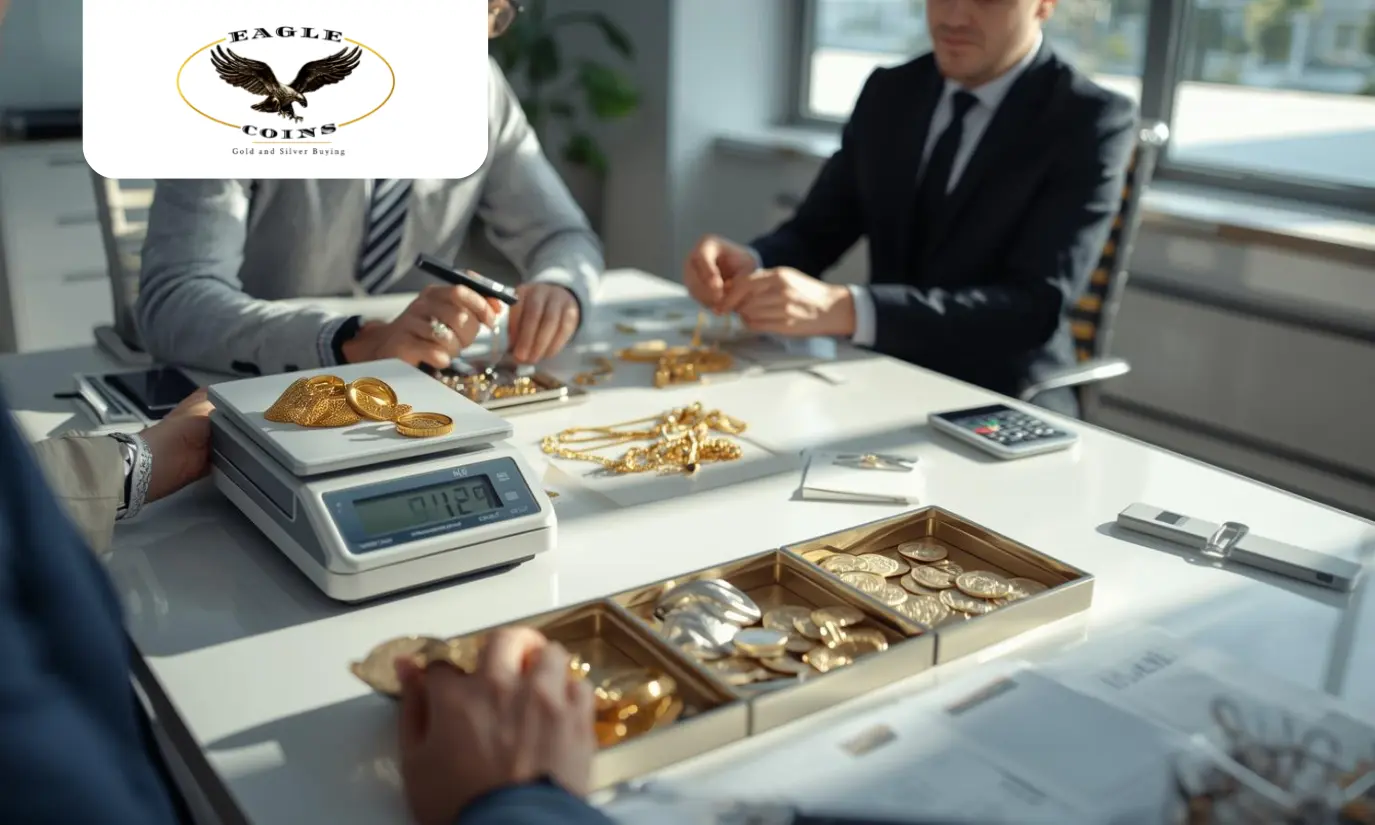
Finding a reliable gold buyer in Cape Cod means finding one who tests, cleans, and weighs your gold in front of you instead of guessing. We use multilevel scientific gold testing, ultrasonic cleaning, and weighing to three decimal places per gram, then price against current market rates and pay same-day cash.

Table of Contents

How Do We Evaluate Your Gold?

Every piece we buy goes through the same evaluation, whether it’s a wedding ring, scrap gold, or a dental crown. We test purity scientifically, clean it ultrasonically so the weight reading is accurate, and weigh it to three decimal places per gram before pricing it against current market rates.

Here’s why that precision matters. Gold jewelry is almost never pure; it’s alloyed with other metals to make it durable enough to wear. A 14k piece is about 58% gold, an 18k piece is about 75%, and a 24k piece is nearly pure. Two rings that look identical can pay very differently once you factor in purity, which is exactly why we test rather than estimate.

What Karats and Forms of Gold Do We Buy?

We buy gold in every karat, and nearly every form, from polished jewelry to scrap metal most people wouldn’t think to sell.

  • Karats: 10k, 14k, 18k, 22k, and 24k gold
  • Jewelry: rings, chains, bracelets, earrings, and pendants
  • Bars and bullion: gold bars in various weights
  • Scrap gold: broken chains, single earrings, mismatched pieces
  • Dental gold: crowns and dental gold pieces
  • Coins: American Eagles, Krugerrands, pre-1933 U.S. gold, and more

If it’s gold and you’re not sure it’s worth bringing in, bring it anyway. We’ll test it for free and tell you exactly what you have.

What Is Our Three-Step Process?

  1. Bring in your gold. No appointment necessary; walk right into our Harwich Port shop.
  2. Free evaluation. We test, clean, and weigh your gold while you watch, then price it against current market rates.
  3. Walk out with cash. Accept the offer and get paid the same day, no waiting.

We’ve run this process for over 40 years, and it hasn’t changed because it doesn’t need to. Face-to-face, transparent, and fast.

Where Is the Best Place to Sell Old Coins Along with Gold?

The best place to sell old coins is somewhere they evaluate them individually rather than melting them down as generic scrap. Old coins can carry rarity or collector value on top of their metal content, and that value gets lost if a buyer only weighs and melts.

We evaluate coins coin by coin, checking date, mint mark, and condition alongside metal weight. If you’re bringing in gold jewelry and also have an old coin collection sitting around, bring both in the same visit. We’ll appraise everything together.

What Should You Know Before Selling a Wedding Ring in Harwich?

Selling a wedding ring is rarely just a transaction, and we treat it that way. Whether the ring is from a marriage that ended, an inheritance, or simply a piece you no longer wear, we evaluate the gold and any stones with the same care and privacy as anything else.

A wedding band’s value comes from two places: the karat and weight of the metal, and any diamonds or stones set into it, graded separately on cut, color, clarity, and carat. We’ll walk you through both numbers so you understand exactly how we calculated your offer.

What Affects Your Gold Offer?

  • Karat purity. Higher karat means more actual gold content per gram.
  • Measured precisely to three decimal points.
  • Current market rate. Gold prices shift daily based on the broader market.
  • Bars and coins may carry premiums beyond pure melt value depending on demand.

Strong gold prices in recent years have made this a good time for many sellers to finally clean out a jewelry box or cash in gold that’s just been sitting there. We’ll always show you the current numbers behind your specific offer.

Local Gold Buyer vs. Mail-In Service vs. Pawn Shop

FactorEagle Coins (Local)Mail-In BuyerPawn Shop
Testing methodScientific testing, in personTesting after you’ve shipped it awayVaries, often basic acid test
Weighing precisionThree decimal points per gramUnverifiable to youVaries by shop
Item securityNever leaves your sight until saleShipped to unknown handlersIn-store
PaymentSame-day cashCheck, often delayedSame-day, cash or loan

Serving Cape Cod for Over 40 Years

We’re proud to be a local gold buyer in Cape Cod, serving Harwich, Harwich Port, Yarmouth, Barnstable, Hyannis, Brewster, and Orleans, as well as sellers from greater Massachusetts towns like Newton and Framingham. As a BBB Accredited Business, our name and address stay the same year after year, which is more than most mail-in buyers can say.

Browse everything we buy on our gold, silver, coins, and watches page, or read about our history. If you’re comparing where to sell gold in Cape Cod, an in-person evaluation lets you see how your items are tested and priced before you decide.

Get Top Cash from a Trusted Gold Buyer in Cape Cod

A dependable gold buyer in Cape Cod should be able to explain exactly how they arrived at your offer, in person, on the spot. Visit Eagle Coins Gold and Silver Buying at 537 Main Street in Harwich Port for a free appraisal and same-day cash, or call us at +1 508-252-8888 with any questions before you come in.

Frequently Asked Questions

Q.1 How do you test gold purity?
A.
We use multilevel scientific gold testing along with ultrasonic cleaning to remove buildup that can throw off an accurate weight reading. Once purity is confirmed, we weigh your gold to three decimal points per gram and price it against current market rates.

Q.2 Do you buy dental gold or scrap gold with no clear karat marking?
A.
Yes. Dental gold and unmarked scrap are common, and our scientific testing determines the actual purity regardless of whether the item has a stamped karat marking. Bring it in, and we’ll test it on the spot at no charge.

Q.3 Can I sell just one ring, or do you only buy larger amounts?
A.
There’s no minimum. We evaluate and buy single items, including one wedding ring or a single gold coin, with the same free, in-person process we use for larger collections. Every visit gets the same attention.

Q.4 Is now a good time to sell gold?
A.
Gold prices shift daily, and we price every item against current market rates at the time of your visit. Rather than guessing based on headlines, stop by for a free evaluation, and we’ll show you the numbers behind your specific offer.
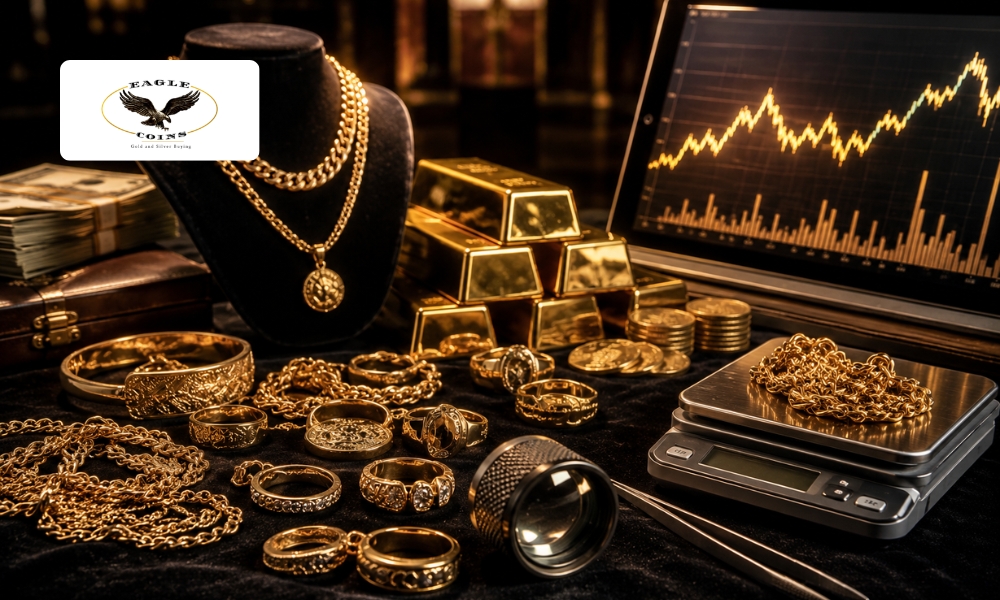

How Gold Prices Affect Cash for Old Jewelry Offers Today

Gold has always been considered one of the most valuable and stable assets throughout history. Whether it is inherited jewellery, broken chains, unused rings, or outdated accessories, many people are now opting to take instant cash for old jewellery pieces. However, one important aspect that directly impacts the amount sellers will receive is the current market price of gold.

With gold prices continuously fluctuating, understanding how those changes affect cash for jewelry offers can help sellers make smarter decisions when selling their valuables. Businesses like Eagle Coins Gold and Silver Coins make it easier for customers to understand the evaluation process while offering transparent evaluations for gold, silver, coins, jewelry, and luxury items. 

Why Gold Prices Change Regularly

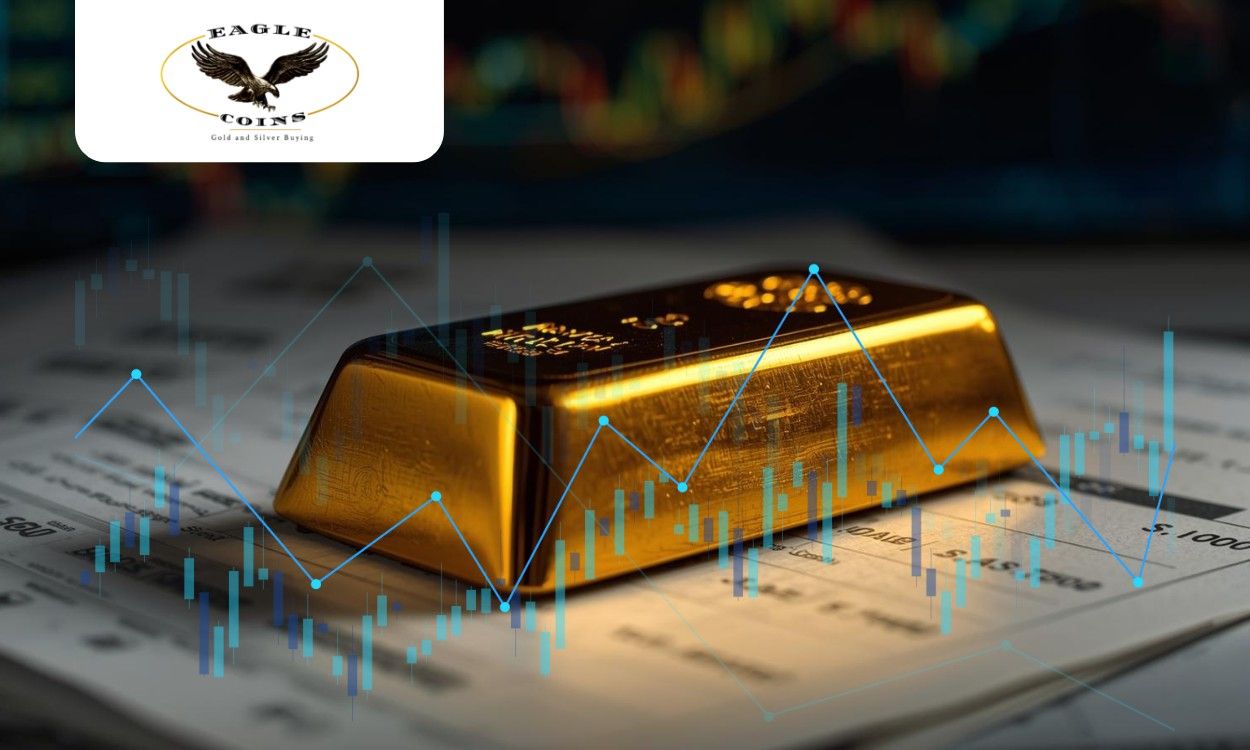
There are a number of economic and global factors that affect gold prices. Unlike fixed retail prices, gold’s value fluctuates daily, depending on activity in the international markets.

Some of the biggest influences include:

  • Inflation and economic uncertainty
  • Interest rates and currency values
  • Global supply and demand
  • Political and financial market conditions
  • Investor demand for precious metals

During periods of economic instability, many investors move toward gold because it is considered a reliable store of value. When there is higher demand, prices tend to rise, and this can affect offers for individuals who are seeking cash for old jewelry. 

In recent market reports on precious metals, it’s been revealed that the strength of gold demand can have a significant impact on buying activity and payouts in the local coin and jewelry market. 

How Jewelry Buyers Determine Value

There are several important factors professional buyers take into account before making an offer when they evaluate the jewelry that customers bring in.

Gold Purity

One of the biggest factors is purity. Gold jewelry is generally available in the following:

  • 10K gold
  • 14K gold
  • 18K gold
  • 22K gold
  • 24K gold

Higher purity generally means a higher gold content, which can increase the overall value.

Weight of the Jewelry

Since jewelry payouts are dependent on the overall weight of precious metal, gold buyers take jewelry very seriously. Gold still carries significant value, even if the jewelry is broken or damaged.

Current Market Price

The live market rate of gold is one of the most important components in determining a final payout. As gold prices increase, customers tend to get better deals on cash for jewelry.

Condition and Collectible Value

Some pieces may hold additional value because of craftsmanship, brand recognition, antique appeal, or collectible demand. Coins, luxury watches, and estate jewelry can sometimes be worth more than their metal content alone.

Why Many People Sell Jewelry During High Gold Markets

As gold values rise, more people decide to sell jewelry that they no longer wear. Old necklaces, mismatched earrings, broken bracelets, and inherited items are some of the items that can prove to be profitable assets during a robust gold market.

According to precious metals industry discussions and market activity reports, rising gold prices often create increased customer demand for local appraisal as well as selling services. 

That’s why many sellers need to keep an eye on the market before they choose to swap their valuables in exchange for cash for old jewelry.

The Importance of Transparent Appraisals

Trust and transparency are of utmost significance when trading valuables. A reputable gold and silver purchaser will explain:

  • How items are weighed
  • How purity is tested
  • How market pricing affects the offer
  • Whether collectible premiums apply

This enables customers to have a better sense of security during the process.

Eagle Coins Gold and Silver Coins specializes in accurate coin assessments and clear coin pricing for rare coins, gold, silver, bullion, jewelry, and luxury watches. Their services include purchasing broken jewellery, silverware, collectible coins, and estate goods while providing obligation-free evaluations

Jewelry Items That May Hold Value

Many people are surprised to discover how many household items may qualify for cash for jewelry opportunities.

Common examples include:

  • Broken gold chains
  • Old wedding rings
  • Outdated bracelets
  • Gold earrings without pairs
  • Scrap gold pieces
  • Sterling silver jewelry
  • Gold coins and bullion
  • Vintage jewelry collections
  • Estate jewelry
  • Luxury watches

Even products that are broken or have become obsolete can contain valuable precious metals.

Why Local Precious Metal Buyers Remain Important

Online selling is becoming more common, but there are still some customers who want to deal with local buyers because of the in-person evaluation process. Local businesses can offer sellers the ability to:

  • Ask questions directly
  • Receive immediate appraisals
  • Understand testing procedures
  • Get same-day offers
  • Avoid shipping valuables

Trust within the community is also an important factor. Most people are more at ease dealing with well-known companies with a history of purchasing gold, silver, coins, and jewelry.

Understanding Timing Before Selling

Timing can significantly affect the amount someone receives for cash for old jewelry. If the gold price is experiencing significant increases, waiting for good market conditions could lead to higher bids.

However, sellers should also take into consideration:

  • Personal financial needs
  • Market volatility
  • Current demand for precious metals
  • The condition and rarity of the jewelry

Many gold buyers opt for professional evaluations before deciding on a gold purchase due to the fast pace at which gold markets move.

Final Thoughts

Gold prices continue to play a major role in determining modern cash for jewelry offers. As market values rise and fall, the amount buyers can offer for gold jewelry changes as well. Purity, weight, and market value, plus collectibles value, are important concepts that sellers should be educated in making choices about valuables.

Whether someone is selling broken jewelry, inherited pieces, silver collections, or rare coins, working with experienced professionals can help simplify the process. Businesses specializing in precious metals and jewelry buying continue to provide valuable services for individuals looking to convert unused items into immediate financial value.

FAQs

  1. How do gold prices affect cash for old jewelry offers?

Gold prices directly impact how much buyers can offer for jewelry. When market gold prices increase, sellers often receive higher payouts for their gold items because the metal itself becomes more valuable.

  1. Can I get cash for jewelry that is broken or damaged?

Yes. Many buyers accept broken chains, single earrings, damaged rings, and scrap gold because the value is based mainly on the gold content and weight rather than appearance.

  1. How is the value of jewelry determined?

The value is usually based on several factors, including gold purity (karats), weight, current market gold prices, and whether the item has collectible or designer value.

  1. Is it better to sell jewelry when gold prices are high?

In many cases, yes. Higher gold market prices can lead to stronger offers for gold jewelry and precious metal items. Many sellers monitor market trends before deciding to sell.

  1. What types of items can be sold for cash for jewelry services?

Common items include gold necklaces, rings, bracelets, earrings, silver jewelry, estate jewelry, luxury watches, gold coins, and other precious metal items.

Best Time of Year to Sell Gold in Massachusetts

Gold has always been among the most reliable assets in terms of keeping wealth preserved, and more so in times of uncertainty in the economy. Having gold jewelry, coins, or bullion and knowing when to sell out can make or break your returns. Most individuals are obsessed with the question of where to sell gold, yet timing is the other factor that is important in maximizing value. The sellers in Massachusetts can identify the best deals as a result of a combination of the global price trend and the local market conditions.

By knowing these trends, you will be able to make strategic decisions instead of being forced to rush into a sale at an inappropriate time.


Explaining Gold Price Movement

There is a range of economic and geopolitical factors that make the prices of gold change every single day. These are the inflation rates, interest rates, currency fluctuations, and the uncertainty in the world. Inflation or an unstable economy is an economic condition that gives preference to gold as a safe-haven asset, which makes the demand and price of gold high.

Your last quote will be pegged to the international price of gold, even when you have conducted research on where to sell gold locally in Massachusetts. It is important to note that it is not only as crucial to be aware of the international financial trends as it is to locate a local buyer that is reliable.

Moreover, the stock prices of gold tend to be negatively associated with the power of the U.S. dollar. In the event of a weak dollar, the cost of gold will go up, and it will be the appropriate moment to sell. A high dollar, on the other hand, can lower the prices of gold, which means you are likely to lose out on returns.


Best Time of Year to Sell Gold

Not only is the question of where to sell gold important, but you should also know when to sell it. Although the price of gold may go up suddenly, the trends over time always show that certain times of the year are usually more conducive to the sellers.


Late Summer/Early Fall (August-October)

This time is also considered as one of the most profitable periods to sell gold. During these months, global demand is very high owing to major festivals and wedding seasons in such nations as India and China, where gold plays a prime cultural and financial role. When considering the option of selling gold, you will probably find more attractive prices and better bargaining at such a period.


January-February (beginning of the year)

The other good sales window is at the beginning of the year. Rebalancing the portfolios and adding to gold is a common activity by investors after the holiday season. This new activity in investment can start a price push.

The sale at this time can be especially beneficial when the prices fell down at the end of last year. It is also a period when a large number of buyers are in need of inventory.


Periods of Low Returns to Selling

Spring Months (April to June)

The demand for gold is expected to level off or decrease a little during late spring and early summer. Prices can either stagnate or decline without good drivers in the world market. You are still able to sell throughout this period, but you might not be able to get the utmost return.


Strong Economic Periods

As the stock markets are doing well and the interest rates are on the increase, people stop paying attention to gold. This minimizes the demand and may result in a reduction in price. When making decisions on the location of selling gold, it is prudent to keep track of these macroeconomic changes before you make the plunge.


Local Forces that Affect Gold Selling in Massachusetts

There are also local factors in Massachusetts, like local price trends other than the global price trends, which will determine your end payout.

  1. Tourist Demand and Season
  2. Competition Among Buyers
  3. Economic Environment in the Region


Real-Life Advice on How to Get the Most Out of Your Gold

The time to sell is a good factor, but it is not the only part of the equation. In order to achieve the highest possible return, one should consider the following strategies:


  1. Track Gold Prices Regularly
  2. Get Multiple Quotes
  3. Understand Your Gold’s Value
  4. Choose Reputable Buyers


Reasons Why Timing and Buyer Selection Go Hand in Hand

Most sellers do not appreciate the significant role of selection of the appropriate buyer. Even in the best times of the year to make high prices, the wrong selection of where to sell gold will result in less payout. On the one hand, a credible purchaser will provide competitive prices corresponding to the situation in the market.

The secret of maximizing the value of your gold is to combine the right timing and the right buyer. In this manner, you are assured of good market rates as well as good evaluation procedures.


Final Thoughts

Selling your gold in Massachusetts isn’t just about finding a convenient buyer; you also need to have a good understanding of the market trends, identify seasonal opportunities, and carefully evaluate your options. The most favorable period to sell is generally considered to be the late summer to early fall period and the beginning of the year. However, if you are informed about the economic conditions, it will give you an added advantage. 

It is equally important to know where to sell gold if you want to earn the best value for it. Strategies such as comparing different offers, choosing reputable buyers, and timing your sale accordingly can help you increase your returns. The right approach will help in making your gold sale a rewarding decision rather than a rushed transaction.


FAQs

1. When is the best time of year to sell gold in Massachusetts?

Typically, from late summer to early fall, or the months from August to October, and early in the year, the period from January to February is considered the best time. At this time, the demand is high and so are the prices. 

2. How do I choose where to sell gold?

When deciding where to sell your gold, you should start by comparing different buyers, check their reviews, and make sure that they offer transparent pricing based on the current gold rates. 

3. Do gold prices change frequently?

Yes, they do. The prices of gold are dependent on the global economic conditions; this makes it important to monitor the pricing trends before you sell it. 

4. Is it better to sell gold during economic uncertainty?

Absolutely. It is in such times that the prices of gold generally increase, since the investors turn to it as a safe-haven asset. 

5. Can I negotiate with gold buyers?

In most cases, you can. If it is a period of high demand, most buyers would be willing to offer you higher rates than what is prevailing in the market. Choosing where you sell your gold can make all the difference. 

Understanding the Role of Buyers of Gold and Silver: A Complete Guide for Sellers

Gold and silver have always been valued as signs of wealth, money, stability, and financial stability. These precious metals are still highly valuable in the current market, whether in coins, jewelry, or in the form of bullion. To those individuals who want to sell their gold and silver, it is important to work with reputable buyers of gold and silver to make sure that they can have a transparent deal.

If you have ever thought about selling gold or silver products, it can be helpful to know how this process works so that you make wise choices. At Eagle Coins Gold and Silver Buying, the sellers feel at ease with the procedure, as they are taken through all processes, from evaluation to the final payment.


Who Are Buyers of Gold and Silver?

Buyers of gold and silver are professionals or businesses who buy precious metal items from individuals. These items may include gold and silver coins, bullion bars, jewelry (broken or intact), sterling silver items, rare and collectible coins. 

These buyers consider the purity, weight, and price of the metal in the market to determine a fair price.


Why People Sell Gold and Silver

Individuals use various reasons as to why they sell their precious metals:

  • Financial Needs: Gold and silver are convertible to cash within a very short period so they are an easy choice that has been used in cases of financial crisis.
  • Upgrading Investments: Some sellers will be willing to sell aging products because they decide to get new products or to diversify their portfolio.
  • Decluttering: Jewels or other inherited items, which are not in use, can be changed into something valuable instead of lying idle.
  • Market Timing: Many individuals take this advantage when the cost of metal is high so that they can sell at a higher price.

Through dealings with well-established buyers of gold and silver, you will be assured of the correct price, as per the current market price.


How the Evaluation Process Works

Your items are taken through an organized assessment system when you visit a professional buyer, such as Eagle Coins Gold and Silver Buying.

  1. Testing for Purity: Gold and silver are put through tests to determine the level of purity. With gold, this could include checking the karat, such as 10K, 14K, 18K, or 24K.
  2. Weighing the Items: Their weight is determined using very accurate scales, allowing you to estimate the value of your items in accordance with the prevailing market prices.
  3. Market Price Assessment: Buyers refer to real-time gold and silver rates to calculate the value of your items.
  4. Final Offer: After all factors have been put into consideration, a transparent offer is made to the seller.

This process ensures that sellers know exactly how their items are valued.


Types of Gold and Silver Items Accepted

Professional buyers of gold and silver usually accept a very wide range of items, including:

Gold Items


Silver Items

At Eagle Coins Gold and Silver Buying, common and unique items are considered with attention to detail, which gives the seller a fair value.


Popular Brands and Coin Types

Some brands and types of coins are particularly popular in the precious metals market because of their purity and recognition.

Gold Coins

Silver Coins

  • American Silver Eagle
  • Canadian Silver Maple Leaf
  • Morgan Silver Dollar

These are well-known coins and may have more value than the amount of metal in them because of their collectability.


Benefits of Working with Trusted Buyers

There are many benefits to selecting reputable buyers of gold and silver:

  • Transparent Pricing: Your professional buyers clarify the process of evaluating your items and make the process clear.
  • Fair Market Value: The prices will be calculated according to the existing market rates, and you will get confidence in the offer.
  • Quick Transactions: This process is usually quick, and you can receive your money without wasting any more time.
  • Secure Environment: Trusted buyers provide a secure and professional environment for conducting transactions.

Eagle Coins Gold and Silver Buying focuses on the trust and transparency of its customers, which makes it a bit more comfortable for customers to feel confident in their choices.


Tips for First-Time Sellers

If you’re new to selling gold and silver, here are some tips that can be helpful:

  • Know Your Items: When visiting a buyer, understand what kind of gold or silver you have and what its purity is.
  • Check Market Prices: It is always a good idea to have a basic idea of what current gold and silver prices are to evaluate offers.
  • Bring Identification: The majority of buyers need a valid ID to complete transactions.
  • Ask Questions: Feel free to inquire about how your items are being evaluated.

These are some of the steps that can make you feel more prepared and make the selling process easier.


The Importance of Professional Appraisal

Not everything that contains gold and silver is appreciated solely for its metal content. Certain items, especially coins, can have an additional collector value.

Professional appraisal services can help:

  • Identify rare coins
  • Establish historical significance
  • Maximize the value of your items

At Eagle Coins Gold and Silver Buying, the intrinsic and collectible value of the items is determined by experienced professionals, and thereby, the pricing is correct.


When Is the Best Time to Sell?

The prices of gold and silver are subject to change depending on the market conditions. Although there is no perfect time to sell, most people tend to sell when prices are high or when they are in immediate need of cash.

It is always a good idea to keep an eye on the market and consult experienced buyers of gold and silver before determining the right time for your situation.


FAQs

  1. Who are buyers of gold and silver?

Gold and silver buyers are businesses or professional buyers of gold and silver items such as jewelry, coins, and bullions depending on their purity, weight, and current market value.


  1. What items can I sell to buyers of gold and silver?

You are allowed to sell gold and silver jewelry, coins, silver bars, silverware, and even scrap and broken ones as long as they are made of precious metals.


  1. How do buyers determine the value of gold and silver?

They will evaluate the purity, weigh the items, and use the prevailing market prices to offer a fair price for your valuables.


  1. Do branded coins have more value than regular gold or silver?

Yes, there might be some additional value added to common coins such as American Eagles or Canadian Maple Leafs because of their recognition, and they can be collected.


  1. Should we sell gold and silver to a professional buyer?

Yes, when collaborating with such reliable purchasers as Eagle Coins Gold and Silver Buying, the process of the transaction is secure, transparent, and fair.

Is Gold Plated Real Gold? What It Actually Means

Walk into almost any jewelry store and you will see pieces labeled “gold plated.” Necklaces, bracelets, watches, rings. They look bright, shiny, and honestly not that different from solid gold at first glance. Which leads to the common question people ask: is gold plated real gold?

The short answer is yes and no. There is real gold involved, but not in the way many people assume. The gold layer is extremely thin. Sometimes so thin that its value is mostly cosmetic rather than financial.

Let’s slow down and unpack what gold plated actually means.


What Gold Plated Really Is

Gold plated jewelry is made by covering a base metal with a thin layer of gold. That base metal might be brass, copper, stainless steel, or another inexpensive alloy.

Think of it like painting a wall. The paint is real, but the wall underneath is something else entirely. The gold layer is applied using an electroplating process where electricity bonds microscopic gold particles to the surface of the metal.

It looks like gold. It even contains gold.

But the amount of gold is very small.

Often the plating thickness is measured in microns. A micron is one thousandth of a millimeter. That tells you how thin the layer really is.


Why Gold Plated Jewelry Exists

There is a practical reason for gold plating. Solid gold jewelry is expensive. Gold plated pieces allow people to enjoy the look of gold without paying the price of solid gold.

For everyday fashion jewelry, that works perfectly fine.

Someone might buy a gold plated necklace for daily wear or a trendy bracelet that may go out of style in a year anyway. The goal is appearance, not long term investment.

And honestly, many gold plated pieces look beautiful when new.


The Difference Between Gold Plated and Solid Gold

The biggest difference comes down to gold content.

Solid gold jewelry contains a significant percentage of gold throughout the entire piece. When you see stamps like:

  • 10K
  • 14K
  • 18K

Those marks indicate the gold purity of the entire item.

Gold plated jewelry usually has markings such as:

  • GP
  • GEP
  • Gold plated

These marks signal that only the outer surface contains gold.

Once the plating wears down, the base metal underneath becomes visible.


Does Gold Plating Wear Off

Yes, eventually it does.

Daily wear slowly removes the thin gold layer. Friction from clothing, skin oils, lotions, and even water exposure contribute to this.

Some pieces hold up longer than others. A thicker plating can last a few years. Very thin plating might fade in months.

You may notice color changes around edges or high contact areas like clasps and rings.

That is normal for plated jewelry.


Is Gold Plated Jewelry Valuable

This is where expectations sometimes collide with reality.

Because the gold layer is so thin, the actual gold value in a plated item is usually extremely small. In many cases the gold content is worth less than the effort required to extract it.

So from a precious metal standpoint, gold plated pieces rarely carry significant melt value.

People often discover this when they start asking is gold plated real gold while researching resale options.

The gold is real, but the quantity is minimal.


Gold Filled Is Slightly Different

While discussing plating, it helps to mention gold filled jewelry.

Gold filled pieces contain a thicker layer of gold bonded to the base metal. The gold layer is mechanically attached rather than electroplated.

This gives it better durability and a higher gold percentage than simple plating.

Still, it is not the same as solid gold.

Understanding these differences helps avoid confusion when evaluating jewelry.


How Jewelers Identify Gold Plated Pieces

Professionals rely on several methods to identify metal content.

They check:

  • Hallmarks and stamps
  • Surface wear patterns
  • Weight and density
  • Chemical or electronic testing

At Eagle Coins Gold and Silver Buying jewelry is examined carefully to determine whether a piece is solid gold, gold filled, or gold plated before any valuation discussion begins.

Testing removes guesswork.

Sometimes a piece that looks like costume jewelry turns out to be real gold. Other times the opposite happens.

It goes both ways.


A Simple Way to Think About It

Imagine a chocolate covered candy.

The chocolate coating might be delicious, but most of the candy is still the center inside. Gold plated jewelry works in a similar way. The outside layer is gold, but the core metal underneath is something else.

That analogy helps people understand why plating affects long term value.

Appearance and intrinsic metal value are not the same thing.


When Gold Plated Jewelry Still Makes Sense

Despite its limited metal value, gold plated jewelry still has its place.

It allows people to:

  • Experiment with style
  • Wear bold designs at lower cost
  • Enjoy the look of gold without large investment

For fashion purposes, it works perfectly well.

Just approach it with realistic expectations.


Conclusion

So, is gold plated real gold? Technically yes, because a thin layer of real gold is applied to the surface. But the quantity of gold is extremely small, and the base metal underneath makes up most of the item.

Gold plating provides the appearance of gold rather than the long term value associated with solid gold jewelry. Over time the plating can wear away, revealing the base metal beneath.

If you are unsure about the metal content of a piece, professional evaluation provides the clearest answer. Understanding the difference between plated jewelry and solid gold helps you make informed decisions about both purchasing and resale value.

Are Gold and Silver Sales Taxable? Federal vs State Tax Considerations

Diversification and wealth preservation are always been strategies of investing in precious metals such as gold and silver. Whether you’re selling inherited bullion, coins gathered over years, or assets you accumulated during market peaks, a common question arises: ‘Are gold and silver sales taxable?’ Learning about the federal and state taxes, such as how to sell gold and silver tax-free as much as possible, would allow you to keep more of your hard-earned money and avoid unexpected tax liabilities. 


Federal Taxation: Capital Gains on Gold and Silver

On the federal level, selling gold and silver is usually taxed under the capital gains tax if you make a profit during the sale. The IRS treated precious metals, including bullion, bars, and certain coins, as collectibles for tax purposes. This classification can have specific implications: 


  1. Short-Term vs. Long-Term Capital Gains

Any gain from a sale is usually taxed as short-term capital gains, at ordinary income tax rates, if you held your precious metals for one year or less. These rates can be higher depending on your total taxable income. 

The gain is considered a long-term capital gain if you held the metals for more than one year. However, the collectible category has a limit on the long-term rate. 


  1. Long-Term Capital Gains Rate for Collectibles

Unlike standard long-term capital gains, which may be taxed at preferred rates (0%, 15%, or 20%), the IRS sets a maximum 28% tax rate on profits from selling collectibles, including gold and silver. This implies that even long-term gains may be taxed more heavily compared to other investment assets like stocks or bonds. 


  1. Calculating Your Gain

To calculate your taxable income, take the difference between the amount you paid when you purchased the metals, including purchase fees, and the amount you receive when selling the metals. This is the difference between your taxable capital gain (or loss).


How to Sell Gold and Silver Tax-Free (Legitimately)

Although most of the sales are taxable, there are valid strategies that can result in non-taxable or low-taxed situations. Understanding these pathways can help you to plan ahead.


  1. Selling at a Loss

When the fair market value of your gold or silver has fallen below your cost basis, using the loss to sell usually does not form taxable income. There are also cases when capital losses may be applied towards other capital gains to cut down the tax bill.


  1. Utilizing Tax-Advantaged Accounts

When you keep gold or silver in some of the self-directed IRAs (Individual Retirement Accounts), you will be able to sell the metals without tax implications. With such instances, the tax considerations will be based on the regulations of the retirement account, such as the distribution regulations, and future tax brackets.

You should always consult a financial advisor or tax professional before transferring physical assets into a retirement account, as there are certain custodial and eligibility rules.


  1. Gifting Precious Metals

When you give out gold or silver to a relative or friend, it might not incur any tax at all at the time you make the gift – again, based on the value and the limit on the amount of substantial gifts the taxpayer can make each year. The cost basis of the recipient is, however, usually your original cost basis, and this could have an impact on the future tax liabilities of the recipient once he or she eventually sells.


  1. Selling Within the Same Tax Year as Purchase

Even though technically, selling precious metals shortly after their purchase can leave one with a loss or minimal profit, this does not necessarily make it tax-free. There is, however, no taxable event where no gain is obtained. Scheduling of sales based on cost basis and market value may have an impact on the tax liabilities.

  • Note: None of these strategies should be undertaken without professional tax guidance, especially since tax laws can change, and misinterpretation can lead to penalties.


State Tax Considerations on Precious Metals

In addition to federal tax rules, most states have a sales or use tax regulation on the purchase or sale of precious metals.


  1. Sales Tax on Precious Metals

Some states impose sales tax on the purchase of gold or silver, while others exempt precious metals under special conditions. For example, investment-grade coins or bullion are not taxed in a number of states. The regulations are, however, diverse in states.

In the State of Texas, for example, certain bullion and coins can be exempted from sales tax offered as an investment. When you are selling precious metals to an investor such as Eagle Coins Gold and Silver Buying, you will typically not pay any sales tax on the purchase, but always check the existing laws in your state.


  1. Use Tax

In certain cases, if you purchase out of state and bring the metals to your home state, then the ‘use tax’ may be imposed. This is usually similar to the state’s sales tax, and it is supposed to make the taxes on interstate or remote purchases equal.


  1. Reporting Requirements

Even if your state does not tax precious metal sales, you may still be required to report capital gains or losses on your state income tax return if your state has an income tax. States without income tax (such as Texas) do not tax capital gains at the state level, though federal taxes still apply.


FAQs

  1. Do I have to pay federal taxes when I sell gold or silver?

Yes, if you make a profit, the IRS typically treats it as a capital gain and taxes it accordingly.


  1. What is the capital gains tax rate on gold and silver?

Long-term gains on precious metals are generally taxed at a maximum rate of 28% because they are classified as collectibles.


  1. How can I determine if I owe taxes on my sale?

You subtract your original purchase price (cost basis) from the selling price to calculate your taxable gain or loss.


  1. Is it possible to learn how to sell gold and silver tax-free?

In certain situations, such as selling at a loss or using tax-advantaged accounts, you may reduce or avoid immediate taxes, depending on your circumstances.


  1. Are gold and silver sales taxable at the state level?

It depends on your state’s laws; some states tax capital gains, while others do not have state income tax at all.

Mixing Silver and Gold Jewelry: Modern Styling Guide

For years, fashion rules suggested that you were meant to select a single metal and stick to it. Gold or silver, but never both. However, with time, modern jewelry styling has evolved, and today the answer to the question that everyone is talking about is: ‘Can you mix silver and gold jewelry?’ is a confident yes. Mixing metals is not only acceptable, but it is stylish, versatile, and expressive. 

Understanding how to blend silver and gold jewelry can enhance your look, whether you’re layering necklaces, stacking rings, or combining heirloom pieces. This guide will help you explore styling tips, balance techniques, and how quality pieces, such as bullion, coins, or fine jewelry, can be used in your overall collection. 

Why Mixing Metals Works?

However, modern styling celebrates contrast and dimension. Combining silver and gold provides depth to your look and allows you to highlight different tones in your outfit and skin tone. 

Gold tends to be warm and rich, while silver brings brightness and cool elegance. Combined in a well-thought-out manner, they create a balanced, modern aesthetic that feels intentional rather than accidental. 

So if you’re still wondering, can you mix silver and gold jewelry? The answer lies in how you style it.

  1. Start with a Unifying Piece

Among these, the simplest method of successfully combining the metals is to base your look on a piece that already has a combination of the elements of both gold and silver. The metals together naturally blend the metals of bracelets, two-tone watches, or pendants to make the rest of your jewelry a nice fit. 

In case you do not have a two-tone item, choose one kind of dominant metal and the other one as a complement. For example, use gold hoop earrings with a small silver bracelet, or put a small pendant of gold over a chain of silver.

  1. Layer with Intention

When combining metals, layering is one of the most effective styling techniques. Here are a few ways to do it: 

  • Necklaces: Textures in both metals combine lengths of chains to add volume.
  • Bracelets: Stack bangles or link bracelets, alternating between gold and silver. 
  • Rings: Use thin gold and silver bands on the various fingers to do a thin blend.

The key is balance. It is best not to stack up a significant amount of metal on one side of your body and isolate the other. Cover with them uniformly so as to present a smooth look.

  1. Consider Your Skin Tone, But Don’t Limit Yourself

Traditionally, it is believed that gold goes with warmer skin tones, whereas silver goes with cooler skin tones. Although that may be an effective point of departure, it is not a hard and fast rule. A lot of individuals discover that a combination of both metals makes them look better in spite of the undertone.

When you are first trying it out, you can have one metal on your face (earrings) and the other on your arm (bracelets or rings). This will enable you to view the most flattering and yet adopt the mixed-metal trend.

  1. Match the Occasion

For casual outings, playful layering and bold contrasts work beautifully. For formal events, aim for a more refined approach with delicate pieces and thoughtful coordination.

The setting is also another consideration that can be made when considering the question: Can you mix silver and gold jewelry? Playful layering and dramatic contrast are the perfect choices when playing around on informal occasions. When it comes to formal occasions, be more sophisticated and use elegant pieces and considerate planning.

For example:

  • Business-style clothes are compatible with minimalist mixed-metal accents.
  • Evening wear shines with layered necklaces or stacked rings that incorporate both tones.
  • Everyday outfits can handle more creative freedom.

Its ability to mix metals such that it can be used almost in any setup, should it be styled to suit any occasion.

  1. Blend Vintage and Modern Pieces

Most individuals inherit gold or silver jewels as a gift from the family, and later on, they acquire new jewels as time goes by. The blending of metals in the mix enables you to still wear sentimental pieces with the current accessories without looking out of place.

The heirloom rings made of gold can be placed comfortably next to the smooth silver rings. Antique silver pendants may be stacked with modern-day gold chains. Instead of picking one valuable item over another, mixing metals will allow you to have it all on a single occasion.

  1. Don’t Forget About Value

Although styling does matter, there is also the inherent value of gold and silver jewelry. In addition to being used as fashion, precious metals can be used as a long-term asset. When you finally choose to change or sell the products you are not using currently, you can deal with a reputable buyer to make sure you get the right price.

At Eagle Coins Gold and Silver Buying, the customers come in with broken chains, and as far as bullion coins and estate jewelry. Knowing the market value of gold and silver makes you make a wise decision, whether you’re investing, selling, or updating your gold and silver collection.

Common Mistakes to Avoid

The following are some of the easy tips to follow when mixing metals:

  • Do not overload your appearance with many heavy accessories at once.
  • Keep a proportional balance of gold and silver 
  • Coordinate with other accessories like belts, handbags, or watches.
  • Make sure your jewelry is clean and polished, as dull metals can make mixing appear unintentional.

Minor changes could contribute to a harmonious style in a significant way.

FAQs

  1. Can you mix silver and gold jewelry in the same outfit?

Yes, you can absolutely mix silver and gold jewelry in one outfit. When styled with balance and intention, combining both metals creates a modern, layered look that feels stylish rather than mismatched.

  1. What is the easiest way to combine gold and silver pieces?

A simple way to start is by wearing a two-tone piece that already blends both metals. You can also layer delicate necklaces, stack rings, or alternate bracelets in gold and silver to create a cohesive look.

  1. Does mixing metals work for formal occasions?

Yes, mixed metals can look elegant at formal events when you keep the pieces minimal and refined. Choosing sleek, well-coordinated jewelry helps maintain a polished and sophisticated appearance.

  1. Will mixing gold and silver clash with my skin tone?

Not at all, in many cases, mixing both metals can complement your natural undertones. You can experiment by keeping one metal closer to your face and using the other as an accent to see what feels most flattering.

  1. Is mixed-metal jewelry just a trend or a timeless style?

While it’s currently popular, mixing metals has evolved into a timeless styling choice. Because both gold and silver are classic materials, wearing them together offers long-term versatility in your jewelry collection.

How is Gold Made? Exploring the Origins & Formation

Gold is considered one of the most prized and valuable metals in the world, and this didn’t just happen recently. It has been considered valuable for thousands of years for its exceptional corrosion resistance, electricity conduction, and a luster that never fades. Most modern economies are dependent on gold for their currency reserves, jewelry, electronics, aerospace components, and medical devices.

But why is this metal so valued? To understand this, we need to understand the origins and also know how gold is made in detail. Read on as we uncover everything, starting from the cosmic origins of gold to the refining techniques used for finally making pure bullion and investment-grade bars.


The Cosmic Origins of Gold

Gold existed as an element long before even the Earth was formed. So then how is gold made? The answer to this question is that its origin begins in deep space. The formation of this metal is a result of violent astrophysical events, mainly the supernova explosions and neutron star collisions. These events release extremely high temperatures and neutron densities that allow the forging of heavy elements through a process called rapid neutron capture, or the r-process.

Now, once this gold was created, the atoms traveled in space as cosmic dust and later became a part of the solar nebula that finally resulted in the formation of the Sun, planets, and finally Earth. So, it wouldn’t be wrong to say that the gold wedding band or earrings that you are wearing right now actually predate the existence of humanity and even our home, the Earth.


Gold Formation Within the Earth

When the Earth was formed, roughly 4.5 billion years ago, the heaviest elements, including gold, sank to its molten core. The gold that is found on the surface of Earth might have arrived later, perhaps through meteor bombardment during the Late Heavy Bombardment period, which happened around 3.9 billion years ago. Due to this, gold became more accessible to us, rather than staying locked away in the core.

Now, according to the geological terms, how gold is made inside the Earth’s crust is connected to hydrothermal and magmatic processes. The formation of gold as veins or deposits is related to the following:

  • Hydrothermal activity

The minerals found deep underground are dissolved in superheated water, which then carries them upwards through cracks and faults. Away from the Earth’s core, this water begins to cool, and gold precipitates, forming veins with quartz and sulfide minerals.

  • Magmatic processes

The magma chamber holds dissolved metals. As the magma cools, the dissolved metals crystallize into ores.

  • Sedimentary and placer processes

Gold is present within some rocks; through erosion and weathering, these break down. Gold, being a non-reactive metal, is accumulated in streambeds and alluvial deposits. This is also known as placer deposits.

These geological processes are responsible for gold being found in quartz veins, riverbeds, and sedimentary layers in mining regions.


Mining Methods Used to Extract Gold

Now that we have understood the formation process, the next step is mining. Mining means recovering the metal once the gold deposits have been located. Generally, this is done through commercial techniques, and the most common methods include:

Open-Pit Mining

Suitable and performed when the ore files are present near the surface and are vertically shallow but horizontally expansive. Large haul trucks, excavators, and explosives are used for removing rocks to reach the ore-rich material.

Underground Mining

Used in case the veins are deeper. Miners make use of shafts, tunnels, and drilling to extract the ore, causing minimal disturbance on the surface, unlike open pits.

Placer Mining

The primary target is the gold particles found in riverbeds and sediment layers. The most common historical as well as modern placer techniques are panning, sluicing, and dredging. Through these methods, however, ores containing a small amount of gold can only be accessed. This often measures around grams per ton of rock, making refining an essential part.


Modern Refining: How Ore Becomes Pure Gold

Getting to understand how gold is made into pure bullion involves knowing metallurgical processes in depth. After the mining process is completed, the ore is crushed, ground, and milled to separate the gold from other material, and then the extraction process begins.

  1. Cyanidation

It is one of the most widely used industrial techniques to recover gold. The ground ore is mixed in a solution of cyanide, dissolving the gold into a stable complex. Finally, through carbon and zinc precipitation, the gold is recovered from the solution.

  1. Flotation

For ores bearing sulfide, a different approach is used, mixing with air and chemicals. This causes the gold-bearing minerals to float, and they are separated.

  1. Gravity Concentration

This method takes advantage of gold’s high density for separating it from lighter minerals present in the ores. This is done by shaking tables, centrifugal devices, or sluice systems. Once the gold is extracted, it needs to be purified for achieving the commercially desired purity standard, either 99.5% or 99.99%.


Refining Techniques Include:

  • Miller process (chlorine gas removes impurities)
  • Wohlwill process (electrolytic refining produces 99.99% purity)
  • Fire assay (used mainly for testing purity)

Once the gold has been refined according to the required standards, it is made into the final products. This means they would be cast into bars, coins, nuggets, or granules. This depends on the downstream industry.


Industrial and Scientific Uses for Refined Gold

Now that we have discussed how gold is made, it will help you understand better why it is so highly valued. The value of gold goes far ahead of the aesthetics of jewelry and investment in the form of bullion. It also enables critical technologies that can benefit from this metal’s unique characteristics:

  • Conducts electricity with minimal resistance
  • Resists corrosion better than most metals
  • Bondable at the micro-scale for electronics

Due to these properties, gold is primarily used in semiconductors, aerospace connectors, dental components, medical implants, fiber optic systems, and computer processors. Gold offers a combination of stability, biocompatibility, and conductivity that makes it valuable and relevant even in an era that is dominated by silicon and rare earth metals.

Why Gold Remains Economically and Culturally Important?

The economic role of gold is reinforced by its cosmic scarcity, geological rarity, industrial utility, and cultural symbolism. Investors use gold reserves and bullion as a means of hedging against inflation and currency volatility. Central banks of most countries also store gold in tons as refined bars, whereas private buyers accumulate gold in the form of coins for wealth preservation.

So, when someone asks how gold is made, the complete answer would span across astrophysics, geology, mining engineering, and metallurgy. A very few materials have such an origin story matched with a lasting value that exists across eras.


FAQs

  • How is gold made in nature?

    The formation of gold starts from cosmic nucleosynthesis in supernovae and neutron star mergers. When this reaches the Earth, hydrothermal and magmatic processes concentrate it into deposits that can be mined.


  • How is gold made into jewelry?

    Refined 24k gold is alloyed with metals like copper and silver. This improves its hardness, and then they are cast, forged, or machined into jewelry.


  • How is gold made pure?

    Gold is refined through various processes, such as cyanidation or the Wohlwill and Miller methods. After this process, the gold achieved would be of 99.99% purity.


  • How is gold made into bars and coins?

    Once the refined gold is achieved, it is molten and poured into molds for making bars or rolled and stamped to make coins. The end product is made according to a strict weight and purity standard.


  • Can gold be artificially made?

    Technically, yes, through nuclear transmutation in particle accelerators, but the cost exceeds the value of the gold produced, making it impractical.

Is Gold a Good Investment?

As the markets fluctuate and economic uncertainty arises, one question that often comes up among investors and savers is: Is gold a good investment? Gold has held a special place in finance and culture as a store of value, a protection against inflation, and a safe haven during turbulent times for centuries. In this guide, you’ll get to know the historical background and the contemporary factors that define the role of gold in an investment portfolio. 


A Brief History of Gold as Value

Gold has an appeal that dates back thousands of years. It served as money in ancient civilizations, prized for its beauty and rarity, and was valued for its durability; gold never corrodes or tarnishes and is therefore perfect for long-term preservation. With time, gold became associated with wealth, power, and stability. 

Today, gold is still maintained in central banks, and investors buy physical gold, gold ETFs, and gold-related assets as a part of diversified portfolios. Such traditions show that gold is still not just a commodity for many individuals but also a trusted store of value. 


Why People Ask: “Is Gold a Good Investment?”

There is no interest, dividends, or earnings that gold generates, as is the case with stocks and bonds. So why do people invest in it?

Here are the main reasons:

  • Hedge Against Inflation: Gold has had a long reputation of being able to retain its purchasing power in the long-term, or particularly during inflationary periods, when paper currency values can diminish. 
  • Economic Uncertainty: Gold tends to gain or maintain its value during recessions, geopolitical disturbances, or market volatility when investors turn to less risky investments.
  • Diversification: Gold has the potential to perform differently from traditional financial markets, thus making it an effective diversifier within a broader investment strategy. 

These characteristics and the comparison of the behavior of gold with other classes of assets are useful before making a decision whether to invest in gold or not.


Gold vs. Other Investments

Although gold does not produce income such as stocks or bonds, its value is often counter-cyclical, which means that when other assets are falling, its price will tend to rise. For example, gold tends to perform better than equities during a market downturn as investors perceive it as a secure store of value. 

However, this does not mean that gold should be used in place of other investments. According to most financial planners, a diversified portfolio should only have a part of gold. This is a balanced approach that can be used to enhance stability without compromising growth potential from traditional investments. 


READ MORE: Gold vs Silver Investment: Key Differences


Gold’s Behavior in Inflationary Times

One of the most celebrated functions of gold is the ability to retain value in an inflationary economy. When prices rise and the purchasing power of paper money goes down, gold often retains or increases its value because its supply is limited and demand increases. 

The question, which is, Is gold a good investment, is especially relevant during the period of rising inflation. Due to an unexpected increase in the cost of living, investors tend to resort to gold to protect wealth. However, it’s important to remember that gold might be volatile in the short term based on market sentiment and expectations of the interest rate. 


Different Ways to Invest in Gold

Investing in gold can take place in many ways and each of them has their own characteristics:


  1. Physical Gold:


  1. Gold ETFs and Funds:

  • These are exchange-traded funds that track the price of gold
  • They provide exposure without needing physical storage


  1. Gold Mining Stocks:

  • These are stocks of companies that mine gold 
  • They can offer leverage to gold prices, but also have company-specific risks 


  1. Jewelry:

  • This is not a pure investment because of craftsmanship and retail markups, but still a way to hold gold. 

The possession of physical gold, not just paper assets, provides peace of mind and tangible control over investment for many people. 


What Drives the Price of Gold?

To find out the answer to ‘Is gold a good investment’, it is beneficial to understand what factors affect the price of gold. Its key drivers include: 

  • Global economic conditions: During uncertainty, the demand for gold increases
  • Inflation rates: An increase in inflation has the potential to enhance the appeal of gold. 
  • Currency strength: A weaker dollar tends to raise the prices of gold
  • Interest rates: When interest rates are low, it makes gold more appealing since it has no yield.
  • Supply and demand: Supply is low, and the demand is rising among investors and central banks, affecting the price.

These factors can interplay in complicated forms, leading to periods of growth and fluctuation in the price of gold. 


Pros and Cons of Investing in Gold

Gold has both advantages and disadvantages like any other investment.

Pros:

  • Long-term store of value
  • Protection against inflation and uncertainty
  • Diversification benefits

Cons:

  • No revenue earning like dividends or interest
  • Storage and insurance costs for physical gold
  • Price may be subject to short-term market sentiment

The knowledge of both is used to determine how much gold, if any, should be a part of their overall strategy to a certain extent.


Why Many Choose Trusted Precious Metal Buyers?

Investing in physical gold requires sources that are trusted and transparent in pricing. Established precious metal buyers ensure authenticity, purity, and valuations at a reasonable price.

To individuals who are exploring gold ownership, businesses like Eagle Coins Gold and Silver Buying can provide insight into existing market pricing and guide people in making investment decisions. They are skilled and their knowledge can be of great help, especially to new investors who need an understanding of the dynamics of market and gold acquisition. 

FAQs

  1. Is gold a good investment for beginners?

Yes, gold can be a good starting investment for beginners because it helps preserve value and diversify a portfolio. It is often seen as a safer option during economic uncertainty.


  1. Does gold increase in value over time?

Gold has historically maintained its value over the long term, especially during inflation or market instability. While prices may fluctuate short term, it is often used for long-term wealth protection.


  1. Is physical gold better than paper gold?

Physical gold offers direct ownership and tangible security, while paper gold provides convenience and liquidity. The better option depends on your investment goals and risk preference.


  1. How much of my portfolio should be in gold?

Many investors allocate a small percentage of their portfolio to gold for diversification. The exact amount depends on your financial goals, risk tolerance, and long-term strategy.


  1. When is the best time to invest in gold?

There is no perfect time to buy gold, but it is commonly purchased during inflationary periods or economic uncertainty. Long-term investors often focus on gradual accumulation rather than timing the market.

Gold vs Silver Investment: Key Differences

Gold and silver have long been trusted as stores of value and tools for preserving wealth in terms of precious metals. The question that keeps being posed by investors is which metal offers better potential, stability, and flexibility. It is essential to understand the major differences between gold and silver before making decisions about investing, especially in today’s dynamic economic landscape. 

Both metals are significant in diversified portfolios, but they act differently in terms of price movement, accessibility, and the value of metals in the long-term. In this guide, you’ll find the differences between investment in gold and silver to help you make informed choices. 


The Historical Role of Gold and Silver

Gold and silver have been used as currency, trade assets, and wealth reserves for thousands of years. Gold has long been associated with stability, wealth preservation, and central banking systems. Silver, while also being used as money in the past, has evolved into a dual-purpose metal that serves both investment and industrial needs. 

Because of this history, both of the metals still remain attractive to investors seeking tangible assets that can help in protecting against inflation, currency fluctuations, and economic uncertainty. 


Price Differences and Accessibility

Price is one of the most visible differences between gold and silver. Gold is significantly more expensive per ounce than silver, which makes silver more accessible for first-time investors or those with a low budget. 

The lower entry point of silver allows investors to accumulate large quantities over time, while gold is more expensive, which makes it easier to store a significant amount in small sizes. This difference is significant when considering investing in gold and silver based on the financial goals of individuals. 


Market Stability vs. Volatility

Gold is known for being relatively stable in price. It often succeeds in times when the economy is not doing well, financial markets are facing crises, and inflation is high. Many investors consider gold to be a safe-haven investment that does not depreciate when other investments struggle. 

Silver is, however, more volatile. Its price may fluctuate more radically due to its high dependence on industrial demand. Although this volatility can create growth opportunities, it also carries a higher risk. These investors who are more conservative in their performance tend to invest in gold, whereas those who are comfortable with market volatility may find silver attractive.


Industrial Demand and Practical Use

One of the key distinctions between gold and silver is their application outside the area of investment. The industrial use of gold is limited compared to silver. While gold is used in the fields of electronics, dentistry, and technology, most of its demand comes from investment and jewelry. 

Silver is an important ingredient in various industries, including electronics, solar panels, medical equipment, and manufacturing. This dependence on industries means that the price of silver may increase when industrial demand increases, and also decreases during economic slowdowns. This dual demand makes silver an exclusive alternative when investing in gold or silver for growth potential. 


Storage and Portability

Because gold is more valuable per ounce, it is easier to store and transport in smaller quantities. This makes gold an effective way to preserve wealth over a long period of time and to perform estate planning. 

Silver requires more physical space because it has low value per unit. While storage can be handled, investors should consider storage solutions, insurance, and security when they’re holding larger quantities of silver. 


Liquidity and Resale Value

Both gold and silver are highly liquid assets, which means they can be easily purchased and sold. Under most market conditions, the resale of gold is easy because of the constant demand for the commodity across various regions of the world. 

Silver is also liquid, though its resale value may fluctuate more depending on the market and industrial trends. Working with a trusted local buyer, such as Eagle Coins Gold and Silver Buying, would be beneficial for investors, as it can help them negotiate prices and understand current market conditions when selling either metal. 


Long-Term Investment Goals

The choice between gold and silver often depends on individual investment goals. Gold is commonly used for long-term wealth protection and portfolio stability. Conservative investors often prefer to keep it, because they would rather protect than grow.

Silver may be attractive to investors who are looking for potential price appreciation and diversification. It can offer expansion opportunities in times of economic growth through its industrial applications and lower cost. A balanced approach is adopted by many investors who combine both metals to enhance their overall strategy for investing in gold and silver. 


Buying and Selling Physical Precious Metals

Physical ownership, such as coins, bullion, and bars, is considered one of the most widespread ways to invest in gold and silver. Physical metals provide direct ownership and eliminate the dependency on paper-based assets. 

When buying or selling physical precious metals, it’s important to work with knowledgeable professionals who understand market pricing and the purity of different metals. Businesses like Eagle Coins Gold and Silver Buying offer valuable insight into fair pricing and how people can easily navigate precious metal transactions.


Which Metal Is Right for You?

When choosing between gold and silver, there is no one-size-fits-all answer. Gold offers stability, convenient storage, and high demand in the world market. Silver is more affordable, has an industrial potential for growth, and is more accessible. 

Understanding the major differences allows investors to align their decisions according to their financial objectives, risk tolerance, and time horizon. Investing in gold and silver can play an important role in a diversified financial strategy, whether it’s related to building a hedge against inflation or diversifying assets. 


FAQs

  1. Is gold or silver a better investment?

Gold is generally more stable and is often used for long-term wealth preservation. Silver tends to be more volatile but can offer higher growth potential due to industrial demand.


  1. Why do investors choose to invest in both gold and silver?

Investing in gold and silver helps diversify risk. Gold provides stability during economic uncertainty, while silver offers affordability and potential gains during periods of industrial growth.


  1. Does silver have more price fluctuations than gold?

Yes, silver prices usually fluctuate more than gold because silver is heavily influenced by industrial demand as well as investment trends, making it more volatile.


  1. Is gold easier to store than silver?

Gold is easier to store because it holds higher value in smaller quantities. Silver requires more physical space due to its lower price per ounce.


  1. When is the right time to buy or sell gold and silver?

The right time depends on market conditions and personal goals. Many investors buy during price dips and sell during strong market demand, often with guidance from experienced buyers.