
Roman Coins Explained: History, Rare Finds & Ancient Currency Connections


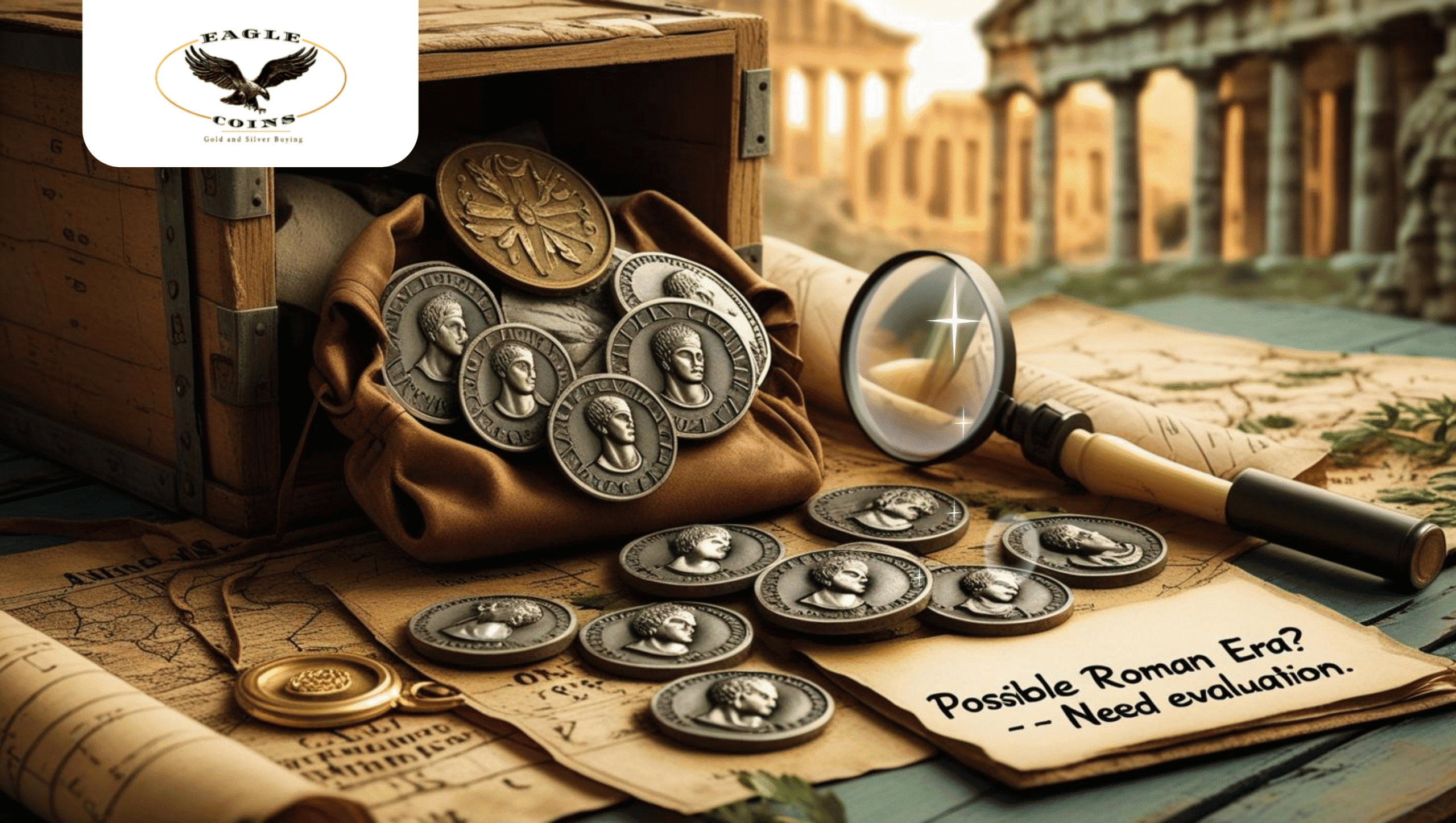
That dusty box of roman coins, your grandfather collected during his military service overseas might contain more than just interesting souvenirs. Or perhaps you’ve stumbled across some unusual metal discs while metal detecting or exploring old property. Roman coins have been turning up in unexpected places for centuries, and many people don’t realize they’re holding pieces of ancient history worth significant money.

The fascination with roman coins goes beyond their monetary value. These ancient artifacts offer direct connections to emperors, battles, and civilizations that shaped our world. Yet many families dismiss them as “old foreign coins” without understanding their potential worth.

At Eagle Coins Gold and Silver Buying, we help people understand the value of inherited coin collections, including ancient pieces that families often overlook. Here’s what you should know about roman coins before deciding whether that old collection deserves professional evaluation.

Understanding Roman Coins and Their Historical Value

Roman coins dominated commerce for over a millennium, from the Roman Republic through the fall of the Western Empire. These pieces weren’t just currency – they were propaganda tools, historical records, and artistic expressions rolled into precious metal.

According to Wikipedia, Roman currency for most of Roman history consisted of gold, silver, bronze, orichalcum and copper coinage. From its introduction during the Republic, in the third century BC, through Imperial times, Roman currency saw many changes in form, denomination, and composition. A feature was the inflationary debasement and replacement of coins over the centuries. Notable examples of this followed the reforms of Diocletian. This trend continued with Byzantine currency.

Due to the economic power and longevity of the Roman state, Roman currency was widely used throughout western Eurasia and northern Africa from classical times into the Middle Ages. It served as a model for the currencies of the Muslim caliphates and the European states during the Middle Ages and the Modern Era. Roman currency names survive today in many countries via the Carolingian monetary system, such as the dinar (from the denarius coin), the British pound (a translation of the Roman libra, a unit of weight), the peso (also a translation of libra), and the words for the general concept of money in the Iberian Romance languages (e.g. Spanish dinero and Portuguese dinheiro). (Source: Wikipedia)

The Roman monetary system included gold aurei for major transactions, silver denarii for everyday commerce, and bronze pieces for smaller purchases. Many of these ancient roman currency pieces survived because Romans often buried hoards during times of crisis, creating time capsules that modern collectors discover centuries later.

What makes roman coins particularly valuable is their historical significance. Unlike modern currency, these pieces often commemorated specific events, honored particular emperors, or celebrated military victories. Each coin tells a story about the person, place, or event it represents.

Famous Figures That Add Value

Some of the most sought-after roman coins feature history’s most recognizable figures. Finding julius caesar on a coin can be exceptionally valuable, as Caesar was among the first living Romans to appear on currency. His assassination in 44 BCE makes coins bearing his likeness historically significant and potentially worth thousands of dollars, depending on condition and rarity.

However, Caesar wasn’t alone. Augustus, Nero, Marcus Aurelius, and dozens of other emperors appeared on various denominations. Even lesser-known rulers can command premium prices if their reigns were brief or their coins are particularly rare.

While searching through old coins, people sometimes discover they actually own earlier Greek pieces. A coin with alexander the great, for example, predates Roman coinage but often gets mixed into collections of ancient currency. Alexander’s coins are extremely valuable, representing some of the earliest examples of royal portraiture on currency.

Difference Roman from Other Ancient Coins?

Not all old European coins are Roman. Many people assume that ancient French coins fall into the same category, but French coinage developed much later. While Gaul was part of the Roman Empire, what we consider ancient French coins typically date from the medieval period onward – still valuable and historically significant, but from a different era entirely.

True roman coins can be identified by Latin inscriptions, specific artistic styles, particular metal compositions, and dating systems that reference Roman leadership or events. Learning these distinctions is crucial for understanding what you might own.

What Makes Roman Coins Valuable?

Several key factors determine whether your roman coins have significant value:

  • Historical importance – Coins from pivotal moments like civil wars or major military campaigns command higher prices than routine commemorative pieces
  • Rarity – Brief reigns, limited territories, or small production runs can make ordinary-looking pieces quite valuable
  • Precious metal content – Silver and gold coins have intrinsic worth based on metal content, establishing minimum values regardless of historical premium
  • Condition – Ancient pieces in exceptional condition are extraordinarily rare and command premium prices, though even worn examples featuring important figures can have value

Authentication Red Flags to Watch For!

When examining potential roman coins, be aware of these common warning signs:

  • Weight inconsistencies – Authentic coins have specific weight ranges for each type
  • Modern patination – Artificial aging often looks uniform rather than natural
  • Poor artistic quality – Roman coins featured skilled craftsmanship; crude details suggest reproductions
  • Tourist souvenir markings – “Made in Italy” or similar modern stamps
  • Perfect condition – Be suspicious of ancient coins that look brand new

Types and Their Typical Values?

Coin TypeMetalTypical Value RangeNotes
Gold AureiGold$3,000 – $50,000+Most valuable due to precious metal and rarity
Silver DenariiSilver$100 – $5,000+Backbone of Roman commerce, popular with collectors
Bronze/CopperBase metal$20 – $500+Everyday currency, valuable examples depend on rarity

Values depend heavily on emperor, condition, rarity, and historical significance

Regional Variations and Provincial Issues

The Roman Empire was vast, and different regions produced coins with local characteristics while maintaining Roman standards. These provincial issues often blend Roman imperial themes with local artistic traditions, making them particularly interesting to collectors.

Some provincial roman coins feature local deities, regional symbols, or unique artistic styles while still honoring Roman emperors. These pieces can be especially valuable because they represent specific geographic areas and often had smaller production runs than coins minted in Rome itself.

Getting Professional Evaluation

If you’ve discovered coins that might be roman coins, professional evaluation is essential. The difference between a valuable ancient piece and a modern reproduction can be subtle, and even experienced collectors sometimes need expert opinions.

At Eagle Coins Gold and Silver Buying, we offer free, no obligation evaluations for all types of coins, including ancient pieces. Our appraisers bring over 40 years of experience in appraising and buying valuable items, and understand the complexities of ancient coin authentication and valuation.

We emphasize a no-pressure selling process and take time to explain what we’re seeing. Many customers visit just to understand what they have, and we’re happy to provide information about their pieces regardless of whether they choose to sell.

Making Informed Decisions

Whether you’re dealing with roman coins, other ancient pieces, or mixed collections containing various types of currency, understanding what you own is the first step toward making informed decisions. Some pieces might have significant historical or monetary value, while others might be interesting but not particularly valuable.

Professional evaluation helps distinguish valuable pieces from common ones, authentic items from reproductions, and historically significant coins from routine examples. This information allows you to make educated decisions about what to keep, sell, or research further.

Ready to learn whether your old coins include valuable roman coins or other historically significant pieces? Visit Eagle Coins Gold and Silver Buying for a free evaluation. We’ll help you understand what you have and explain the historical significance of your pieces in plain English.

People Also Ask

What were the Roman coins called?

Roman coins were part of a complex monetary system known as ancient Roman currency, used throughout the Roman Republic and Empire. The main types included:

  • Denarius – A silver coin widely circulated and most recognized.
  • Aureus – A high-value gold coin used in the Empire.
  • Sestertius – A large bronze coin often featuring emperors.
  • As – A common bronze coin during the Republic era.

These Roman coins often featured powerful imagery, including emperors, gods, and significant military victories. Some rare issues show Julius Caesar on a coin, marking one of the first times a living person appeared on currency. While not Roman, collectors often compare them with ancient French coins or Greek pieces like a coin with Alexander the Great, prized for their historical importance and artistry.

How much is a Roman coin worth?

The value of a Roman coin can vary widely, typically ranging from just a few dollars to several thousand, depending on factors like rarity, condition, historical significance, and the metal used. Common bronze Roman coins, such as the As or Sestertius, may sell for $10 to $200, while silver Denarius coins are often valued between $50 and $500 or more. The most valuable are gold coins like the Aureus, which can fetch anywhere from $2,000 to over $50,000 depending on the emperor and preservation. Roman coins featuring important figures – such as Julius Caesar on a coin or rare depictions related to historical events or mythologies tend to command higher prices. Although Alexander the Great was not Roman, coins bearing his image are often compared in value and collectability to high end Roman examples. Compared to ancient French coins, Roman currency is generally more diverse and widely studied.

Why were Roman coins found in India?

Roman coins have been found in India due to extensive Indo-Roman trade that flourished between the 1st century BCE and the 4th century CE. During this period, the Roman Empire engaged in active trade with ancient Indian kingdoms, especially along the southern coast, including regions like Tamil Nadu and Kerala. Roman merchants imported spices, gemstones, ivory, fine textiles, and perfumes from India, while exporting gold and silver coins in exchange. These Roman coins mainly gold Aurei and silver Denarii served as payment and were often hoarded or used as ornaments in Indian society. Some coins even featured emperors like Julius Caesar, contributing to their uniqueness. Their discovery alongside ancient Indian and even ancient French coins at coastal trade centers reveals India’s deep connections with global trade networks, including those that also circulated coins of Alexander the Great in earlier times. In essence, Roman coins in India are a testament to the rich, interconnected history of ancient Roman currency and global commerce.

What is the most popular Roman coin?

The most popular Roman coin is the Denarius, a silver coin that became the backbone of Roman currency for centuries. Introduced around 211 BCE during the Roman Republic, the Denarius was widely used throughout the Empire and is the coin most commonly found, studied, and collected today. Its popularity stems from several factors: it was minted in large quantities, used in everyday transactions, and often featured detailed portraits of emperors, including iconic figures like Julius Caesar, one of the first to appear on a coin during his lifetime. Some collectors also prize Denarii showing mythological scenes or military victories, adding to their historical and artistic appeal. Compared to other Roman coins like the bronze As, the gold Aureus, or the large Sestertius—the Denarius strikes a balance between availability and value. It’s also commonly found alongside ancient French coins and coins featuring Alexander the Great in global collections, making it a standout piece of ancient Roman currency.

What is the biggest Roman coin?

The Sestertius is considered the largest regular Roman coin in terms of physical size. Struck primarily in bronze or orichalcum (a brass-like alloy), the Sestertius could measure 32–35 mm in diameter and weigh 20–30 grams. It was introduced during the late Roman Republic but became most prominent under the Roman Empire, especially during the reign of emperors like Nero and Trajan. While not the highest in value (that would be the gold Aureus), the Sestertius was ideal for showcasing detailed portraits and elaborate reverse designs. Many feature powerful imagery of Roman emperors, military victories, or important buildings—some even show Julius Caesar on a coin or other legendary rulers. In comparison, smaller coins like the Denarius (silver) and As (bronze) were used more frequently in daily trade, while the Sestertius was more ceremonial or high-value. These Roman coins are still widely collected and often found alongside ancient French coins and coins related to Alexander the Great in museum collections and auctions.
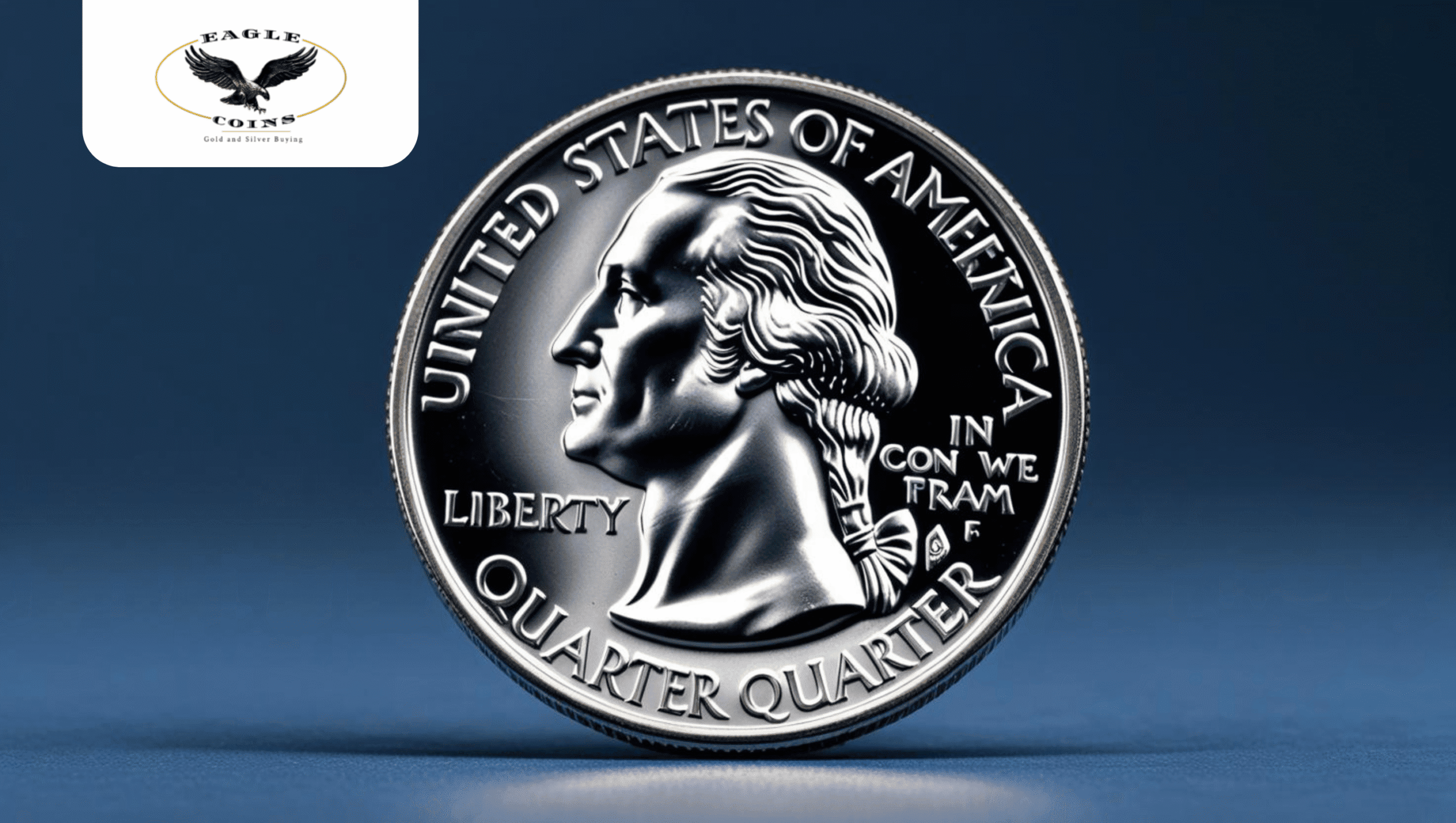
Is Your 1967 Quarter Worth More Than 25 Cents? What You Need to Know?


Found some old 1967 quarters while cleaning out your parents’ house? Wondering if those coins sitting in your dresser drawer might be worth something? We see this situation regularly. Many people discover coins from the 1960s and assume they’re just pocket change, but the truth about 1967 quarters might surprise you.

At Eagle Coins Gold and Silver Buying, we help families understand the value in inherited coin collections. While most 1967 quarters are worth face value, certain varieties and errors can be worth significantly more.

The Story Behind Your 1967 Quarter

Your 1967 quarter comes from a fascinating time in American coin history. In the mid-1960s, the U.S. government was dealing with a coin shortage caused partly by people hoarding silver coins. The solution? Stop putting silver in everyday coins and temporarily remove mint marks to discourage collecting.

This means every 1967 quarter you find is what experts call a 1967 no mint mark quarter, not because it’s rare, but because the government decided not to put mint marks on any coins that year. All 1967 quarters were made in Philadelphia, and over 1.5 billion were produced.

The Silver Question Everyone Asks

Here’s the most important thing to understand about 1967 quarter silver content: there isn’t any. This is a common misconception among coin owners.

Many folks know that older quarters contain silver and they’re right. Washington quarters from 1932 to 1964 are 90% silver and worth several times their face value just for the metal content. But by 1967, the U.S. Mint had completely switched to a copper-nickel composition with no silver whatsoever.

Why the confusion? It’s simple timing. The transition happened quickly. People often assume the changeover took longer than it did, or they’ve heard stories about valuable transitional coins and think their 1967 quarter might be one of them.

The bottom line: your regular 1967 quarter has no silver value. However, that doesn’t mean it’s worthless.

When Your 1967 Quarter Could Be Valuable?

While most 1967 quarters are common, some are worth keeping an eye out for. The value lies not in precious metal content, but in minting errors and exceptional condition.

Mint Errors: The Hidden Treasures

1967 Washington quarter errors are where things get interesting. During production, mistakes occasionally happened that created valuable varieties:

  • Double-struck coins show overlapping images where the coin was struck twice. These are immediately noticeable and can be worth $20 to several hundred dollars depending on how dramatic the doubling appears.
  • Off-center strikes happen when the coin blank wasn’t properly positioned during stamping. If your quarter shows the design shifted to one side with a crescent of blank metal visible, you might have something valuable.
  • Die cracks and breaks appear as raised lines or chunks on the coin’s surface. Major die breaks that affect significant portions of the design can add considerable value.

Condition Matters Too

Even without errors, exceptionally well-preserved 1967 quarters can have value to collectors. Coins that never circulated and still have their original mint luster might be worth $5 to $20 or more.

What About That Missing 1967 Quarter Mint Mark?

The missing 1967 quarter mint mark isn’t an error as it’s normal. Between 1965 and 1967, the U.S. Mint deliberately left mint marks off coins to reduce speculation and hoarding. So if you’re looking at your quarter wondering where the little “D” or “S” should be, don’t worry. It’s supposed to be blank.

How to Spot a Potentially Valuable Quarter?

When examining your 1967 quarters, look for these signs that might indicate added value:

  • Obvious doubling in letters, numbers, or design elements. This is usually visible to the naked eye once you know what to look for.
  • Missing portions of the coin’s edge, which could indicate a clipped planchet error.
  • Off-center designs where Washington’s profile isn’t properly centered on the coin.
  • Unusual raised lines or lumps that shouldn’t be part of the normal design.
  • Exceptional preservation – coins that look like they just came from the mint, with full luster and no wear marks.

Why Professional Evaluation Matters?

Professional coin evaluation can be valuable when assessing inherited collections. Many people focus on researching common coins while potentially overlooking valuable specimens from other dates or series entirely.

If you’ve found old quarters or inherited a coin collection, don’t guess at their value. The difference between a common coin and a valuable error can be subtle, and even experienced collectors sometimes miss important details.

At Eagle Coins Gold and Silver Buying, we offer free, no-obligation evaluations. Whether it’s a single 1967 quarter you’re curious about or boxes of inherited collections, we’ll help you understand what you have. Our appraisers bring over 40 years of experience in appraising and buying valuable items, and can identify valuable varieties, errors, and key dates.

We take time to explain what we’re seeing and answer your questions. We emphasize a no-pressure selling process, and many customers visit just to understand what they have.

The Bottom Line on 1967 Quarters

Your 1967 quarter probably isn’t a hidden treasure, but it might be worth more than you think. While the lack of silver content means no precious metal value, errors and exceptional condition can create surprising worth.

Ready to learn what your coins are really worth? Stop by Eagle Coins Gold and Silver Buying for a free evaluation. We’ll explain everything in plain English, no numismatic jargon required.

People Also Ask

Is 1967 quarter worth anything?

Yes, a 1967 quarter can be worth more than its face value, but it depends on its condition and collector interest. Although it doesn’t contain silver (unlike quarters minted before 1965), some 1967 quarters in uncirculated or mint condition can be valuable to coin collectors. Most circulated 1967 quarters are worth around 25 cents to $1, but a well-preserved or error coin could fetch more.

Where do I find the mint mark on a 1967 quarter?

You won’t find a mint mark on a 1967 quarter—because there isn’t one. During the years 1965 to 1967, the U.S. Mint intentionally left mint marks off coins to discourage collectors from hoarding them during a national coin shortage. That means all 1967 quarters, regardless of where they were made—Philadelphia, Denver, or San Francisco—were issued without a mint mark. This makes identifying the exact mint location impossible without special packaging (like from a mint set). If you’re checking your coin for value or planning to sell, don’t worry about the mint mark. Instead, focus on the coin’s condition, any error features, or whether it’s part of a rare coin series.

Which quarter is worth $35000 today?

The coin fetching $35,000 is a 1970‑S Washington quarter with a spectacular mint error—it was struck on a 1941 Canadian quarter planchet (made of 80 % silver). This “Canadian overstrike” is insanely rare; you can actually see remnants of the Canadian coin (like the date “1941” or King George VI’s outline) beneath Washington’s image. (Source: The Penny Holder)

Is a 1967 No mint mark worth anything?

Yes, a 1967 quarter with no mint mark can be worth more than face value—but not because of the missing mark. In fact, all 1967 quarters were struck without a mint mark, regardless of where they were made. This was a deliberate decision by the U.S. Mint between 1965 and 1967 to prevent hoarding during a national coin shortage.

Which quarter is worth $1,000,000?

The quarter famously linked to a $1,000,000 value is the ultra-rare 1796 Draped Bust Quarter in pristine condition. It was the first U.S. quarter ever minted, and only 6,146 were struck. Surviving examples in mint or near-mint condition are so scarce that collectors have paid hundreds of thousands, and in some elite auctions, values have approached or exceeded $1 million.

History and Value of the Susan B Anthony Dollar Coin

Susan B Anthony Dollar Coin


Ever found a strange-looking “quarter” in your change that turned out to be something else entirely? That odd coin might be a Susan B Anthony dollar coin – America’s first small-sized dollar and one of the most fascinating failures in U.S. coinage history. While many were tossed into junk drawers and forgotten, some of these Susan B Anthony coins are now worth serious money to collectors.

From their rocky introduction to the surprising values some command today, this guide uncovers everything you need to know about these distinctive dollar coins. You might want to check those coin jars when you finish reading!

America’s First Female on Circulating Currency

The Susan B Anthony dollar coin represented a groundbreaking moment in American currency – the first time a real woman appeared on circulating U.S. coinage. Released in 1979, these coins honored the legendary women’s rights activist who fought tirelessly for women’s suffrage.

The decision to feature Anthony came after initial plans for the coin included Liberty again. But public advocacy, particularly from women’s organizations, successfully pushed for honoring a real female historical figure.

Despite this progressive step, the Susan B Anthony dollar coin faced an uphill battle from the moment it hit American cash registers.

The Coin That Confused America

The Susan B Anthony dollar coin suffered from one critical design flaw that doomed it from the start – it looked and felt too similar to a quarter! At 26.5mm in diameter, the coin was only slightly larger than the quarter’s 24.3mm size, and both had reeded edges.

In poor lighting conditions like restaurants, bars, or vending machine areas, people frequently confused these dollar coins with quarters, leading to frustration for both businesses and consumers. This confusion, more than any other factor, prevented the Susan B Anthony dollar coin from gaining widespread acceptance.

The U.S. Mint had hoped these smaller dollar coins would replace bulky Eisenhower dollars and solve the vending machine industry’s call for a dollar coin. Instead, they created what many numismatic experts now consider one of the greatest design miscalculations in American coinage history.

Production Years and Mintage

The Susan B Anthony dollar coin had an unusual production schedule:

  • 1979: Initial release with high mintages (over 757 million coins)
  • 1980: Reduced production as public resistance became evident
  • 1981: Minimal production for collector sets only
  • 1999: Surprising revival for one final year (almost two decades later!)

This strange, interrupted production history creates an interesting collecting challenge – and contributes to some Susan B Anthony dollar coins being much more valuable than others.

What Makes These Dollar Coins Special: Design Elements

Despite its commercial failure, the Susan B Anthony dollar coin features several notable design elements:

Obverse (Front) Design:

  • Portrait of Susan B. Anthony facing right
  • “LIBERTY” inscribed above the portrait
  • “IN GOD WE TRUST” to the right
  • Mint date below
  • Mint mark (P, D, or S) near Anthony’s neck

Reverse (Back) Design:

  • Modified Apollo 11 mission insignia showing an eagle landing on the moon
  • Thirteen stars representing the original colonies
  • “UNITED STATES OF AMERICA” around the top edge
  • “ONE DOLLAR” along the bottom edge

The reverse design carried over from the previous Eisenhower dollar, commemorating the historic moon landing – creating an interesting juxtaposition between women’s rights and space exploration achievements.

Key Dates and Varieties to Watch For

While most Susan B Anthony dollar coins are worth little over face value, several key dates and varieties can be worth significant premiums:

The 1979-P Wide Rim Variety

Early in 1979, the Philadelphia Mint produced a variety with the date positioned closer to the rim and the rim appearing wider than on later coins. These “Wide Rim” varieties can sell for $30-$50 in uncirculated condition.

How to spot it: The “9” in the date nearly touches Anthony’s bust, and the rim appears thicker.

The 1981-S Type 2 Proof

In 1981, the San Francisco Mint changed the way they produced proof coins mid-year, creating clearer, more defined mint marks. The Type 2 proof with the clearer S mint mark is significantly rarer and can command $50-$100 or more in perfect condition.

All 1981 Business Strikes

With extremely low mintages for circulation (just 3.2 million from Philadelphia and 3.5 million from Denver), any 1981 Susan B Anthony dollar coin in uncirculated condition is worth keeping. These can sell for $5-$25 depending on condition.

Susan B Anthony Dollar Coin Values Today

So what exactly are these coins worth now? Here’s a breakdown:

Common Dates (Most 1979 and 1999 Issues)

  • Circulated condition: Generally just face value ($1)
  • Uncirculated condition: $2-$5
  • Proof specimens: $5-$10

Better Dates and Varieties

  • 1979-P Wide Rim: $30-$50 uncirculated
  • 1981-P and 1981-D: $5-$25 uncirculated
  • 1981-S Type 2 Proof: $50-$100

Error Coins

As with all U.S. coins, errors can dramatically increase value:

  • Double die varieties: $50-$300
  • Off-center strikes: $100-$500 depending on severity
  • Wrong planchet errors: $500-$2,500+

The most valuable Susan B Anthony dollar coin? A perfect MS-67 example of the 1979-P Wide Rim variety sold for over $15,000 at auction – not bad for a coin with a face value of just one dollar!

How to Identify Your Susan B Anthony Dollar Coins

Want to check if your Susan B Anthony dollar coins might be valuable? Here’s a quick identification guide:

Step 1: Check the Date and Mint Mark

  • The date appears below Anthony’s portrait
  • The mint mark is found near her neck:
    • P = Philadelphia
    • D = Denver
    • S = San Francisco

Step 2: Look for Key Varieties

For 1979-P coins, measure the distance between the date and the bust – if they nearly touch, you might have the valuable Wide Rim variety.

For 1981-S proofs, examine the mint mark under magnification – a bold, clear S indicates the valuable Type 2 variety.

Step 3: Assess Condition

Uncirculated coins show no wear and retain their original mint luster. Even minimal circulation wear can significantly reduce value for collector coins.

The Failed Dollar That Found New Purpose

Despite its commercial failure, the Susan B Anthony dollar coin found unexpected purpose in two specific areas:

Mass Transit Systems

Transit authorities embraced these dollar coins for ticket machines, particularly in cities like Washington DC, Baltimore, and New York. Their small size and distinctive design worked well in automated systems.

U.S. Postal Service

Post office stamp vending machines became major users of the Susan B Anthony dollar coin, giving customers dollar-coin change that could be reused in the machines.

This niche utility led to the surprising 1999 comeback of the Susan B Anthony dollar coin when Treasury supplies ran low before the Sacagawea dollar was ready for release.

Collecting Susan B Anthony Dollar Coins: Getting Started

For beginning collectors, Susan B Anthony dollar coins offer an accessible entry point:

Basic Date Set

With only four years of production (1979, 1980, 1981, and 1999), collecting one coin from each year is an easy starting point.

Complete Date and Mint Mark Set

A more comprehensive approach includes all 11 regular issue coins from the different mints each year.

The affordability of most issues makes this an achievable collection for nearly any budget – most coins can be found for under $10 each in uncirculated condition, with only a few key dates commanding significant premiums.

Preservation Tips: Keeping Your Coins Valuable

If you discover valuable Susan B Anthony dollar coins in your collection, proper storage is critical for maintaining their value:

  • Never clean your coins – the original surfaces are essential for collector value
  • Store in non-PVC holders designed specifically for coins
  • Handle only by the edges to avoid fingerprints on the faces
  • Consider professional grading for particularly valuable examples

Why Susan B Anthony Dollar Coins Still Matter

Though they failed commercially, these innovative coins marked several important milestones:

  • First U.S. coin to feature a real, historical woman rather than an allegorical figure
  • Last U.S. dollar coin with a traditional copper-nickel composition
  • Important lesson in coinage design that influenced later dollar coins

The Susan B Anthony dollar coin provided valuable lessons that shaped the later Sacagawea dollar and Presidential dollar series, both of which featured distinctive gold coloration and smooth edges to avoid confusion with quarters.

Where to Sell Your Susan B Anthony Dollar Coins

If you’ve discovered valuable Susan B Anthony dollar coins in your collection, getting expert evaluation is crucial to receiving fair value. Eagle Coins Gold and Silver Buying, with 40 years of numismatic experience, offers professional appraisal services for these and all collectible coins.

Their knowledgeable team can identify valuable varieties and dates, authenticate mint state examples, spot valuable errors, and provide fair market valuations based on current collector demand.

Conclusion: America’s Misunderstood Dollar

The Susan B Anthony dollar coin represents one of the most interesting chapters in modern American coinage – a forward-thinking design honoring a pioneering woman that stumbled due to practical flaws. While they may have confused cashiers and consumers, these distinctive coins now fascinate collectors and historians alike.

Before dismissing that “odd quarter” as just another dollar coin, take a closer look – you might be holding one of the valuable varieties worth far more than face value. From honoring women’s rights to teaching important lessons about coin design, the Susan B Anthony dollar coin’s legacy extends far beyond its brief time in cash registers.

Want to know if your Susan B Anthony dollar coins have hidden collector value? The experts at Eagle Coins Gold and Silver Buying can help identify those special varieties worth more than their face value. Visit eaglecoinsgoldandsilverbuying.com or call 508-252-8888 to learn what your coins might be worth!

What Are Numismatic Coins? A Beginner’s Guide to Coin Collecting

Numismatic Coins


Remember that scene in National Treasure where Nicolas Cage gets all excited about a centuries-old coin? Turns out, he wasn’t just being a movie nerd – he was being a numismatist! And that fancy-sounding hobby isn’t just for history professors and eccentric millionaires. That weird penny with the wheat stalks on the back sitting in your junk drawer? It could be worth way more than one cent to the right collector.

Welcome to the world of numismatic coins – where everyday pocket change sometimes turns into treasure, and where that dusty box of coins your grandpa left you might contain more than just memories. Let’s dive into the hobby that’s been captivating everyone from kings to regular folks like us for thousands of years!

What Exactly Are Numismatic Coins, Anyway?

When we talk about numismatic coins, we’re talking about coins that are valued for more than just the metal they contain or their face value. These are the coins that collectors go crazy for because of their rarity, historical significance, condition, or artistic merit.

Think of it this way: That quarter in your pocket is worth 25 cents at the store. But a rare 1932-D Washington quarter in excellent condition? That could be worth thousands of dollars to the right collector. The difference between the face value and what collectors will pay for it? That’s the numismatic value.

Why Some Coins Are Worth a Fortune While Others Are Just Pocket Change

Numismatic value isn’t random – several specific factors make certain coins more desirable to collectors:

Rarity: The Fewer, The Better

The most obvious factor in a coin’s numismatic value is how rare it is. Maybe only a small number were minted, like the famous 1909-S VDB Lincoln cent (only 484,000 made). Or perhaps most were melted down or lost over time, like the legendary 1943 copper penny mistakenly made when all others that year were supposed to be steel.

Historical Significance: Coins That Tell a Story

Some numismatic coins are valuable because they witnessed important moments in history. Think of the 1776 Continental Dollar that circulated during America’s fight for independence, or the “Fugio Cent” designed by Benjamin Franklin – America’s first official coin!

Even more recent coins can have historical value. The 1964 Kennedy Half Dollar, rushed into production just weeks after JFK’s assassination, saw Americans lining up around blocks to get them. Many were saved as mementos rather than spent, giving them lasting numismatic value.

Condition: Mint State Means Major Money

In the numismatic coin world, condition is everything. Collectors use a 70-point scale to grade coins, with terms like “Good,” “Fine,” “Extremely Fine,” and “Mint State” describing their condition.

A common coin in perfect “Mint State” condition can be worth far more than a rare coin that’s been heavily circulated. That’s why you’ll see serious collectors handling their coins with gloves and storing them in special holders – even fingerprints can reduce numismatic value!

Errors: When Mistakes Are Worth Money

Sometimes the most valuable numismatic coins are the ones where the Mint messed up! Double-struck coins, off-center strikes, wrong planchets (using the wrong metal blank), and other errors can create one-of-a-kind treasures that collectors will pay big bucks to own.

The 1955 Doubled Die Lincoln cent is one famous example – a mistake in the die-making process created pennies with clearly doubled lettering that can sell for thousands of dollars today.

Building Your Own Numismatic Coin Collection: Where to Start

Ready to dive into the world of numismatic coins? Here are some beginner-friendly approaches:

Start With What You Know

Many collectors begin with the coins already in circulation. Check your change for wheat pennies (1909-1958), silver dimes or quarters (pre-1965), or interesting state quarters. This costs nothing but time and gives you practice identifying and evaluating coins.

Pick a Theme That Speaks to You

The most enjoyable collections have personal meaning. Some ideas to consider:

  • Birth year sets: Coins from the year you or loved ones were born
  • Type sets: One example of each design from a particular denomination
  • Historical periods: Coins from the Great Depression, WWII, or the Bicentennial
  • Beautiful designs: Saint-Gaudens Double Eagles or Standing Liberty Quarters

Set a Realistic Budget

You don’t need to spend thousands to enjoy collecting numismatic coins. Many fascinating coins with historical significance can be purchased for under $20. Set a monthly budget and stick to it – this hobby should be fun, not financially stressful!

Learn Before You Buy

Knowledge is your best investment in numismatic coin collecting. Before spending serious money:

  • Get a copy of the “Red Book” (A Guide Book of United States Coins)
  • Join online forums where collectors share knowledge
  • Visit coin shows to see examples and talk with experienced dealers
  • Learn how to spot counterfeits and altered coins

The Tools Every Numismatic Coin Collector Needs

You don’t need fancy equipment to start collecting, but a few basic tools will help:

  • A good magnifying glass to examine details
  • Cotton gloves to handle valuable coins
  • A basic reference book on U.S. coins
  • Coin holders or albums for storage
  • A digital scale that measures in grams

As your collection grows, you might add specialized lighting, higher-powered magnification, and reference materials for specific types of numismatic coins.

Common Mistakes New Collectors Make

Save yourself some heartache by avoiding these classic beginner errors:

Cleaning Coins

This seems counterintuitive, but cleaning can destroy a coin’s numismatic value! That natural toning and patina that develops over decades is actually desired by collectors. A harshly cleaned coin can lose 50-90% of its potential value.

Buying on Impulse

The excitement of finding an “amazing deal” can lead to poor decisions. Research before buying, especially for expensive numismatic coins. Know the appropriate grade, typical market value, and how to spot alterations.

Overlooking Storage

Those old cardboard holders with cellophane windows? They could be damaging your coins! Many older storage methods used materials that can cause PVC damage or environmental deterioration. Invest in archival-quality storage designed specifically for numismatic coins.

Where to Buy and Sell Numismatic Coins

When you’re ready to start acquiring more valuable numismatic coins, here are trusted sources:

  • Established local coin shops like Eagle Coins Gold and Silver Buying
  • Major coin shows with reputable, established dealers
  • Auction houses that specialize in numismatics
  • Online marketplaces (though beware of counterfeits)

For selling valuable numismatic coins, working with experienced professionals is crucial. Eagle Coins Gold and Silver Buying has over 40 years of experience evaluating numismatic coins and can help determine the true value of your collection. Their expert team knows how to identify key dates, rare varieties, and condition factors that affect numismatic value.

Beyond the Money: Why Numismatic Coin Collecting Matters

While the potential financial reward of discovering valuable numismatic coins is exciting, most longtime collectors will tell you the real rewards go deeper:

  • Holding a piece of history in your hand – a coin that might have been in someone’s pocket during the Civil War or Great Depression
  • The thrill of the hunt when you finally find that elusive date to complete a set
  • The friendships formed with other collectors who share your passion
  • The endless learning about history, economics, art, and metallurgy
  • The ability to pass something meaningful to the next generation

Getting Started Today with Numismatic Coins

The beauty of numismatic coin collecting is that you can start right now with whatever coins you already have. Check your coin jar, your parents’ collections, or even just your pocket change. Look closely at dates, mint marks, and condition. Research anything unusual you find.

Remember, every serious collection of valuable numismatic coins started with a single coin and a curious collector. Whether you’re in it for the history, the artistry, or the potential investment, coin collecting offers endless discovery.

When you’re ready to have your coins evaluated or want expert advice on building your collection, the team at Eagle Coins Gold and Silver Buying can provide the guidance you need. Their decades of experience in the numismatic marketplace ensure you’ll receive honest, knowledgeable assistance whether buying or selling.

Visit eaglecoinsgoldandsilverbuying.com or call 508-252-8888 to discover the numismatic value of your coins or start your collecting journey with confidence!

Bicentennial Quarter Value: What Makes These Coins Special?

Bicentennial Quarter


Remember digging through your change and spotting that unusual quarter with the colonial drummer on the back? That distinctive Bicentennial quarter might be worth a whole lot more than 25 cents! While most of these patriotic coins are only worth face value, some rare varieties could be hiding in your coin jar right now – potentially worth hundreds or even thousands of dollars.

Let’s dive into the fascinating world of the Bicentennial US quarter and discover what makes certain ones valuable enough to fund your next vacation. Time to check those cup holders and couch cushions!

The Birth of America’s Celebration Coin

The year 1976 marked America’s 200th birthday, and the U.S. Mint commemorated this milestone by creating special designs for the quarter, half dollar, and dollar coins. The Bicentennial quarter featured a colonial drummer on the reverse side alongside a victory torch and thirteen stars representing the original colonies.

What makes the Bicentennial US quarter instantly recognizable is the dual date “1776-1976” on the obverse (front) side, replacing the standard single year. This double date celebrates the 200 years between the signing of the Declaration of Independence and the bicentennial year.

Interestingly, despite being associated with 1976, the Mint actually started producing these special quarters in 1975! They were churned out in massive numbers through 1976, with both the Philadelphia and Denver mints creating hundreds of millions of these coins. That’s why most Bicentennial quarters found in circulation today are pretty common.

Composition: Two Varieties Worth Knowing

The standard Bicentennial quarter that most people find in their change has the same copper-nickel clad composition as regular quarters – 75% copper and 25% nickel bonded to a pure copper core. These circulating coins were produced in enormous quantities:

  • Philadelphia Mint (no mint mark): 809,784,016 coins
  • Denver Mint (D mint mark): 860,118,839 coins

But here’s where it gets interesting for collectors: The San Francisco Mint also produced special 40% silver Bicentennial quarters exclusively for collectors. These silver versions came in two varieties:

  • Uncirculated silver version: 4,908,319 coins
  • Proof silver version: 4,149,730 coins

These silver Bicentennial quarters were never meant for circulation and were only sold in special collector sets. They have an “S” mint mark and are worth significantly more than their clad counterparts.

How Much Is Your Bicentennial Quarter Worth?

Now for the question everyone wants answered: what’s your Bicentennial US quarter actually worth? Here’s a breakdown:

Standard Clad Bicentennial Quarters (Most Common)

  • Circulated condition: Generally just face value (25 cents)
  • Uncirculated condition: $1-$5
  • Exceptional uncirculated specimens: $10-$20

Don’t feel discouraged if your Bicentennial quarter falls into this category – they’re still cool historical pieces even if they won’t fund your retirement!

40% Silver Bicentennial Quarters

  • Uncirculated silver: $5-$15 (more in perfect condition)
  • Proof silver: $10-$20 (more for perfect examples)
  • Silver quarters with cameo contrast: $25+

But here’s where the real excitement begins:

Rare Error Bicentennial Quarters

  • Doubled die varieties: $25-$300 depending on the error’s prominence
  • Off-center strikes: $50-$300 depending on severity
  • Wrong planchet errors: $200-$1,000+

The holy grail? A few 40% silver Bicentennial quarters accidentally made it into circulation. These rare “transitional errors” can be worth thousands of dollars. If your Bicentennial quarter has an “S” mint mark AND was found in circulation, it deserves professional evaluation!

How to Spot Valuable Bicentennial Quarter Varieties

Want to know if your Bicentennial US quarter might be one of the valuable ones? Here’s what to look for:

Check the Mint Mark

Look on the obverse (front) side with Washington’s profile. The mint mark, if present, appears just below the date:

  • No mint mark = Philadelphia
  • “D” = Denver
  • “S” = San Francisco (potentially valuable silver version)

Test for Silver Content

The 40% silver versions look similar to clad coins but:

  • Weigh slightly more (6.25 grams vs. 5.67 grams)
  • Don’t show copper edges when viewed from the side
  • Produce a different sound when dropped on a hard surface

Examine for Errors

Using a magnifying glass, look for:

  • Doubling in the lettering or features
  • Off-center striking where the design isn’t centered
  • Unusual thickness or weight compared to other quarters

Beyond Face Value: Collector Desirability Factors

Several factors make certain Bicentennial quarters more desirable to collectors:

Grade and Condition

As with all collectibles, condition is king. Bicentennial quarters with no circulation wear, full mint luster, and no contact marks command the highest prices. Professional grading services like PCGS or NGC can certify a coin’s condition on a 70-point scale, with MS-65 and higher being the sweet spot for maximum value.

Special Strikes

Some Bicentennial quarters were struck with special care for collectors:

  • “Proof” coins with mirror-like fields and frosted designs
  • “Special Mint Set” coins with better-than-average strikes

Toning and Color

Natural toning (rainbow-like coloration that develops over time) can significantly increase a Bicentennial quarter’s value if attractive and unique. Some collectors pay premiums for coins with spectacular color patterns.

The 40% Silver Varieties: A Closer Look

The 40% silver Bicentennial US quarters deserve special attention since they’re much more valuable than their clad counterparts. How can you tell if you have one? Here are the key identifiers:

  • Look for the “S” mint mark below Washington’s portrait
  • Check the edge – silver versions won’t show the copper core visible on clad quarters
  • Weigh the coin – silver versions weigh approximately 6.25 grams, while clad quarters weigh 5.67 grams

These silver quarters were only sold in special collector sets:

  • The three-coin Silver Uncirculated Set in a blue envelope
  • The three-coin Silver Proof Set in a brown box

Finding one in circulation today would be extremely unusual and valuable – most were carefully preserved by collectors.

Legendary Bicentennial Quarter Errors Worth Searching For

While most Bicentennial quarters are common, certain error coins have achieved legendary status:

The Doubled Die Bicentennial Quarter

Some Bicentennial quarters show doubling on lettering or design elements due to a misaligned die. Look closely at “UNITED STATES OF AMERICA” and “QUARTER DOLLAR” for signs of doubling. These can fetch $100+ in high grades.

Off-Center Bicentennial Quarters

If the design appears off-center, you might have a valuable error. The more extreme the off-centering (while still showing the complete date), the more valuable the coin becomes.

Wrong Planchet Errors

A few Bicentennial quarters were mistakenly struck on planchets intended for dimes, nickels, or foreign coins. These dramatic errors can be worth hundreds or even thousands of dollars.

Silver-Clad Mules

The rarest of all: a few Bicentennial quarters have been confirmed with silver composition but circulation quality strikes. These “mules” (coins with mismatched production methods) can be worth thousands to the right collector.

Preservation Tips: Protect Your Bicentennial Quarter Investment

If you’ve found a potentially valuable Bicentennial US quarter, proper handling and storage are essential:

  • Never clean your coins! That “dirt” might be valuable toning, and cleaning damages the surface.
  • Handle coins by their edges only, avoiding contact with the faces.
  • Store valuable specimens in non-PVC holders specifically designed for coins.
  • Consider professional grading for particularly valuable examples.

Even if your Bicentennial quarter isn’t worth a fortune, these preservation tips will help maintain whatever value it does have.

Where to Sell Your Valuable Bicentennial Quarters

If you believe you have a valuable Bicentennial quarter, there are several options for having it evaluated and potentially selling it:

The experts at Eagle Coins Gold and Silver Buying have 40 years of experience evaluating all types of coins, including Bicentennial quarters. Their professional appraisers can identify valuable varieties, authenticate silver composition, and spot valuable errors that amateur collectors might miss.

Their comprehensive evaluation considers:

  • Composition (silver vs. clad)
  • Mint mark and production details
  • Condition and grade
  • Presence of valuable errors or varieties
  • Current market demand

Whether you have a single exceptional Bicentennial US quarter or a collection of potentially valuable coins, their team provides transparent evaluations and fair offers based on current market values.

Conclusion: America’s Birthday Coins

The Bicentennial quarter might be the most widely recognized commemorative coin in American history. While most examples are worth just 25 cents, the thrill of discovering a rare variety or error makes checking your change worthwhile.

Remember these key points when evaluating Bicentennial quarters:

  • The “S” mint mark potentially indicates valuable silver composition
  • Condition dramatically affects value, especially for collector varieties
  • Errors and varieties can transform a common coin into a valuable collectible
  • Even common examples represent an important piece of American history

Whether you’re a serious collector seeking that elusive error variety or simply curious about the quarters in your pocket, the Bicentennial US quarter offers a fascinating glimpse into America’s numismatic heritage.

Want to know if your Bicentennial quarters have hidden value? Eagle Coins Gold and Silver Buying can help identify those special varieties worth far more than face value. Visit eaglecoinsgoldandsilverbuying.com or call 508-252-8888 to learn what your coins might be worth!

A Brief History of the Lincoln Cent: From 1909 to Today

Lincoln Cent


Ever find a strange-looking penny with wheat stalks on the back and wonder if you’ve struck gold? You’re not alone! The Lincoln cent has been jingling in American pockets for over a century, making it the longest-running design in U.S. coinage history. From those distinctive wheat pennies of your grandparents’ era to the shield design we see today, these humble one-cent pieces tell an amazing story of American history.

This guide might just make you dump out that jar of pennies you’ve been ignoring. Let’s dive into why these little copper coins could be worth way more than you think!

From Indian Head to Lincoln: How the Penny Got Its Face

Before 1909, Americans were carrying Indian Head pennies in their pockets. But when the 100th anniversary of Abraham Lincoln’s birth rolled around, everything changed. The Lincoln cent made history as the first circulating U.S. coin to feature an actual person rather than the symbolic “Lady Liberty.”

The man behind the design? Lithuanian immigrant Victor David Brenner. His initials (VDB) appeared on the earliest 1909 Lincoln cents, creating an instant controversy. People complained the letters were too prominent – almost like Brenner was advertising himself on America’s money! The Mint quickly removed his initials, creating what would become the legendary 1909-S VDB Lincoln cent – a wheat penny that can sell for over $1,000 today in decent condition.

Wheat Pennies: The Original Lincoln Cents (1909-1958)

The original Lincoln cent featured:

  • Lincoln’s thoughtful profile on the front (the same basic portrait we still see today!)
  • Two wheat stalks framing “ONE CENT” and “UNITED STATES OF AMERICA” on the back
  • 95% copper composition that gives wheat pennies their distinctive reddish-brown color

These wheat pennies stayed in production for nearly 50 years, becoming one of the most collected coins in American history. If you find one in your change today (and yes, it still happens!), you’re holding a piece that’s at least 65 years old.

Treasure Hunt: The Wheat Pennies Worth Serious Cash

While most wheat pennies are worth about 3-5 cents each for their copper content alone, some dates can fund a nice dinner out – or even a vacation! Here are the dates that make collectors’ hearts race:

The Holy Grail: 1909-S VDB Lincoln Cent

Only 484,000 of these wheat pennies were minted in San Francisco before Brenner’s initials were removed. Even in worn condition, these sell for hundreds of dollars. Found one? You might want to sit down – in perfect condition, they’ve sold for over $100,000!

The 1914-D: A Denver Rarity

With just 1.1 million minted (tiny by penny standards), the 1914-D wheat penny is another major find. Worth $200+ even in worn condition, it’s the dream of every penny roll hunter.

The Mistake Penny: 1922 “No D” Lincoln Cent

In 1922, only the Denver Mint made pennies. However, a worn die created some without the D mint mark. What was originally a mint mistake is now a treasure worth $500+ if you find one.

The Doubled Die: 1955 Error Lincoln Cent

Look closely at a 1955 wheat penny. If the words appear doubled (especially “LIBERTY” and the date), you might have the famous 1955 Doubled Die – worth $1,000+ even in circulated condition!

The Steel Penny: 1943 Lincoln Cent

During World War II, copper was needed for ammunition, so the Mint struck 1943 Lincoln cents on steel planchets coated with zinc. These silvery wheat pennies are worth about $0.50-$1 in circulated condition – not a fortune, but still a cool find!

The real treasure? A copper 1943 penny. The Mint accidentally struck a few on copper planchets, creating an error worth over $100,000. Check those steel pennies carefully – if a magnet doesn’t stick, you might have hit the jackpot!

Beyond Wheat: How the Lincoln Cent Changed Over Time

The penny has gone through several major design changes since the wheat penny era ended:

The Memorial Years (1959-2008)

In 1959, the wheat stalks gave way to the Lincoln Memorial, creating a coin where Lincoln appeared on both sides (look closely – his statue is visible inside the Memorial!). These pennies aren’t worth much over face value unless in pristine condition, but they’re gradually disappearing from circulation.

The 2009 Special Edition Lincoln Cents

For Lincoln’s 200th birthday, the Mint released four special designs showing different phases of his life:

  • His humble Kentucky log cabin birthplace
  • His Indiana childhood, reading books by firelight
  • His professional life in Illinois as a state legislator
  • His presidency and the partially-constructed Capitol dome

These special pennies caused a mini collecting craze, with people hoarding rolls to save for the future.

The Shield Design (2010-Present)

Since 2010, Lincoln cents have featured a Union Shield on the reverse, symbolizing Lincoln’s preservation of the United States during the Civil War. While common in circulation, these newer pennies are still made with the copper-plated zinc composition that began in 1982.

The Penny Paradox: Why Each Cent Costs More Than a Cent

Here’s something crazy – it costs the U.S. Mint about 2.1 cents to make each one-cent coin! This negative math has led to occasional discussions about killing off the penny entirely, as Canada did in 2012.

But for collectors, this potential end to the penny makes Lincoln cents – especially wheat pennies – even more appealing as future collectibles. After all, once something stops being made, it tends to become more valuable!

Starting Your Own Lincoln Cent Collection: Easy Ways In

Want to start hunting for valuable Lincoln cents? Here are some beginner-friendly approaches:

The Wheat Penny Challenge

Check your change, raid the coin jar, or ask your bank for penny rolls. While the super-rare wheat pennies probably won’t turn up, finding any wheat penny in circulation is getting harder each year. Each one you rescue is at least 65 years old!

The Birth Year Collection

Try finding Lincoln cents from your birth year from each mint (look for a tiny D or S below the date for Denver or San Francisco). For birth years before 1959, you’ll be looking for wheat pennies, which makes this extra challenging and fun.

The “One of Each” Collection

Grab one wheat penny, one memorial cent, one of each 2009 design, and a shield cent. Just five coins tell the entire design history of the Lincoln cent!

Selling Your Lincoln Cents: Getting Top Dollar

Found some wheat pennies or other Lincoln cents you want to sell? Here’s how to make sure you’re not shortchanged:

  1. Never clean your coins! That “dirt” is actually valuable patina that collectors want. Cleaning instantly reduces value.
  2. Check key dates using a coin guidebook or reputable website. Those 1943 steel cents might be worth a few bucks, but a 1909-S VDB wheat penny could fund a vacation!
  3. Consider condition – even common wheat pennies in pristine, uncirculated condition can be worth significantly more than worn examples.
  4. Work with experts who can spot valuable varieties and errors. The team at Eagle Coins Gold and Silver Buying has been evaluating Lincoln cents for over 40 years and can identify those subtle differences between a common coin and a rare treasure.

Why Lincoln Cents Matter Beyond Money

In a world of digital payments and credit cards, the Lincoln cent remains America’s most tangible connection to its monetary past. These coins have passed through millions of hands – from World War I veterans to TikTok influencers.

Every time you find a wheat penny in your change, you’re connecting with someone who might have used that same coin during the Great Depression, World War II, or the early Space Age. That’s pretty incredible for something that costs just one cent!

Ready to Discover What Your Pennies Are Worth?

That jar of pennies gathering dust might contain some hidden treasures – especially if any wheat pennies are hiding in the mix. The experts at Eagle Coins Gold and Silver Buying have been helping people identify valuable Lincoln cents for decades, ensuring sellers receive fair value for their coins.

Whether you’ve found one special wheat penny or have rolls of Lincoln cents from a relative’s collection, their team can help determine what you have and what it’s really worth in today’s market.

Don’t let valuable wheat pennies slip through your fingers! Check your change, dig through that penny jar, and remember – that dusty old cent might be worth far more than you think.


What Is a Buffalo Nickel? History, Value, and Collectability

Buffalo Nickel


Few American coins capture the spirit of the frontier quite like the Buffalo nickel. With its iconic Native American portrait on one side and a mighty American bison on the other, the Buffalo nickel stands as one of the most distinctively American coins ever minted. Collectors treasure these pieces not just for their monetary worth, but for the slice of Americana they represent.

For those curious about these historic five-cent pieces or wondering about that 2005 Buffalo nickel in their collection, this guide explores everything from the coin’s fascinating origin story to its modern collectability and value.

The Birth of an American Icon: Buffalo Nickel History

The Buffalo nickel entered circulation in 1913 as part of a wave of artistic redesigns of American coinage. President Theodore Roosevelt had called for more beautiful, artistic American coins that would represent the nation’s identity and growing international prominence.

Renowned sculptor James Earle Fraser answered this call with his design for the Buffalo nickel. The striking imagery captured the vanishing American frontier at a time when the nation was rapidly industrializing.

The Faces Behind the Design

The Buffalo nickel featured a composite portrait of three Native American chiefs on the obverse and an American bison on the reverse. The Native American figure combined features from several real chiefs:

  • Iron Tail (Oglala Lakota)
  • Two Moons (Northern Cheyenne)
  • Chief John Big Tree (Seneca)

The buffalo was reportedly modeled after Black Diamond, a bison living in New York’s Central Park Zoo.

The Buffalo nickel remained in production from 1913 until 1938, when it was replaced by the Jefferson nickel. During its 25-year run, the raised design elements wore down quickly in circulation, often making the date one of the first details to disappear.

The 2005 Buffalo Nickel: A Modern Tribute

Many people search for information about the 2005 Buffalo nickel and wonder about its origin and value. It’s important to clarify that the United States Mint did not produce Buffalo nickels for circulation in 2005. The original Buffalo nickel series ended in 1938.

What collectors might be referring to as a 2005 Buffalo nickel is actually the 2005 American Bison nickel — part of the Westward Journey Nickel Series commemorating the bicentennial of the Lewis and Clark expedition. This modern coin pays homage to the classic Buffalo nickel with a newly designed American bison on the reverse, while featuring a portrait of Thomas Jefferson on the obverse.

Additionally, in 2006, the U.S. Mint released a Buffalo Gold Coin based on the original Fraser Buffalo nickel design. Neither of these modern issues should be confused with the original Buffalo nickels minted from 1913 to 1938.

Identifying Buffalo Nickels: Key Features at a Glance

Authenticating Buffalo nickels requires familiarity with their distinctive design elements:

Obverse Features

  • Profile of a Native American facing right
  • The word “LIBERTY” along the upper right edge
  • The mint date along the lower left edge beneath the portrait
  • No mint mark for Philadelphia; “D” for Denver or “S” for San Francisco located beneath the date

Reverse Features

  • Standing American bison on a raised mound
  • “UNITED STATES OF AMERICA” above the bison
  • “E PLURIBUS UNUM” below “UNITED STATES OF AMERICA”
  • “FIVE CENTS” at the bottom of the coin

Major Buffalo Nickel Varieties Worth Knowing

Buffalo nickels come in several major varieties that serious collectors distinguish:

  • 1913 Type 1 – Features the bison on a raised mound with the denomination “FIVE CENTS” exposed
  • 1913 Type 2 – The design was recessed to protect the denomination from wear
  • 1916 Doubled Die Obverse – Shows doubling on the date and “LIBERTY”
  • 1918/7-D Overdate – One of the most famous Buffalo nickel errors where a 1918 date was stamped over a 1917 die
  • 1937-D Three-Legged Buffalo – Due to excessive die polishing, one of the bison’s legs was removed, creating a valuable error variety

None of these varieties apply to the 2005 American Bison nickel, which represents a modern homage rather than a continuation of the original Buffalo nickel series.

Buffalo Nickel Values: What Determines Worth?

The value of Buffalo nickels varies dramatically based on several key factors:

Date and Mint Mark Matter Most

Certain years and mint marks are considerably rarer than others. Key dates include:

  • 1913-S Type 2
  • 1914-D
  • 1921-S
  • 1924-S
  • 1926-S

These dates typically command premium prices even in circulated condition due to their low mintage numbers.

Condition is King

As with all collectible coins, condition significantly impacts value. Buffalo nickels in uncirculated condition (MS-63 or higher on the Sheldon scale) can be worth many times more than heavily circulated examples.

One condition factor specific to Buffalo nickels is the presence of “full horn” detail on the bison. Because the horn was one of the highest points of the design, it wore down quickly. Specimens with complete horn detail command substantial premiums.

For context, while common date Buffalo nickels in heavily worn condition might be worth only slightly more than their face value, rare dates in pristine condition can sell for tens of thousands of dollars. The 1918/7-D overdate in gem uncirculated condition has sold for over $350,000 at auction.

As for the 2005 American Bison nickel, these modern coins generally trade for close to face value unless in pristine uncirculated condition.

Collecting Buffalo Nickels: Strategies for Success

Buffalo nickels present both rewarding opportunities and unique challenges for collectors:

Popular Collection Approaches

Collectors typically pursue Buffalo nickels through several different strategies:

  • Date and Mint Mark Sets – Attempting to acquire one example from each year and mint
  • Type Collection – Obtaining representative examples of the major varieties
  • Grade-Based Collection – Focusing on high-grade examples regardless of date
  • Error and Variety Collection – Specializing in the various known errors and die varieties

Watch Out For These Issues

Buffalo nickel collectors frequently encounter several obstacles:

  • Dateless Coins – Because the date wore off easily, many Buffalo nickels in circulation have no visible date
  • Altered Dates – Some unscrupulous sellers artificially enhance or recreate dates on worn coins
  • Counterfeit Rare Dates – High-value dates like the 1918/7-D and 1937-D Three-Legged Buffalo are frequently counterfeited

Keeping Your Buffalo Nickels in Top Shape

Proper storage and handling remain essential for maintaining Buffalo nickels in collectible condition:

  • Store coins in non-PVC holders designed specifically for numismatic preservation
  • Handle coins by their edges, never touching the faces directly
  • Keep Buffalo nickels in stable environments away from temperature and humidity extremes
  • Consider professional grading and encapsulation for valuable specimens
  • Avoid cleaning coins, as improper cleaning can dramatically reduce value

Ready to Sell? Getting Top Dollar for Your Buffalo Nickels

For those looking to sell Buffalo nickels, understanding their market value proves essential for receiving fair offers. Eagle Coins Gold and Silver Buying, with 40 years of experience in the numismatic market, offers expert appraisal services for Buffalo nickels and other collectible coins.

When considering selling Buffalo nickels, the most important factors include:

  • Authentication – Confirming the coin’s authenticity and identifying any valuable varieties
  • Grading Assessment – Evaluating the condition objectively against standard numismatic scales
  • Market Knowledge – Understanding current collector demand and price trends
  • Transparent Valuation – Receiving clear explanations for the offered price

Sellers should be particularly cautious with rare dates and varieties, as these coins merit expert examination to ensure proper identification and valuation. This applies whether dealing with vintage Buffalo nickels or modern tributes like the 2005 American Bison nickel.

Original vs. Modern: Know the Difference

Distinguishing between original Buffalo nickels and modern commemoratives like the 2005 American Bison nickel helps collectors understand their historical context and value:

Original Buffalo Nickels (1913-1938)

  • Designed by James Earle Fraser
  • Native American composite portrait on obverse
  • Standing buffalo on reverse
  • Many dates now considered scarce or rare

2005 American Bison Nickel

  • Designed by Jamie Franki (reverse) and Felix Schlag/Joe Fitzgerald (obverse)
  • Thomas Jefferson portrait on obverse
  • Standing bison on reverse
  • Produced as part of the Westward Journey series
  • Generally available at face value except in pristine condition

Conclusion: The Enduring Legacy of an American Classic

The Buffalo nickel represents more than just a denomination of American currency. It stands as an artistic achievement, a historical document, and a collectible treasure that continues to captivate coin enthusiasts over a century after its introduction.

Whether pursuing original Buffalo nickels from 1913-1938 or appreciating modern tributes like the 2005 American Bison nickel, collectors connect with an iconic design that captured the American spirit during a transformative period in the nation’s history.

For those looking to buy, sell, or simply learn more about Buffalo nickels, Eagle Coins Gold and Silver Buying offers expertise developed through decades of numismatic experience. Their appraisers can help determine the value of your Buffalo nickels, whether common dates or rare treasures, ensuring you receive fair value for these pieces of American history.

British Sovereign Gold Coin Explained: Everything You Need to Know

British Sovereign Gold Coin


Many investors and collectors have heard about British Sovereign gold coins and wondered what makes them so special. These golden treasures have been capturing attention for over 200 years, and for good reason! Whether inherited from family members, spotted on history programs, or considered as additions to investment portfolios, British Sovereign gold coins hold unique appeal and value.

The experts at Eagle Coins Gold and Silver Buying have been in the precious metals industry for over 40 years and know gold sovereigns inside and out. This guide explores the fascinating world of one of history’s most famous gold coins – the British Sovereign gold coin.

What Exactly Is a British Sovereign Gold Coin?

The British Sovereign gold coin is a gorgeous piece about the size of a nickel, featuring a warrior on horseback stabbing a dragon on one side and the profile of British royalty on the other. These aren’t just ordinary coins – they’re essentially the celebrities of the gold coin world.

Gold sovereigns first appeared back in 1489 under King Henry VII during England’s Tudor period. However, the modern version of the British Sovereign gold coin recognized today was introduced in 1817, right after the Napoleonic Wars when Britain was reforming its entire monetary system.

What makes these gold sovereigns truly special is their gold content – exactly 0.2354 troy ounces of pure gold, which equals about 7.32 grams. This seemingly odd measurement served a specific purpose; back when introduced, this amount of gold was worth exactly one pound sterling, creating a direct link between the British Sovereign gold coin and the British monetary standard.

The Design: Royal Evolution Through the Centuries

One fascinating aspect of British Sovereign gold coins is tracking which monarch appears on the front. It serves as a compact history lesson in British royalty! The most common gold sovereigns feature:

  • Queen Victoria, with three different portraits throughout her reign showing her aging from young queen to imperial monarch
  • King Edward VII, known for his diplomatic skills and lavish lifestyle
  • King George V, who ruled during World War I and the early interwar period
  • Queen Elizabeth II, with FIVE different portraits spanning her remarkable 70-year reign
  • And now King Charles III, the newest addition to the British Sovereign gold coin legacy

But the true masterpiece is found on the reverse side of the gold sovereign. Most British Sovereign gold coins display the epic design of St. George slaying a dragon created by Italian artist Benedetto Pistrucci. This design has remained virtually unchanged since 1817 – an extraordinary testament to its artistic power and cultural significance. Very few designs in monetary history have shown such remarkable staying power across two centuries.

Coin collectors often remark that holding a gold sovereign feels like connecting directly with history – a sentiment that resonates with anyone who has ever examined these remarkable pieces.

Why British Sovereign Gold Coins Command Premium Prices

What factors determine why some gold sovereigns are worth significantly more than others? Like many collectibles, certain years and features can make British Sovereign gold coins extraordinarily valuable beyond just their gold content:

Rare Years and Mint Marks

Not all gold sovereigns were produced in London! During the height of the British Empire, they were minted across the globe in places like Sydney, Melbourne, Perth, Bombay, Ottawa, and Pretoria. British Sovereign gold coins from these branch mints often command substantially higher prices than their London-made counterparts.

Gold sovereigns from the Sydney Mint dating from the 1850s-1860s are especially prized among serious collectors. These early Australian-minted British Sovereign gold coins represent a significant chapter in both numismatic and colonial history.

Condition Is Crucial

British Sovereign gold coins in pristine condition naturally sell for much higher premiums. Coins that appear virtually untouched since leaving the mint can fetch remarkable prices, especially when professionally graded and authenticated by recognized services.

Coin dealers frequently encounter situations where what seemed like an ordinary gold sovereign turns out to be extraordinarily valuable due to exceptional condition. A 1917 British Sovereign gold coin in uncirculated condition might sell for four times or more its basic gold value.

The Royal Connection

Some monarchs’ gold sovereigns are exceptionally rare and valuable. The Edward VIII British Sovereign gold coins are considered the ultimate prize in gold sovereign collecting because he abdicated the throne in 1936 after less than a year as king. Very few of his coins were ever produced, and when they appear at auction, they can sell for hundreds of thousands of dollars.

Investment Potential of British Sovereign Gold Coins

Several compelling reasons explain why these coins might deserve consideration in an investment strategy:

Global Recognition

Unlike some obscure collectible coins that might perplex buyers in foreign markets, gold sovereigns enjoy worldwide recognition. This universal familiarity makes British Sovereign gold coins highly liquid assets – essentially, they can be sold almost anywhere that deals in precious metals.

Accessible Entry Point

With roughly a quarter ounce of gold, British Sovereign gold coins offer a more affordable option than full-ounce gold coins. This makes gold sovereigns ideal for beginning collectors or investors looking to gradually build a position in physical gold assets.

Impressive Value Retention

During market turbulence like the 2008 financial crisis or the 2020 pandemic, gold sovereigns typically maintain their value exceptionally well. During economic uncertainty, the premium over the gold spot price often increases as investors seek physical gold with historical significance.

Many investment advisors note that physical gold assets like British Sovereign gold coins provide peace of mind during volatile economic periods. The tangible nature of these coins, combined with their historical importance, creates both financial and psychological security.

Authenticating British Sovereign Gold Coins

With valuable items comes the unfortunate reality of counterfeiting. Fake gold sovereigns exist in the marketplace, which is why working with reputable dealers like Eagle Coins Gold and Silver Buying is essential. Professional dealers identify authentic British Sovereign gold coins through:

  • Precise weight testing, as genuine gold sovereigns should weigh exactly 7.98 grams
  • Exact diameter and thickness measurements of 22.05mm × 1.52mm
  • The distinctive sound test, as real gold produces a specific tone when tapped
  • Advanced technology including ultrasound or XRF analyzers for material verification

One reliable indicator of authenticity appears in the St. George design details of British Sovereign gold coins. Counterfeiters frequently fail to replicate the exceptionally fine details in elements like the horse’s mane or the dragon’s scales. The craftsmanship on genuine gold sovereigns demonstrates remarkable precision that’s difficult to duplicate.

The Selling Process for British Sovereign Gold Coins

Those who have inherited coins or are rebalancing investment portfolios may consider selling gold sovereigns. Understanding their true value becomes essential in this situation.

Eagle Coins Gold and Silver Buying offers a straightforward appraisal process for British Sovereign gold coins:

  1. Gold Value Assessment – determining the worth of the raw gold content based on current market prices
  2. Collector Value Evaluation – calculating any premium based on rarity, condition, and historical significance
  3. No-Pressure Offer Presentation – providing a fair offer that customers can freely accept or decline

Their transparent approach includes explaining WHY the British Sovereign gold coins merit their offered value rather than simply presenting a number without context. This educational component helps sellers make informed decisions about their valuable assets.

Proper Storage Techniques for Gold Sovereigns

Whether keeping British Sovereign gold coins long-term or temporarily until deciding to sell, proper storage plays a crucial role in maintaining value:

  • Store gold sovereigns in individual protective capsules or holders to prevent surface damage
  • Avoid direct skin contact, as natural oils can deteriorate the surface of British Sovereign gold coins over time
  • Maintain storage in cool, dry environments as humidity can harm gold sovereigns
  • Consider secure options like home safes or bank deposit boxes for valuable collections

Unfortunately, some people unknowingly damage valuable gold sovereigns through improper handling or storage. A British Sovereign gold coin carried as a “good luck charm” might lose significant collector value through everyday wear and handling.

The Growing Appeal of Gold Sovereigns

With King Charles III now featured on the newest British Sovereign gold coins, a fresh wave of interest has emerged in these historic pieces. New releases often spark renewed appreciation for the entire series, drawing attention from both established collectors and newcomers to gold sovereign collecting.

In an increasingly digital financial world, the tactile experience of holding physical gold sovereigns connects people to centuries of monetary history. This tangible link to the past provides both historical perspective and financial security that purely digital assets simply cannot match.

Conclusion

British Sovereign gold coins have rightfully earned their reputation as the “king of coins.” They’ve endured through two World Wars, numerous economic crises, and the entire digital revolution – emerging as strong and desirable as ever.

For those considering selling gold sovereigns or simply wanting to learn more about their value, the team at Eagle Coins Gold and Silver Buying offers expert guidance. With four decades of industry experience, they’ve encountered virtually every variation and condition of these fascinating British Sovereign gold coins.

Even those not ready to sell can benefit from professional evaluation – gaining knowledge about gold sovereigns often inspires deeper appreciation for their historical significance and enduring value.

Coin Roll Wrappers Explained – Sizes, Counts, and How to Use Them

Quick answer: A standard coin roll wrapper holds a set number of coins depending on denomination: 50 pennies, 40 nickels, 50 dimes, 40 quarters, 20 half dollars, or 25 dollar coins. These counts are standardized across US banks, so any roll can be verified and deposited without recounting.

Coin Roll Denominations Table

CoinCoins Per RollFace Value
Pennies (1¢)50$0.50
Nickels (5¢)40$2.00
Dimes (10¢)50$5.00
Quarters (25¢)40$10.00
Half Dollars (50¢)20$10.00
Dollar Coins ($1)25$25.00
 

Whether you’re a seasoned coin collector, a small business owner managing daily cash, or simply someone looking to organize loose change, coin roll wrappers are essential tools for efficiently handling and storing coins. These simple paper tubes might seem straightforward, but understanding their various sizes, proper coin counts, and best practices for using them can save you time and prevent costly mistakes. This guide explores everything you need to know about coin roll wrappers, with special attention to valuable coins like silver quarters that might be hiding in your spare change.

What Are Coin Roll Wrappers?

Coin roll wrappers (also called coin tubes or coin sleeves) are specially designed paper containers used to package specific quantities of coins into uniform rolls. These standardized rolls make counting, storing, and transporting coins more efficient while meeting the requirements of banks and businesses for accepting rolled coins.

Modern coin wrappers typically feature color-coding and clear markings indicating the denomination, total value, and coin count. They’re usually made from lightweight paper that’s strong enough to hold coins securely but can be easily twisted closed at the ends or opened when needed.

Standard Coin Roll Wrapper Sizes and Counts in the United States

The Federal Reserve has established standard specifications for coin rolls in the United States. These standards ensure consistency across banking institutions and businesses. Here’s a breakdown of the standard coin roll sizes:

Coin DenominationWrapper ColorCoins Per RollFace ValueRoll Diameter
Pennies (1¢)Red50$0.503.0 inches
Nickels (5¢)Blue40$2.003.0 inches
Dimes (10¢)Green50$5.002.75 inches
Quarters (25¢)Orange40$10.003.0 inches
Half Dollars (50¢)Tan/Brown20$10.002.75 inches
Dollar CoinsBlue/White25$25.003.0 inches

These standardized counts are designed to create rolls of approximately similar size and weight, making them easier to handle and store. The color-coding system helps quickly identify denominations without having to open the rolls.

Special Case of Silver Quarters

For collectors and silver investors, a roll of silver quarters deserves special attention. Silver quarters minted in the United States before 1965 contain 90% silver and 10% copper, giving them intrinsic value far exceeding their face value.

Identifying Silver Quarters

Before wrapping your quarters, it’s worth checking if any are silver:

  • Date Check: Any U.S. quarter dated 1964 or earlier contains silver.
  • Visual Inspection: Silver quarters have no copper/nickel edge visible (unlike modern clad quarters which show a copper stripe).
  • Sound Test: When dropped on a hard surface, silver quarters produce a distinctive high-pitched ring compared to the duller sound of clad quarters.
  • Weight Difference: A roll of 40 silver quarters weighs approximately 226.8 grams (8 ounces), while a roll of clad quarters weighs about 200 grams (7.05 ounces).
Value of a Roll of Silver Quarters

The value of a roll of silver quarters fluctuates based on the current silver spot price. Unlike regular quarters worth just $10 per roll, silver quarter rolls derive most of their value from their silver content:

  • Each pre-1965 quarter contains approximately 0.18 troy ounces of silver.
  • A full roll of 40 silver quarters contains about 7.2 troy ounces of silver.
  • At a silver spot price of $25 per troy ounce, a roll of silver quarters would be worth approximately $180 in silver content alone.
  • Certain dates and mint marks can command significant premiums beyond silver value.

For collectors and investors, keeping silver quarters separate and properly identified is crucial to preserve their value.

How to Properly Use Coin Roll Wrappers

Using coin roll wrappers effectively requires a bit of technique. Here’s a step-by-step guide:

1. Sorting Your Coins

Before reaching for wrappers, sort your coins by denomination. This is also the perfect time to check for valuable coins like silver quarters or rare mint errors. Consider investing in a coin sorter for larger quantities, or use sorting trays to organize your coins efficiently.

2. Counting and Stacking

Count out the appropriate number of coins for each roll (referring to the standard counts mentioned earlier). For accuracy, consider:

  • Creating smaller stacks (such as 5 or 10 coins) and then combining them.
  • Using a digital coin counting scale calibrated for different denominations.
  • Employing a coin counting board with designated slots for standard roll quantities.

3. Loading the Wrapper

There are two primary methods for loading coin wrappers:

Pre-formed Wrapper Method:

  1. Purchase pre-formed tubes that are open on both ends.
  2. Stand the wrapper on a flat surface.
  3. Drop coins in one at a time or in small stacks.
  4. Gently tap the wrapper on the surface periodically to settle coins.

Flat Wrapper Method:

  1. Start with a flat paper wrapper.
  2. Create a stack of the correct number of coins.
  3. Place the wrapper against the stack and roll it around the coins.
  4. Crimp or fold the ends to secure the coins.

4. Securing the Ends

Properly securing the ends prevents coins from spilling:

  1. Fold one end of the wrapper inward, creating a flat surface.
  2. Turn the roll over and fold the other end.
  3. For extra security, you can create a double fold on each end.

5. Labeling Special Rolls

For valuable coins like silver quarters or collectible specimens:

  1. Use a marker to note special characteristics (e.g., “90% Silver Quarters” or “Wheat Pennies”).
  2. Consider using clear plastic tubes instead of paper wrappers for better visibility and protection.
  3. Include the date of wrapping and approximate value for insurance purposes.

Where to Find Coin Roll Wrappers

Coin wrappers are readily available from various sources:

  • Banks: Most banks provide free coin wrappers to account holders.
  • Office Supply Stores: Companies like Staples and Office Depot sell coin wrappers in various quantities.
  • Big Box Retailers: Walmart, Target, and similar stores usually carry basic coin wrapping supplies.
  • Specialty Coin Shops: For premium wrappers or clear plastic tubes suitable for collectible coins like silver quarters.
  • Online Retailers: Amazon and specialty numismatic suppliers offer bulk quantities at competitive prices.

When purchasing, consider whether pre-formed tubular wrappers or flat wrappers better suit your needs. Pre-formed are easier to fill but cost slightly more, while flat wrappers are more economical for large quantities.

Advanced Tips for Coin Roll Handling

Coin Roll Hunting

“Coin roll hunting” has become a popular hobby where enthusiasts search through rolled coins for valuable specimens. This is particularly rewarding with quarter rolls, where you might find:

  • Pre-1965 silver quarters
  • State and national park quarters missing from collections
  • Error coins with minting mistakes
  • Rare mint marks

To start coin roll hunting:

  1. Obtain rolls from banks, preferably from customer-returned coins rather than Federal Reserve shipments.
  2. Carefully unwrap and examine each coin.
  3. Replace any valuable finds with common coins of the same denomination.
  4. Re-roll the searched coins for return to the bank.

Storage Considerations

Proper storage of coin rolls prevents damage and keeps your inventory organized:

  • For Regular Circulation Coins: Store rolls in plastic bags or boxes, organized by denomination.
  • For Silver Quarters and Collectibles: Store in a cool, dry environment in non-PVC plastic tubes or specialized coin roll storage boxes.
  • Bank Deposits: Most banks require rolled coins to be placed in deposit bags with deposit slips clearly indicating the contents.

Digital Alternatives

In today’s increasingly cashless society, consider these alternatives to physical coin wrapping:

  • Coin Counting Machines: Services like Coinstar convert loose change to cash or gift cards (typically charging a fee unless converted to gift cards).
  • Bank Coin Counting: Some banks offer free coin counting services to account holders.
  • Digital Payment Apps: Consider depositing cash and using apps for transactions to reduce your need to handle coins.

Common Mistakes to Avoid

Miscounting Issues

Accuracy is crucial when wrapping coins, particularly for business use:

  • An incorrect count can lead to rejected deposits at banks.
  • Businesses may face shortages or overages in their accounting.
  • Setting aside odd quantities can help complete partial rolls later.

Mixing Valuable Coins

Avoid these costly errors:

  • Never mix silver quarters with clad (post-1964) quarters.
  • Keep commemorative or special issue coins separate from regular circulation coins.
  • Check both sides of each coin before wrapping to avoid missing valuable specimens.

Improper Storage

Poor storage practices can damage both coins and wrappers:

  • Avoid damp environments which can cause paper wrappers to deteriorate.
  • Don’t store rolls where they’ll experience significant temperature fluctuations.
  • Avoid stacking too many rolls on top of each other, which can cause crushing or wrapper failure.

Environmental Considerations

As we become more environmentally conscious, consider:

  • Reusing paper wrappers when possible (though banks may require new wrappers for deposits).
  • Recycling used paper wrappers rather than discarding them.
  • Investing in durable plastic tubes for frequently accessed coin collections.

Conclusion

Coin roll wrappers may seem like simple tools, but they play an important role in coin management for collectors, businesses, and individuals alike. Understanding the standard sizes, proper counts, and best practices for using them ensures your coins remain organized, secure, and ready for banking or collecting purposes.

For those interested in silver quarters and other valuable coins, proper identification and separate storage using appropriate wrappers or tubes can protect your investment and preserve these pieces of history for generations to come. Whether you’re wrapping coins for a bank deposit or organizing your collection, these fundamental skills make handling coins more efficient and potentially more profitable.

For expert guidance on coin collecting, silver quarters, or other numismatic interests, consider consulting with Eagle Coins Gold and Silver Buying, where knowledgeable staff can help identify valuable specimens and provide quality storage solutions for your collection.

Frequently Asked Questions

How many coins go in a standard coin roll wrapper?

It depends on the denomination: 50 pennies, 40 nickels, 50 dimes, 40 quarters, 20 half dollars, or 25 dollar coins per roll. These amounts are standardized across US banks.

How do I fold or use a coin wrapper?

Flat wrappers are rolled around the stacked coins, and the ends are folded or crimped shut; preformed (tubular) wrappers are pre-shaped, so you simply drop coins in and fold one end closed. Both types are labeled by denomination and color-coded to the American Bankers Association standard.

What are the standard coin roll denominations?

The six standard US denominations are pennies, nickels, dimes, quarters, half dollars, and dollar coins, each with its own fixed coin count and face value per roll. See the table above for exact amounts.

American Eagle Gold Coins – Value, Market Price, and Buying Tips


In the world of precious metal investments, American Eagle Gold Coins stand as one of the most recognized and trusted options for investors and collectors alike. These iconic coins, produced by the United States Mint, combine the security of government-backed gold with stunning design work that represents American heritage and values.

This guide explores everything you need to know about American Gold Eagles, from their current market prices to their inherent value, and provides essential tips for making informed purchasing decisions.

What Are American Eagle Gold Coins?

The American Gold Eagle program was established by the Gold Bullion Coin Act of 1985, with the first coins released in 1986. Available in four sizes (1 oz, 1/2 oz, 1/4 oz, and 1/10 oz), these coins feature Lady Liberty on the obverse, based on Augustus Saint-Gaudens’ iconic design from the early 20th century. The reverse traditionally depicted a family of eagles, symbolizing family tradition and unity, though in 2021, the U.S. Mint introduced a new reverse design featuring a portrait of an eagle.

American Gold Eagles are composed of 91.67% gold (22 karat), with the remainder being silver and copper to enhance durability. Despite this alloy composition, each coin contains its stated weight in pure gold, with the total weight of the coin being slightly higher due to the additional metals.

Understanding Gold Eagle Coin Prices

Factors Affecting American Eagle Gold Coin Prices

Several key factors influence the price of American Gold Eagles:

  1. Spot Price of Gold: The foundation of any gold coin’s value is the current market price of gold, commonly referred to as the “spot price.” This price fluctuates continuously based on global economic conditions, interest rates, inflation concerns, and geopolitical events.
  2. Premium Over Spot: American Gold Eagles typically command a premium above the spot price of gold. This premium covers minting costs, distribution, dealer margins, and the coin’s status as legal tender backed by the U.S. government.
  3. Coin Size: Smaller denomination coins (1/10 oz, 1/4 oz, 1/2 oz) generally carry higher premiums on a percentage basis compared to 1 oz coins, due to higher relative production costs.
  4. Condition and Year: Uncirculated coins in pristine condition may command higher prices, especially for certain years that had lower mintage numbers or special significance.
  5. Market Demand: During periods of economic uncertainty or high inflation, demand for physical gold often increases, potentially driving up premiums.

Current Price Trends for American Eagle Gold Coins

As of early 2025, American Gold Eagle prices have shown significant movement, reflecting broader economic trends. While the spot price of gold provides the baseline value, actual transaction prices for American Gold Eagles include the premiums mentioned above.

For 1 oz American Gold Eagles, premiums have typically ranged from 5-9% above the spot gold price in recent months. This means that if gold is trading at $2,500 per ounce, a 1 oz American Gold Eagle might sell for approximately $2,625 to $2,725.

The smaller denominations carry proportionally higher premiums:

  • 1/2 oz coins: Typically 8-12% over spot
  • 1/4 oz coins: Approximately 10-15% over spot
  • 1/10 oz coins: Often 15-20% or more over spot

These premiums can fluctuate based on market conditions, with higher premiums during periods of strong demand or supply constraints. Recent global economic uncertainties have periodically led to elevated premiums as investors sought the security of physical gold assets.

Investment Value vs. Collector Value

American Gold Eagles possess dual appeal as both investment vehicles and collectible items:

Investment Perspective

From a pure investment standpoint, American Gold Eagles offer several advantages:

  • Government Guarantee: Each coin’s gold content, weight, and purity are guaranteed by the U.S. government.
  • Liquidity: Their widespread recognition makes them easily tradable worldwide.
  • IRA Eligibility: American Gold Eagles are among the few gold coins eligible for inclusion in Individual Retirement Accounts.
  • Inflation Hedge: Gold has historically served as a hedge against inflation and currency devaluation.

However, the premiums paid over spot price can affect investment returns, especially for short-term holdings. Long-term investors often find that gold’s overall price appreciation overshadows the initial premium costs.

Collector Perspective

For numismatists, American Gold Eagles offer additional potential value:

  • Proof Versions: The U.S. Mint produces proof versions with exceptional finish quality and presentation packaging, often commanding significant premiums.
  • First Strikes and Early Releases: Coins certified as being among the first minted in a production run may fetch higher prices from collectors.
  • Anniversary Editions: Special issues commemorating program milestones can appreciate substantially.
  • Historical Significance: The 2021 redesign of the reverse created a natural dividing line in the series, potentially enhancing the collectability of both designs.

Where to Buy American Eagle Gold Coins

Selecting a reputable source is crucial when purchasing American Gold Eagles:

Authorized Dealers

The U.S. Mint sells directly to a network of authorized purchasers, who then distribute to retail dealers. Buying from these established dealers often provides the greatest assurance of authenticity and fair pricing. Many maintain online price charts tracking premiums and spread (the difference between buy and sell prices).

Major Coin Retailers

Large, established coin dealers with substantial market presence typically offer competitive pricing due to their volume purchasing power. They also frequently provide authentication guarantees and buyback policies.

Online Marketplaces

While platforms like eBay and other online marketplaces may sometimes offer lower premiums, they come with increased risks of counterfeit products. If pursuing this route, focus exclusively on high-rated sellers with established histories of precious metal sales.

Local Coin Shops

Building a relationship with a local dealer provides the advantage of examining coins in person before purchase and potentially negotiating better prices over time as a repeat customer.

Essential Buying Tips

1. Understand the Total Cost

Always calculate the per-ounce cost of gold in your purchase by dividing the total price by the actual gold content. This allows you to compare the real premium you’re paying across different options.

2. Verify Authenticity

Genuine American Gold Eagles have precise design details, specific dimensions (1 oz coins are 32.7 mm in diameter and 2.87 mm thick), and exact weights. Familiarize yourself with these specifications before purchasing. For significant investments, consider coins graded and authenticated by PCGS or NGC.

3. Consider Your Investment Goals

  • Long-Term Holding: If planning to hold for many years, 1 oz coins typically offer the lowest premium and thus better long-term appreciation potential.
  • Flexibility in Liquidation: Smaller denominations, despite higher premiums, provide the ability to sell portions of your investment as needed.
  • Collection Building: If collecting is your primary interest, condition, special editions, and historical significance may outweigh raw gold value.

4. Timing Your Purchase

While timing the gold market perfectly is impossible, consider these strategies:

  • Dollar-cost averaging by making regular purchases regardless of price
  • Watching for periods when premiums decline, even if spot prices are rising
  • Being prepared to act during market dips, which often present buying opportunities

5. Storage Considerations

Factor storage costs and security into your investment planning:

  • Home safes (with appropriate insurance)
  • Bank safety deposit boxes
  • Professional precious metal depositories (which may offer advantages for IRA-held gold)

Tax Implications

American Gold Eagles have specific tax considerations that investors should understand:

  • Capital Gains: Profits from selling Gold Eagles are typically subject to capital gains tax, with rates depending on your holding period and income bracket.
  • Reporting Requirements: Certain large transactions may trigger IRS Form 1099-B reporting requirements by dealers.
  • IRA Regulations: Gold Eagles held in IRAs have specific storage requirements and distribution rules.

Consulting with a tax professional familiar with precious metals investments is advisable before making substantial purchases.

Conclusion

American Eagle Gold Coins represent a unique combination of intrinsic gold value, government backing, historical significance, and artistic merit. Whether you’re seeking portfolio diversification, inflation protection, or a meaningful collection, understanding the factors affecting their price and value is essential to making informed decisions.

By researching current market conditions, working with reputable dealers, and aligning your purchasing strategy with your long-term goals, you can confidently navigate the world of American Gold Eagles. While premiums and prices fluctuate with market conditions, these iconic coins have maintained their status as one of the world’s premier gold bullion products for over three decades—a testament to their enduring appeal and value.

Remember that, like all investments, gold should typically form just one part of a diversified portfolio. Its traditional role as a store of value during economic uncertainty can complement more growth-oriented investments, providing balance and stability to your overall financial strategy.

For expert guidance on your American Gold Eagle investments and access to competitive market prices, consider Eagle Coins Gold and Silver Buying—your trusted partner in precious metals since 1997.

Frequently Asked Questions

How much is an American Eagle gold coin worth today?

As of May-June, 2025, the current ask purchase price for a one-ounce American Gold Eagle is approximately $3,436.70, while the bid selling price is around $3,305.80 . These prices fluctuate based on the spot price of gold and market demand.

Are American Eagle gold coins 100% gold?

No, American Gold Eagles are not made of pure gold. They are composed of 91.67% gold (22 karat), with the remaining 8.33% consisting of copper and silver. This alloy enhances the coin’s durability and resistance to scratching and marring .

Are American Gold Eagles worth it?

Yes, American Gold Eagles are considered a valuable investment for several reasons:

Government Guarantee: They are backed by the U.S. government, ensuring their authenticity and weight.

Liquidity: Widely recognized and accepted, making them easy to buy and sell.

Collector Demand: Especially for proof and limited edition coins, which can carry higher premiums.

Tax Advantages: Eligible for inclusion in Gold IRAs, offering potential tax benefits .

Why are American Gold Eagle coins more expensive?

American Gold Eagles often carry higher premiums over the spot price of gold compared to other gold coins. This is due to factors such as:

Minting Costs: The U.S. Mint’s production and distribution expenses.

Design and Packaging: The intricate design and quality packaging add to the cost.

Collector Value: Numismatic interest, especially for proof and limited edition coins, increases demand and price .

How can you tell if a Gold Eagle coin is real?

To verify the authenticity of a Gold Eagle coin, consider the following methods:

Weight and Dimensions: A genuine one-ounce coin should weigh 33.931 grams and have specific diameter and thickness measurements.

Sound Test: Genuine gold coins produce a distinctive, high-pitched ring when struck, while counterfeits often emit a duller sound .

Visual Inspection: Examine the coin for sharp details and quality minting.

Magnet Test: Gold is non-magnetic; if a coin is attracted to a magnet, it’s likely not pure gold.

Professional Authentication: Use services like the Eagle Coins Gold and Silver Buying’s verification tools or consult with reputable dealers for confirmation.