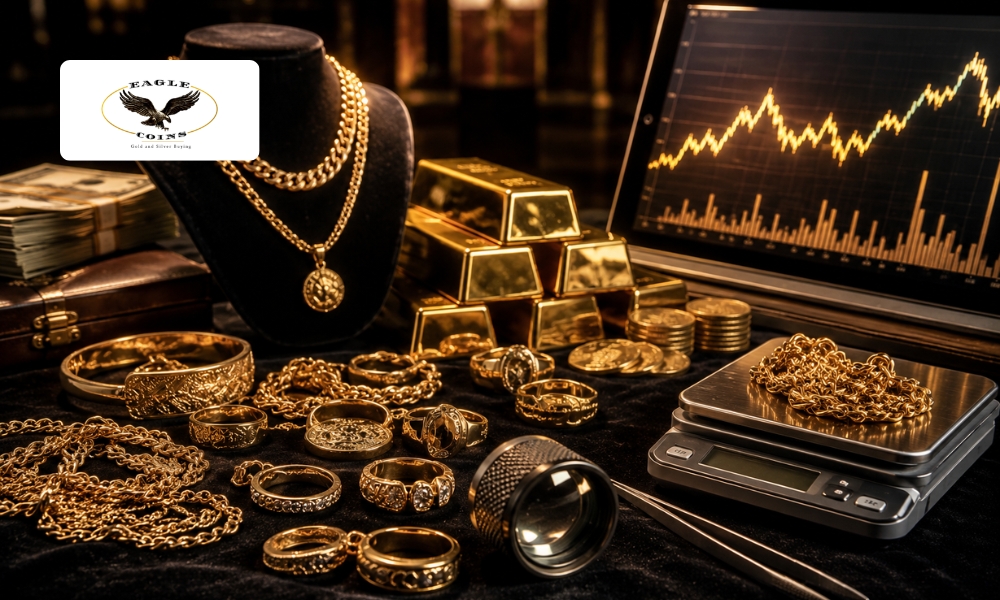

Gold has always been one of the most reliable and stable assets in the world. Millions of investors, central banks, and several individuals around the world are counting on gold as a means to preserve wealth and insure against financial risks. However, what most individuals fail to understand is that gold trading is deeply influenced by global events, including political tensions, economic shifts, natural disasters, and even technological changes. International events, regardless of whether markets rise or fall, can almost instantly send the gold prices ascending or dipping.
Being a trusted source of information for precious metals enthusiasts, Eagle Coins Gold & Silver Buying often highlights how understanding global trends can help investors make more informed decisions.
Why Gold Trading Reacts Strongly to Global Events
Gold is considered a safe-haven asset, unlike many commodities. As uncertainty prevails in the world due to economic meltdowns, political instabilities, or other significant conflicts, gold tends to become more appealing. Investors transfer money out of risky assets to gold, which causes the demand and prices to increase.
Several factors explain this:
- Gold Holds Its Value Over Time: Gold does not depreciate due to inflation or government policies, like paper currency. This ensures that it is a reliable store of wealth during a crisis.
- Limited Supply Creates Stability: The amount of gold is quite limited. When the demand for gold rises suddenly, prices go up quickly.
- Global Demand Remains Strong: A steady demand for gold is contributed to by jewellery, technology, central banks, and even by private investors.
Due to these attributes, gold trading is especially susceptible to international events that affect investor confidence.
How Economic Crises Impact Gold Trading
Gold prices often increase when economies weaken or show signs of recession. Investors look for secure, stable assets, and gold consistently proves its value during turbulent periods.
Examples of Economic Events That Influence Gold Trading:
- Recessions: During a recession, the stock markets drop while gold tends to rise.
- Banking Crises: If banks fail or show instability, investors start seeking assets outside the financial system.
- High Inflation: Gold becomes a stronger store of value when currencies are weak.
For example, global inflation rates have been high in recent years, compelling most investors towards gold, as when the value of currency decreases, the price of gold actually goes up.
Eagle Coins Gold & Silver Buying has observed that when inflation kicks in, there is a tendency for more people to look to either sell or buy precious metals, leading to increased trading activity.
Political Conflicts and Gold Price Movements
Almost every time there are international conflicts, wars, and even diplomatic disputes, gold trading is affected. Global markets become unpredictable when countries face military tensions or political instability.
How Political Tensions Affect Gold:
- The investors fear market uncertainty and shift towards gold.
- Mining and distribution may be affected by disruptions in the supply chain
- Gold is more attractive as a universal store of value because of currency volatility.
For example, geopolitical conflicts in major regions of the world have been known to cause a significant increase in the prices of gold as investors rush to protect their wealth.
Central Bank Policies and Currency Fluctuations
There are several ways in which central banks influence gold trading. The behaviour of the investors is directly influenced by their interest rates, money supply, and currency valuation decisions.
Why This Matters for Gold Trading:
- Lower interest rates usually lead to higher gold prices because gold becomes more desirable than bank savings.
- Higher interest rates may reduce the speed of gold trading, although demand tends to remain stable depending on global factors.
- Devaluation of currency pushes investors towards gold as a safer alternative.
When the key economies make monetary policy changes, traders pay close attention to how gold responds.
Global Trade Relations and Market Regulations
Gold prices may also be affected by international trade policies. Currency and commodity markets are affected by tariffs, sanctions, and trade agreements between countries.
Potential Impacts on Gold Trading:
- Tariffs on goods may weaken some currencies, increasing the demand for gold.
- Economic sanctions can disrupt global liquidity, affecting trading volume.
- Trade agreements can stabilize or destabilize markets, influencing gold prices.
For example, the instability in international trade negotiations often drives investors to gold due to its stability during unpredictable periods.
Natural Disasters and Their Effect on Gold Trading
Events like earthquakes, tsunamis, or pandemics may affect the gold markets in unexpected ways.
Why Natural Disasters Affect Gold Prices:
- Economic damage increases financial uncertainity
- Mining activities may be interrupted, which will have an impact on global supply
- The movement of investors to safe assets is associated with unpredictable global events
The recent pandemic demonstrated how quickly investors turned towards gold when global markets became unstable, leading to record levels of gold trading.
Opportunities in Gold Trading Today
International events create both risks and opportunities. Understanding the market patterns helps traders in making strategic decisions.
Potential Opportunities:
- Gold often increases during economic or political instability
- Long-term trends indicate that gold maintains a steady value
- Gold can be used by traders to diversify portfolios to protect them against inflation
Whether buying, selling, or collecting, working with trusted professionals like Eagle Coins Gold & Silver can help people make confident choices in a fluctuating market.
Risks to Consider in Gold Trading
While gold is generally stable, traders should be aware of risks:
- Short-term volatility can affect profits
- Global events may change over time
- Timing is essential when trading gold in international conditions
These risks can be minimized by being informed and evaluating market trends.
FAQs
What are the factors influencing the price of gold?
Gold prices can be influenced by inflation, interest rates, global economic stability, currency strength, and investor demand.
How can world events impact currency?
World events can impact currency as major events like wars, elections, and economic crises can weaken or strengthen currencies as they affect investor confidence and market stability.
Why does the gold price increase in the international market?
Gold prices rise when economic uncertainty grows, currencies weaken, or global demand for safe-haven assets increases.
How do global events affect the gold prices?
Global events affect the gold prices as they create market volatility, driving investors towards gold as a safe asset, which leads to the prices of gold going upwards.
Why does war increase the price of gold?
War leads to economic instability and currency risk, which increases the demand for gold as a secure store of value.
What is the role of gold in the financial system?
Gold acts as a hedge against inflation, preserves wealth, and supports central bank reserves.
What are the main factors influencing the price of gold?
Economic uncertainty, interest rates, inflation levels, currency performance, and global demand are the main factors that influence the price of gold.
Why is gold important to the economy?
Gold is important to the economy because it supports financial stability, strengthens reserves, and provides a reliable asset during economic downturns.

 +1 508-252-8888