
Quick answer: A dollar bill’s value beyond face amount usually comes down to rarity signals: silver certificates and other pre-1963 note types, red or blue Treasury seals, star notes, fancy or low serial numbers, and printing errors. Most old bills are worth only slightly more than face value, but specific varieties can sell for hundreds or thousands of dollars. The only way to know for certain is a professional appraisal.
Valuable $1 Bills: Key Features and Values
| Bill Type | What to Look For | Approx. Value Range |
|---|---|---|
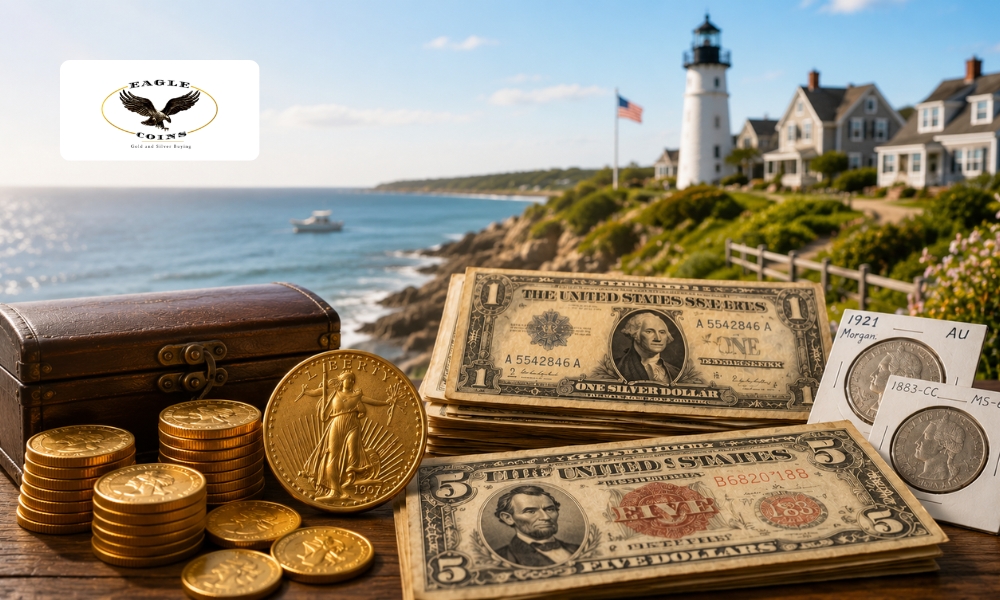
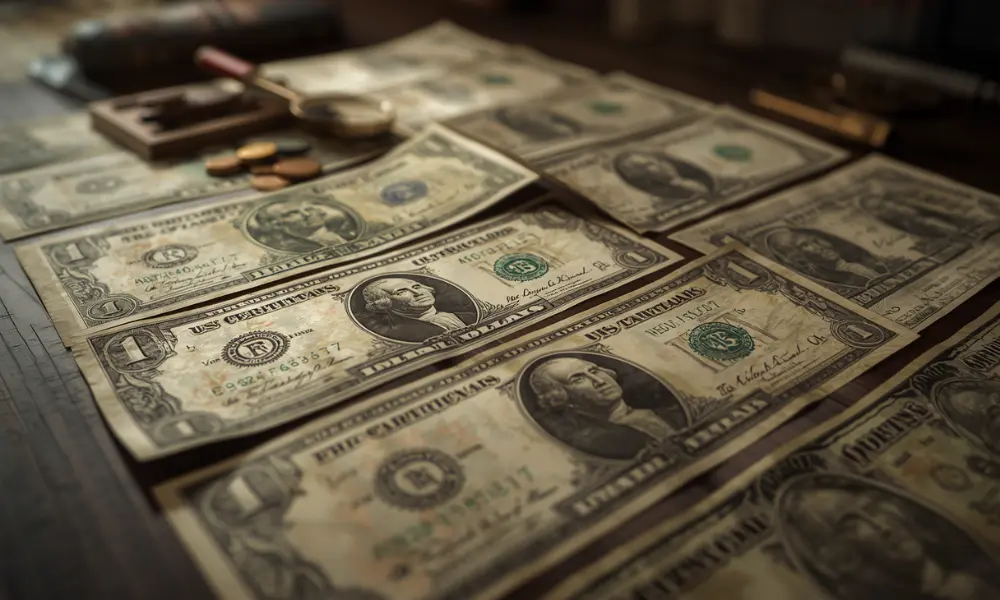
| Silver certificates | “Silver Certificate” printed on the bill, blue seal (pre-1963) | $1.50–$20+ common; rare varieties into the thousands |
| Red Seal Notes (1928–1966) | Red Treasury seal instead of green | $5–$175+ depending on series and condition |
| Star notes | A star symbol at the end of the serial number | $5–$150+; rarer low-print-run stars worth more |
| Fancy serial numbers | Repeating digits, low numbers (under 100), ladders, or near-solid numbers | $50–$10,000+ depending on the pattern |
| Error notes | Misprints, off-center printing, doubled images | $25–$2,500+ depending on the error type |
In the United States, paper currency is not merely a medium of exchange; often, it is also considered a highly valuable collectible. There are certain notes that have become highly valued assets because of their rarity, condition, and the historical significance that they have. Where most bills in circulation are worth only their face value, some other valuable U.S. dollar bills can fetch you thousands of dollars worth in the collectors’ market.
However, in order to know whether your note is worth an exceptional value or not, you need to have professional expertise. This will help both sellers and collectors and sellers to understand the hidden opportunities that their collections have to offer.
Why are U.S. Dollar Bills Valuable?
It is worthwhile to find out why certain bills are regarded as valuable U.S. dollar bills before delving into the cases. Some of the most prominent reasons why they are valuable are limited production, uncommon serial numbers, printing errors, and historical significance. Also, a significant factor is the state of the note, with uncirculated bills fetching the highest prices.
Collected notes that have several desirable characteristics are usually sought after, as they may be valued the most.
1. 1890 Grand Watermelon $1,000 Treasury Note
It is one of the most popular and most desirable bills in U.S. history, so-called because of the huge green watermelon-like zeros on the backside. It is now the most valuable U.S. dollar bill due to its rarity and iconic design, with auction prices in the hundreds of thousands.
2. 1869 1-dollar Legal Tender Note (Rainbow Note)
The Rainbow Note is very collectible with its distinctive design and few known survivors, and is also known to be painted in vivid colors. Mint condition ones can fetch thousands of dollars, particularly the higher grade ones.
3. 1928 $500 Federal Reserve Note
Though the $500 bills were used for day-to-day transactions, they are no longer used. The 1928 series is especially valuable because few of them are available and because of the historical worth of the coins; they are a highlight of valuable U.S. dollar bills.
4. 1934 $10,000 Federal Reserve Note
It is the largest denomination bill to have been issued to the people. Although the majority of them are possessed by institutions or collectors, any specimen that comes on the market can fetch a huge sum of money because of its rarity and its exclusivity.
5. 1891 $50 Treasury Note
This note has a unique portrait and a complicated design that will be of interest to collectors. Its scarcity of production and age are another factor that makes it very valuable, especially when in good condition.
6. 1862 $1 Legal Tender Note
The note is of great historical value since it was one of the earliest paper currencies to be issued by the United States. Its age by itself is not its value, but its contribution to early American finance is what makes it one of the most valuable U.S. dollar bills to the collectors.
7. 1928 $1 Silver Certificate (Funnyback)
The nickname Funnyback is simply due to the design on the reverse side. Although not every example is worth a lot of money, some of the rare versions and high-grade notes may be worth a lot more than their nominal value.
8. 1953 $5 Red Seal Star Note
Star notes are substitution bills that are reprinted in a smaller amount. Together with older series such as the 1953 Red Seal, they are very collectible. Depending on the condition and rarity, these notes can fetch high prices.
19. 2-dollar Federal Reserve Note (Rare Serial Numbers)
Although the $2 bill is still circulating, some of the rare serial numbers (ex: repeating numbers) and low numbers are also regarded as valuable U.S. dollar bills. They could fetch much higher than face value, particularly when they are in uncirculated condition.
10. 1995 $1 Federal Reserve Note (Error Bill)
Even modern bills may be valuable when they have printing errors. These notes are unique as they contain misprints through misaligned design or lacking elements. The 1995 series of error bills has become the focus of collector interest, with some worth thousands of dollars depending on the seriousness of the error.
The Condition Matters
Condition is a vital aspect even in the most valuable U.S. dollar bills. The poor condition of a rare note can fetch much less than the good condition of a common note. Collectors highly value premium, crisp, and clean bills without folds or damage. Condition is graded through grading systems, and the better the grade, the better the price in an auction or a private sale.
Trends and Demand of Collectors in the Market
The price of collector currency depends on the demand in the market. The trends may change depending on the interest of the collectors, the economic state, and the supply of certain notes. Certain bills can appreciate in value with time because they are more difficult to find. Being aware of the outcomes of the auctions and the activity of collectors can allow you to know the modern price dynamics and when it is better to purchase or sell.
How to Verify Authenticity
When you are dealing with highly valuable U.S. dollar bills, it becomes essential to verify its authenticity. Since a lot of counterfeit notes exist in the market, verification allows you to be sure that the items that you are dealing with are genuine. Buyers like Eagle Coins Gold and Silver Buying offer professional assessment and grading services that confirm the legitimacy of the note. After this, they will also provide you with an accurate valuation.
The step involving professional assessment is particularly important for such bills that are being considered as rare and high-denominational. Basically, wherever the stakes are higher.
FAQs
What makes a dollar bill valuable to collectors?
Rarity signals drive value: note type (like silver certificates), unusual seal colors, star notes marking replacement printings, fancy or low serial numbers, and printing errors. Condition matters too; crisp, uncirculated bills are worth significantly more than worn ones.
How much is a silver certificate dollar bill worth?
Common silver certificates in circulated condition are typically worth $1.50 to $20, but rare series, exceptional condition, or unusual serial numbers can push individual notes into the hundreds or thousands of dollars.
What’s the most valuable US dollar bill?
Auction records for exceptionally rare large-size notes from the 1800s have reached into the tens of thousands of dollars. For everyday finds, the highest values typically come from rare star notes, fancy serial numbers, or genuine printing errors rather than the bill’s age alone.

 +1 508-252-8888