
To most individuals, when an old coin is found in a drawer or in the pocket, the thought of it makes one wonder: ‘Is this worth anything?’ While most of the modern coins are only worth their face value, whether due to rarity, age, metal content, or unique features, can be significantly more. Understanding what coins are worth money helps collectors, casual savers, and treasure hunters who know how to recognize the value hidden in coins without paying too much or missing opportunities.
Whether you’re exploring a collection of coins, cashing in inherited coins, or simply checking your spare change, knowing which coins have collectible or melt value can be an outright reward. In this guide, you’ll get to know some common coins that are often worth more than their face value, and explain the key factors behind their value.
How Coins Gain Value: The Basics
Before we look at some specific coins, it is important to understand why some coins are worth money while others aren’t. Value often comes from one or more of the following:
- Rarity: The coins minted in limited quantities or specific years can be worth more simply because of the scarcity.
- Condition: The state of a coin, often graded from poor to mint state, has a significant impact on its value. Even rare coins in poor condition could have only a modest value above face value.
- Metal Content: Some older coins were minted in silver or gold, giving them an intrinsic value of metal, which in most cases exceeds face value alone.
- Historical Significance: Coins with significant historical significance or interesting designs often attract collectors, increasing their market worth.
Common U.S. Coins That Can Be Worth Money
Here are some coins that are already known in the United States that may have more value than their face value.
Wheat Pennies (1909-1958):
The pennies with wheat ears on their back are among the most recognizable collectible coins. The vast majority of them can be valued at slightly more than 1 cent; however, early issues, especially those from 1909-1911 and those bearing a “VDB” mint mark, can be worth several dollars or beyond in fine condition.
Mercury Dimes (1916-1945):
These silver dimes feature the iconic Winged Liberty Head and contain actual silver. Their value generally is over the face value because of the silver content and collector demand.
Silver Roosevelt Dimes, Quarters, and Half Dollars (Pre-1965):
The coins that were minted in the United States prior to 1965 were often made of 90% silver. As a result, such coins have melt value, the worth of the silver itself, usually greater than the original denominations of the coins.
Franklin and Kennedy Half Dollars:
Franklin half-dollars (1948-1963) and early Kennedy half-dollars (1964) contain high silver content, which makes them worth more than 50 cents based on metal value alone.
Buffalo Nickels (1913-1938):
These coins are commonly referred to as Indian Head nickels, and they are popular among collectors. Some dates, like 1913-S Type 2 and 1937-D three-legged varieties, can be especially valuable.
Rare and Valuable Coins You Might Find
Beyond the well-known series, some individual coins are also worth checking closely:
1909-S VDB Lincoln Penny:
This early Lincoln penny is one of the most demanded varieties. In high grades, it can be worth hundreds or even thousands of dollars.
1916-D Mercury Dime:
This coin is another classic rarity. It is not heavily minted and also has collecting demand, which can make its value go much higher than face value.
1932-D & 1932-S Washington Quarters:
Both issues from the first year of the Washington quarter series are scarce and valuable in good condition.
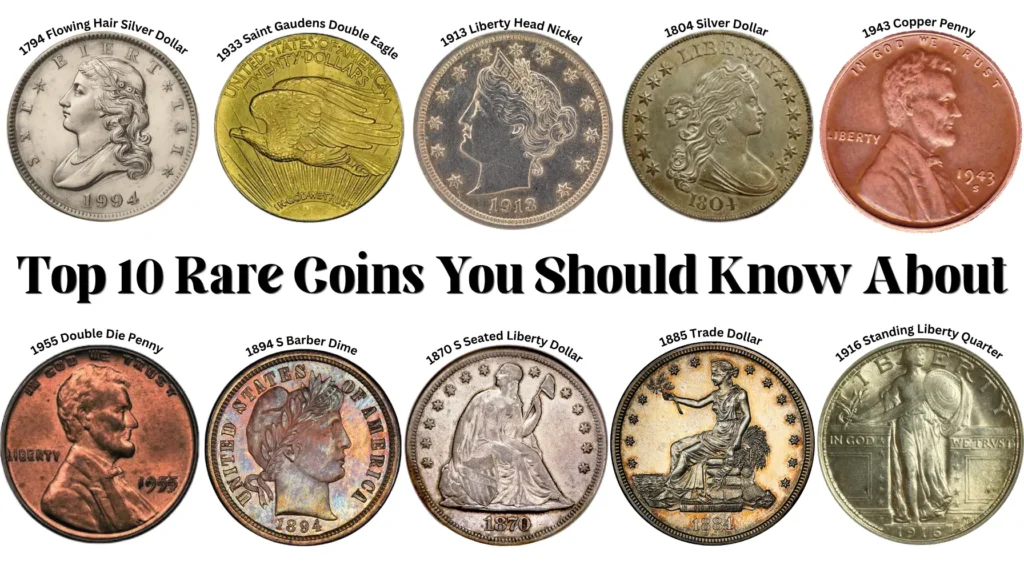
1955 Doubled Die Lincoln Cent:
This penny is a striking error coin where the date and the letters are evidently duplicated. Well-preserved examples can fetch very high prices.
Error Coins: Unexpected Surprises in Pocket Change
Coins with production errors sometimes attract strong collector interest. These include:
- Off-Centre Strikes: The lack of parts of the design due to misalignment
- Double Strikes: Coins struck more than once
- Wrong Planchet Errors: Coins struck on wrong metal blanks
Although not every coin with an error is valuable, major or dramatic errors can be worth a significant amount more than the face value.
How Metal Content Affects Value
When people ask ‘What coins are worth money?’, metal composition is often part of the answer. Until 1965, many U.S. coins contained a large amount of silver, and even earlier, gold coins contained pure precious metals:
- Gold coins (pre-1933 U.S.) often sell at a premium depending on the gold content and rarity.
- Silver coins (pre-1965) still hold value because of silver prices, which fluctuate with the global market.
Both bullion value and collectible demand both influence pricing, thus coins made of precious metals tend to hold consistent interest over time.
Condition Matters: Grading and Preservation
The value of two coins of equal type and date can vary radically depending on the condition. The coin assessments involve:
- Mint State (MS): Almost flawless condition
- Extremely Fine (EF): There is light wear on high points
- Good (G): Major details visible but worn
Value is frequently determined by means of standardized grading scales used by collectors and dealers. The better-condition coins are harder to find and usually fetch better prices in the market.
Where to Learn More About Valuable Coins
If you’re not sure whether a coin you’ve found might be worth money, it may be helpful to seek the advice of professionals or consult reputable pricing manuals. There are many resources available, but professional evaluation remains one of the most reliable ways to determine the value of a coin.
Whether you are selling an inherited collection or simply want to know what coins are worth money, there are knowledgeable buyers, such as Eagle Coins Gold and Silver Buying, who can help in evaluating coins based on current market conditions, metal value, rarity, and condition.
FAQs
What are the best coins to collect for a beginner?
The beginner collectors often start with easily available coins like wheat pennies, modern commemorative coins, or pre-1965 silver coins. These are affordable, widely documented, and help build basic collecting knowledge.
-
What coins should I look for that are worth money?
You should look for older coins, coins with low mintages, silver or gold content, and noticeable errors. Checking dates, mint marks, and condition can help you identify coins with higher value.
How to identify a rare penny?
A rare penny usually has an early mint year, a low-mintage mint mark, or a known error such as doubling or misprints. Comparing it with verified coin guides can help you confirm its rarity.
How should I start collecting coins?
You should start collecting coins by learning the basics, researching common coin types, key dates, and mint marks. Begin with affordable coins, store them properly, and gradually focus on a theme that interests you.
What is the best coin to start with?
Wheat pennies or pre-1965 silver coins are great starting points because they are easy to find, affordable, and provide a solid introduction to coin history and value.

 +1 508-252-8888